cc

Handel / Water Music – Leppard

More of the Music of George Frederick Handel

  • An original Philips import pressing with KILLER Shootout Winning Triple Plus (A+++) sound or close to it from first note to last – exceptionally quiet vinyl too
  • This copy was simply bigger, more transparent, with more clarity and clearly layered depth to the orchestra than practically all others copies we played
  • Shockingly airy and warm, this is the kind of sound that makes it easy to fall in love with an oft-heard piece such as The Water Music
  • Note how far back the trumpets are in the hall, yet they are still clear, tonally correct and not smeared – that’s the sound one hears in a live performance (and too rarely on a record)
  • This is close to the best combination of performance and sound that we know of, and let me tell you, we’ve played an awful lot of pressing of this music over the last thirty years, none of which do what the better pressings of this recording can do
  • This recording should be part of any serious classical music collection. Others that belong in that category can be found here.
  • There are about 150 orchestral recordings we’ve found to offer the best performances with the finest in audiophile sound, and this record certainly deserve a place on that list.

The performance by the English Chamber Orchestra under the direction of Raymond Leppard is currently my favorite, owing in large part to the fact that it has the kind of sound I find the most natural and enjoyable.

In a way this may not be quite fair to other equally well-known, well-respected performances. We went through an elimination round for the work a while back, winnowing the recordings down to those that had the best sound, regardless of performance — perhaps some of the discarded records had even better performances than Leppard’s. At this late stage who can say?

We audiophiles want the music we play to sound its best, a requirement which more often than not involves compromises of one kind or another. We are happy to report that that does not appear to be the case with The Water Music (keeping in mind the caveat above). (more…)

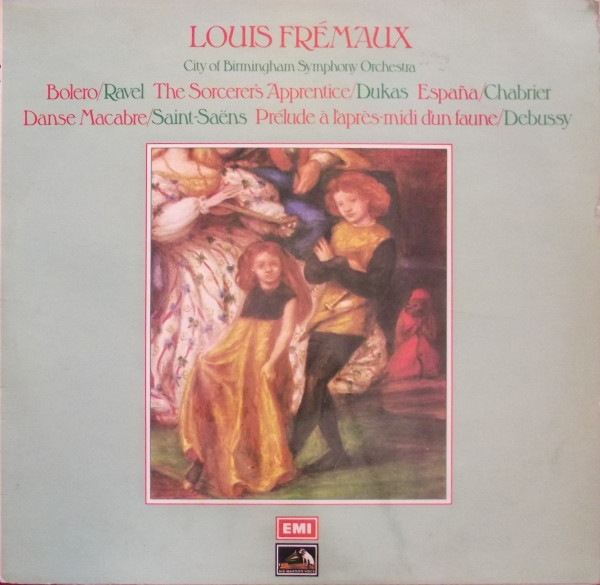
Saint-Saens / Chabrier / Danse Macabre / Espana and More

More of the music of Camille Saint-Saens (1835-1921)

More of the music of Emmanual Chabrier (1841-1894)

  • An outstanding EMI import pressing of these sublime orchestral works with Double Plus (A++) sound from first note to last
  • Both of these sides are bigger and richer than most of what we played – they’re super clean and clear, tonally correct from top to bottom, and have all of the weight of the orchestra down low
  • If you want a classical record to test your system and demo your system, this copy is for you!
  • This Demo Disc Quality recording should be part of any serious Orchestral Music Collection. Others that belong in that category can be found here.
  • There are about 150 orchestral recordings we think offer the best performances with the highest quality sound. This record is certainly deserving of a place on that list.

Orchestral Showpieces

Who can resist these sublime orchestral works? To quote an infamous (around here) label, “they are an audiophile’s dream come true.”

The sound is clear, with wonderful depth to the stage. These recordings may just be the ideal blend of clarity and richness, with depth and spaciousness that will put to shame 98% of the classical recordings ever made.

Clean bottom and lower mids. Zero smear. They’re so full-bodied and rich, yet clear and clean, and spread out on such a huge stage, these sides may become your go-to reference disc for Orchestral Reproduction.

One More Thing

This is the kind of record that will make you want to take all your Heavy Vinyl classical pressings and put them in storage. None of them, I repeat: not a single one of them, can ever begin to sound the way this record sounds. (The worst of them can be found here. If these 30-odd Heavy Vinyl titles sound good to you, something is definitely wrong somewhere.)

(more…)

Prokofiev / Symphony Nos. 1 & 7 – Our Favorite “Classical” Symphony

More of the music of Sergei Prokofiev

  • This stunning classical recording returns to the site for only the second time in three years, here with solid Double Plus (A++) sound throughout this British EMI import – exceptionally quiet vinyl too
  • Previn has a spritely take on the first symphony, which is precisely what it needs and, every bit as important, the LSO has the chops to bring his vision to life
  • “[The Classical Symphony] is rather a brilliant display of charm, gaiety and good humor as well as a delightful and respectful homage to the early masters whom Prokofieff had at one time so scornfully rejected.”
  • There are about 150 orchestral recordings we think offer the best performances with the highest quality sound. This record is certainly deserving of a place on that list.

This superb release contains one of my favorite performances of the Classical Symphony, and it also carries the distinction of having the best combination of sonics and performance that we have ever heard on vinyl. (There is a recording by Previn and the LA Phil from 1986 with a performance to die for; unfortunately, it comes with the kind of mid-80s tear-your-head-off digital shrillness that makes the CD medium the worn-out joke we analog lovers know it to be.)

The First Symphony happens to be one of my favorite classical works of all time, right up there with The Planets and Pictures at an Exhibition. I wouldn’t want to go to a desert island without all three.

This remarkable pressing has exceptional transparency and dynamics, allowing the energy and precision of the performance to shine through. Truly a sublime recording that belongs in any music collection, whether you’re a fan of classical music or not.

If I had to choose one piece of classical music that I would never want to live without, it would have to be the performance of Prokofiev’s First Symphony found on this very side one. It’s a work of such joy that I’ve never failed to be uplifted by it (except when the performance is too slow, which it often is).

This is a difficult piece to pull off. Most of the time either the orchestra is not up to the task or the conductor misunderstands the work. Previn has a spritely take on the piece, which is precisely what it needs and, every bit as important, the London Symphony has the chops to bring his vision to life.

(more…)

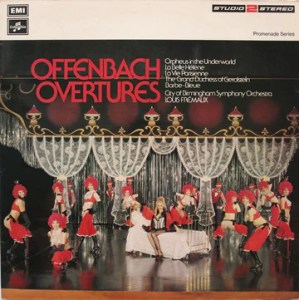
Offenbach – Overtures / Fremaux

More Classical and Orchestral Recordings

  • Overtures appears on the site for only the second time ever, here with INCREDIBLE Shootout Winning Triple Plus (A+++) grades or close to them on both sides of this original British EMI pressing
  • Both of these sides are exceptionally big, clear and dynamic with an abundance of Tubey Magical richness to rival the best recordings you may have heard
  • The notes for side one of our best copy, with sound similar to this side two, read: breathy and rich flutes / fully extending up high / very weighty and powerful and tubey / so fun / spacious
  • If that sounds like the kind of record you might want to hear for yourself in your very own listening room, this one is currently available for just that purpose
  • This shootout has been many years in the making – we’ve been trying to do these wonderful overtures for about five years, which just goes to show how hard it is to find these kinds of records in audiophile playing condition nowadays
  • We also just debuted a recording with Ansermet at the helm for Decca which features two of the pieces found here that’s every bit as good
  • Which one is better is probably a matter of taste as they are both head and shoulders better than any other recordings we have come across in the last five or more years

(more…)

Saint-Saens / Symphony No. 3 (“Organ”) / Fremaux

More of the music of Camille Saint-Saens (1835-1921)

More Classical and Orchestral Recordings

  • Clear and transparent and natural – your ability to suspend disbelief requires practically no effort at all
  • What this copy did better than practically any other was show us just how rich, smooth and Tubey Magical 1973 EMI sound could be
  • “The whole work is a magnificent and fantastical symphonic machine that’s an apotheosis of the orchestral technology of the late 19th century.”
  • There are about 150 orchestral recordings we’ve awarded the honor of offering the Best Performances with the Highest Quality Sound, and this record certainly deserve a place on that list.

(more…)

Holst – The Planets / Previn – Our 2022 Shootout Winner

Hot Stamper Classical and Orchestral Pressings Available Now

This early British EMI pressing of Previn’s reading from 1974 is guaranteed to be the best copy of Holst’s Magnum Opus you have ever heard. Previn’s and the LSO’s performances are without peer in our estimation. These sides are rich, clear and dynamic, with weighty brass, and the kind of dynamic power that lifts the energy level right into space.

A TAS List Super Disc, with a performance that’s as spectacular as the recording (thanks to the work of the two Christophers).

As you might imagine, on a big system this would make for a powerful listening experience, which is exactly the experience we ourselves had during our recent shootout. This copy actually deserves its place on the TAS List.

The EMI Sound

EMI’s are usually recorded with a mid-hall perspective, which is somewhat distant for our taste. That’s not our sound. We prefer the Front Row Center seats (especially at these prices). That said, when an EMI from the ’70s is recorded, mastered and pressed properly, it actually sounds more like the real thing, more like the live performance of orchestral music in a concert hall.

It’s uncanny how real the best copies of this record sound. For a recording of The Planets it has no equal in our experience.

A Must Own Record

This orchestral spectacular should be part of any serious Classical Collection. Others that belong in that category can be found here.

Side One

Mars, the Bringer of War
Venus, the Bringer of Peace
Mercury, the Winged Messenger
Jupiter, the Bringer of Jollity

Side Two

Saturn, the Bringer of Old Age 
Uranus, the Magician 
Neptune, the Mystic

Structure

The suite has seven movements, each of them named after a planet and its corresponding Roman deity (see also Planets in astrology):

  • Mars, the Bringer of War
  • Venus, the Bringer of Peace
  • Mercury, the Winged Messenger
  • Jupiter, the Bringer of Jollity
  • Saturn, the Bringer of Old Age
  • Uranus, the Magician
  • Neptune, the Mystic

With the exception of the first two movements, the order of the movements corresponds to increasing distance of their eponymous planets from the Earth. Some commentators have suggested that this is intentional, with the anomaly of Mars preceding Venus being a device to make the first four movements match the form of a symphony.

One alternative explanation may be the ruling of astrological signs of the zodiac by the planets. If the zodiac signs are listed along with their ruling planets in the traditional order starting with Aries, ignoring duplication, Pluto (then undiscovered and now de-planetised), and the luminaries (the Sun and the Moon), then the order of the movements matches.

Another possibility, this time from an astronomical perspective, is that the first three movements, representing the inner terrestrial planets, are ordered according to their decreasing distance from the Sun. The remaining movements, representing the gas giants that lie beyond the asteroid belt, are ordered by increasing distance from the Sun. Critic David Hurwitz offers an alternative explanation for the piece’s structure: that “Jupiter” is the centerpoint of the suite and that the movements on either side are in mirror images. Thus “Mars” involves motion and “Neptune” is static; “Venus” is sublime while “Uranus” is vulgar, and “Mercury” is light and scherzando while “Saturn” is heavy and plodding. (This hypothesis is lent credence by the fact that the two outer movements, “Mars” and “Neptune,” are both written in rather unusual quintuple meter.)

“Neptune” was the first piece of music to have a fade-out ending. Holst stipulates that the women’s choruses are “to be placed in an adjoining room, the door of which is to be left open until the last bar of the piece, when it is to be slowly and silently closed”, and that the final bar (scored for choruses alone) is “to be repeated until the sound is lost in the distance”. Although commonplace today, the effect bewitched audiences in the era before widespread recorded sound – after the initial 1918 run-through, Holst’s daughter Imogen (in addition to watching the charwomen dancing in the aisles during “Jupiter”) remarked that the ending was “unforgettable, with its hidden chorus of women’s voices growing fainter and fainter… until the imagination knew no difference between sound and silence”.


Further Reading

Mozart / Haydn – The Best Toy Symphony on Vinyl

More of the music of Wolfgang Amadeus Mozart (1756-1791)

More Classical and Orchestral Recordings

  • An early EMI UK import pressing with STUNNING Nearly Triple Plus (A++ to A+++) sound from first note to last – just shy of our Shootout Winner
  • The amazingly well recorded Toy Symphony on side two (which is fairly quiet by the way) is the real reason to own this record – you will be shocked at how realistic the toys sound, and how spaciously they are arrayed in the soundfield
  • These sides are clear, full-bodied and present, with plenty of live venue space around the players, the unmistakable sonic hallmark of the properly mastered, properly pressed vintage analog LP
  • The first pressing of the album I ever played, back in about 1995, was on the Japanese Soundphile Series, and it blew my mind at the time
  • Fast forward 25 plus years and now we know that, as good as the Japanese pressing can be, the real EMI can be even better.  That’s what shootouts are for, right?

(more…)