1971-best

Satie, Ravel, Debussy / The Impressionists – Phase 4, its Strengths and Shortcomings

More Bernard Herrmann

Presenting an exceptionally rare and very good sounding Decca Phase IV pressing (with the textured cover, ooh!), the first to ever hit the site. We have been on the lookout for this album for years and somehow cannot find any clean copies, other than this one of course.

Not to worry; this one will do nicely. Three of the six works here have SUPERB better than Super Hot Stamper sound. We went through them one by one and were rather surprised that the sound quality varied so much from track to track.

One might conclude from the variation in the sound that the album must be a compilation — so many of Herrmann’s albums are — but that is not the case, assuming the liner notes are to be believed.

Here’s what we heard, taken directly from our notes.

Side One

Satie / Gymnopedies I & II

A++ or better. Rich, smooth, sweet, big, natural, clear and very ANALOG. I don’t know when I’ve heard these famous works sounding better than they do here.

Debussy / Clair de Lune

A+, rich but a bit smeary, strings need more texture.

Debussy / Valse ‘la Plus Que Lente

No grade – Too murky.

Ravel / Five O’Clock Fox-Trot

A++ to A+++, with Demo Disc sound! So lively and clear, the sound will jump out of your speakers when you play this track!

(more…)

John Baldry Knows One Thing: It Ain’t Easy Finding Good Sounding Pressings of His Albums

A Record We may Never Shootout Again

Some records were just too much work to find, too expensive to buy and resulted in sales that never really justified the investment in time and money required to find Hot Stamper pressings of them.

This is one such album, and the link above will take you to many more.

xxx

  • For its debut on the site, we present this amazing sounding British original pressing, with a Triple Plus (A+++) side one (the Rod Stewart side)
  • Side two (the Elton John produced side) was outstanding as well, earning a Double Plus (A++) for its rich, tubey sound
  • No wonder side one sounds like the best of Rod Stewart & The Faces’ early-’70s albums – Mike Bobak engineered them
  • “The backing band on Stewart’s side include fellow Face and future Rolling Stone, Ron Wood, on electric guitar and acoustic guitarist Sam Mitchell, who appeared on many of Stewart’s early-’70s solo albums.”

Here’s how this shootout got started.

A few years ago while I was working on the site I had music on youtube playing. The song “Flying” came on from the It Ain’t Easy album, and when the chorus came in I could not believe how big, rich and powerful it sounded — this, on computer speakers! (more…)

Marvin Gaye – What’s Going On

More Marvin Gaye

More Soul, Blues, and R&B

  • A superb copy of an album that almost never hits the site, featuring seriously good sound throughout
  • More spacious and transparent than most other copies yet still super rich and smooth in the midrange; listen to the bells and percussion — there’s real ambience around them for once
  • Gaye’s vocals are full and present on these sides – they’re rich, full and Tubey Magical with plenty of energy and big bottom end
  • If you’re a fan of this great music, you need to snap this one up – most copies we’ve brought in were beat to death, full of groove damage or just sonically unimpressive
  • 5 stars: “What’s Going On is not only Marvin Gaye’s masterpiece, it’s the most important and passionate record to come out of soul music… arguably the best soul album of all time.”

(more…)

Our First Shootout for The Inner Mounting Flame

Hot Stamper Pressings of Top Quality Jazz Recordings Available Now

This is the first album by the band, recorded only a year after Bitches Brew single-handedly created the genre of Jazz Fusion itself. Or is it better described as an album of Prog Rock without the vocals? Remember, King Crimson had a violinist and not a whole lot of singing too.   

Whatever it is, mostly what this music wants to do is rock.

And on this copy it rocks like you will not believe. The louder you play it the better it sounds.

The best copies had huge amounts of bottom end weight as well as rich, Tubey Magical grungy guitar tone. Once you’ve heard it sound that way, on the copies without both you’ll notice that the sound falls flat pretty quickly.

It’s hard to think of another record that rocks as hard, and it’s not even a real rock record! We find ourselves playing albums like Zep II and Back in Black for hour after hour, with dozens of copies to get through, and we do it on a regular basis. If anybody knows Big Rock Sound, it’s us. But can we really say that those albums rock any harder than this one?

What to Listen For

The main problem we heard again and again on the copies we were auditioning was an obvious lack of top end extension and clarity. Without all the top there is not enough space for all the instruments to occupy. It then becomes easy for the sound to get congested and the musical lines to become jumbled, with the most subtle elements get progressively more and more lost in the dense mixes the band is known for.

With everyone blasting away at the same time the mixes on the album get very dense indeed. Big speakers in a carefully treated room are a must if you want to play The Inner Mounting Flame at the loud levels we prefer.

The sides that had the most space and the biggest, tightest low ends tended to do everything else right as well. The energy was rarely less than phenomenal, but that energy only works to increase the listener’s involvement when there is enough space and enough weight to keep the sound opened up above and anchored down below.

5 Stars All Over the Place

Based on the reviews one would have to rank this album as one of the top Jazz/Rock Fusion Albums of All Time. Rolling Stone gives it Five Stars, Allmusic gives it Five Stars, and even Robert Christgau, the toughest grader of them all, gives the album an “A.”

In our experience, few recordings within this genre can begin to compete with the Dynamics and Energy of the best pressings of the album — if you have the system designed to play it. (Even if you don’t the album will still rock like crazy.)

(more…)

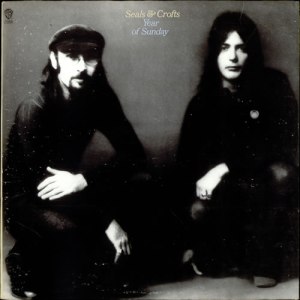
Seals & Crofts / Year of Sunday – A Masterpiece and Underrated Classic

Yet Another Record We’ve Discovered with (Potentially) Excellent Sound

More Personal Favorites


We’ve recently compiled a list of records we think every audiophile should get to know better, along the lines of “the 1001 records you need to hear before you die,” but with less of an accent on morbidity and more on the joy these amazing audiophile-quality recordings can bring to your life.

Year of Sunday is the kind of record that not many audiophiles know well, but those who seek it out may be surprised to find out just how musically rewarding it can be. I’ve played the album hundreds of times and never tired of it once.

The best album by this duo – their strongest songwriting and arrangements. Nearly White Hot on side one, with vocals that are full-bodied, rich and solid.

A forgotten Classic from 1971, the album holds up very well forty plus years on.

Their commercial breakthrough would come with their next album, Year of Sunday, helped out by scores of session cats, but I much prefer the less commercial — although it’s far from uncommercial — sound of Year of Sunday. I am apparently not alone in my love for this album. Of the thirteen reviews on Amazon, every one gives it Five Stars(!).

The consistency of the songwriting is very strong here as well, with surprisingly powerful emotional currents. There’s not a dog in the bunch, and many of the better tracks are gems of popcraft. Some of the my favorites are When I Meet Them, Cause You Love, and Antoinette on side one, and Paper Airplanes, Irish Linen and Springfield Mill on side two.

Side One

Smooth and very rich, with big bass, this is without a doubt precisely the right sound for the album. Very few copies managed to pull off the rich tonal balance that this side has going for it.

Side Two

It’s big and clear, a bit thinner but still very good. (more…)

Al Green – Gets Next To You

  • Incredible sound throughout for this Hi Records pressing with each side earning Top Honors — Triple Plus (A+++) from start to finish
  • These sides are both stunning — clean, clear, dynamic and spacious with tons of bottom end weight 
  • “Al Green and producer Willie Mitchell established their classic sound with Green’s second album… Alternating between Sam Cooke’s croon and Otis Redding’s shout, Green develops his own distinctive style, and Gets Next to You only touches the surface of its depth.” – All Music 

(more…)

Steppenwolf – Gold: Their Great Hits

  • An outstanding copy of the band’s first greatest hits album with solid Double Plus (A++) sound or close to it from first note to last – exceptionally quiet vinyl too
  • Both sides here are rockin’ like crazy, with mostly ull-bodied, natural, smooth, tonally correct sound
  • This surprisingly good sounding greatest hits album is packed with hits, including Born To Be Wild, Magic Carpet Ride, The Pusher, and more
  • 4 stars: “The term heavy metal was rightfully named for this band. Steppenwolf fused traditional rock and R&B with late ’60s contemporary heaviness. “Born to Be Wild,” their signature tune, has aged amazingly well. Aside from the song’s power and performance, its engineering and production is stellar. This goes for most of Steppenwolf’s catalog as well.”

(more…)

Don McLean – American Pie

  • Two excellent sides with each rating Double Plus (A++) or close to it
  • The singers and musicians are balanced by a big, solid piano – this kind of fullness and solidity are key to the best copies
  • The title track and Vincent sound great here, and the vinyl plays about as quiet as we can find
  • “If you’ve ever cried because of a rock & roll band or album, or lain awake nights wondering or sat up talking through the dawn about Our Music and what it all means and where it’s all going and why, if you’ve ever kicked off your shoes to dance or wished you had the chance, if you ever believed in Rock & Roll, you’ve got to have this album.” – Rolling Stone 

This Number One album from 1971 has surprisingly excellent sound on both sides. It’s dynamic too — the end of American Pie gets good and loud, with a very solid piano holding it all together. (more…)