*The Absolute Sound List

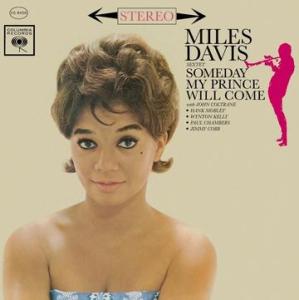
Miles Davis – Someday My Prince Will Come (Six-Eye)

More of the Music of Miles Davis

  • Superb sound throughout this Miles Davis classic, with both sides earning solid Double Plus (A++) grades or BETTER
  • This original Stereo 6-Eye LP is full-bodied, high-rez and spacious, with Miles’s horn uncannily present, a sound you just cannot find on Heavy Vinyl no matter who makes it
  • If you have the big system and dedicated room a record of this quality demands, you can put Miles right in the room with you with a Hot Stamper pressing as good as this
  • Vintage pressings that are free of scratches and groove damage are few and far between, but here’s one, perfect for even the most demanding audiophile
  • Another engineering triumph for Fred Plaut at Columbia’s legendary 30th Street Studios – the man is a genius
  • Musically this is one of our very favorite Miles albums, and the sound is Demo Disc quality on the better copies
  • If you’re a jazz fan, this Must Own Title from 1961 belongs in your collection

(more…)

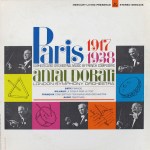
Paris 1917-1938 – Side One Versus Side Two

Hot Stamper Pressings of Mercury Living Presence Records Available Now

UPDATE 2025

This listing was written all the way back in 2012 for the first Hot Stamper pressing of SR 90435 we’d ever listed as a Hot Stamper.

Note that it only had one good side, and even that side had a serious problem.

Thirteen years later in 2025 we would do a real shootout for this wonderful recording and learn something very few audiophiles know to this day — that the best stampers and the worst stampers are sometimes the same stampers.


Our 2012 Review

Super Hot Stamper sound for Eric Satie’s wonderfully eccentric Parade (and the Auric piece as well) can be found on this rare original promo copy of Mercury SR 90435, a record that was previously on the TAS List if I’m not mistaken.

It certainly deserves to be. The sound is BIG and OPEN, and like so many Mercury recordings with the London Symphony, it’s rich and full-bodied, not thin and nasally as is so often the case with their domestically recorded releases. Above all the sound is transparent, lively and dynamic.

In many ways this album would certainly serve quite well as an audiophile Demo Disc: the timbre of the wide array of instruments used is (mostly) Right On The Money.

Check out the lengthy and humorous producer’s notes for the sessions below. And people think The Beatles discovered experimental sounds in the studio.

The Brass Lacked Weight

With one small exception: the brass doesn’t have all the weight of the real thing, and for that we have deducted one plus from our top grade of three.

Side one has classic bad Mercury sound.

So screechy, hard and thin. How many audiophiles own records like this and don’t know that the sound of one side is awful and the other brilliant?

Since so few have ever commented publicly about such matters — and even supposedly knowledgeable audiophile reviewers never bother to even bring up the subject of one side versus the other — one must conclude that this is a subject that has yet to pierce the consciousness of most of our audiophile brethren, especially the ones who haven’t yet discovered this site.

Now’s a good time to start. Dig in, you may be surprised by what you find.

(more…)

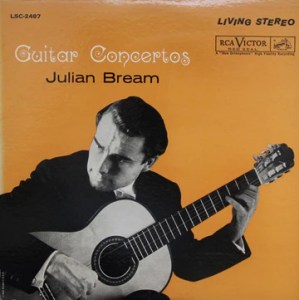
Arnold – Guitar Concertos / Bream

More Living Stereo Recordings

  • Amazing sound throughout this original Shaded Dog pressing, with both sides earning INSANELY GOOD Shootout Winning Triple Plus (A+++) grades
  • It’s also fairly quiet at Mint Minus Minus, a grade that even our most well-cared-for vintage classical titles have trouble playing at
  • These sides are wonderfully full-bodied, rich and present, using state-of-the-art All Tube Living Stereo recording technology that was so advanced in 1961 it thought it could transport a living, breathing Julian Bream directly from his studio into your listening room
  • It turns out that with today’s playback systems and cleaning technologies, the dream of being in the “living presence” of the performers has become a reality
  • Bream’s guitar sounds sweetly natural, not overly detailed and the orchestra is exceptionally well recorded, as we would expect from a good RCA of this period

(more…)

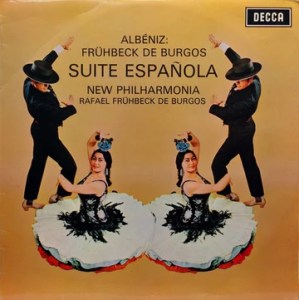
Albeniz / Suite Espanola on Decca

More of the Music of Albeniz

  • With two seriously good Double Plus (A++) sides, we guarantee you’ve never heard Suite Espanola sound remotely as good as it does on this vintage Decca pressing – exceptionally quiet vinyl too
  • This is our best sounding Decca pressing – the best Londons will always win the shootouts we do, but the best Deccas can come close and sound truly amazing in their own right
  • The orchestral power on display is positively breathtaking – few recordings we know of are this dynamic and exciting
  • Wilkie’s Decca Tree recording is overflowing with the kind of clear, spacious, realistic sound that can only be found on the better vintage vinyl LPs
  • Performances and sound like no other – De Burgos’s Suite Espanola is practically in a league of its own

Wow, is this record ever dynamic! I would put it right up there with the most dynamic recordings we have played over the course of the last twenty five years. It also has tons of depth. The brass is at the far back of the stage, just exactly where they would be placed in the concert hall, which adds greatly to the realism of the recording.

Note that careful VTA adjustment for a record with this kind of dynamic energy is a must. Having your front end calibrated to this record is the only way to guarantee there is no distortion or shrillness in even the loudest passages.

What to Listen For

Clear castanets.

Big bass drum thwacks.

Crescendos that build to intense climaxes.

(more…)

How Is this Title Not on the TAS List?

Hot Stamper Pressings of Orchestral Spectaculars Available Now

UPDATE 2026

I wrote this commentary about ten years ago if memory serves. Since then we have done a number of shootouts for Slaughter on Tenth Avenue and have never failed to be impressed with the sound and the music.

Many of Arthur Fiedler‘s recordings are favorites of ours. We may even have a few on the site at the moment. All of them are guaranteed to satisfy.


This copy of  from many years ago was so good on side two it practically left me speechless.

I wondered: How is this title not on the TAS List?

Why is it not one of the most sought-after recordings in the RCA canon?

Beats the hell out of me.

But wait just one minute. Until a month ago I surely had no idea how good this record could sound, so how can I criticize others for not appreciating a record I had never taken the time to evaluate myself?

Which more than anything else prompts the question — why is no one exploring, discovering and then bringing to light the exceptional qualities of these wonderful vintage recordings (besides your humble writer and his staff, of course)?

HP has passed on. Who today is fit to carry his mantle into the coming world of audio?

Looking around I find very few prospects. None in fact.

But then again, I’m not looking very hard. I could care less what any of these people have to say about the sound quality of the records they play.

They all seem to like records that don’t sound very good to us, so why put any faith in their reviews for other records?

Reviewer malpractice? We’ve been writing about it since 1994..

(more…)

Carmina Burana on Telarc – A Very Old Review

Hot Stamper Pressings of Orchestral Spectaculars Available Now

This IMMACULATE Telarc Double LP with Virtually No Sign Of Play is one of the greatest audiophile records of all time and Telarc’s greatest recording! No recording gets more realism with this work … depth, dynamics, colors & performance!

Why don’t more of their recordings sound like this? Telarc is not a label I would normally associate with good sound but you have to give them credit here: they knocked this one out the park. They have made good records in the past — this one is proof enough, and some of the Fennel titles are quite good — but most of their catalog leaves much to be desired and is hard to recommend. (more…)

Lee Morgan / The Sidewinder

More of the Music of Lee Morgan

  • Incredible sound throughout this 60s Blue Note pressing, with a Shootout Winning Triple Plus (A+++) side two mated to a solid Double Plus (A++) side one
  • It took us about two years to get this shootout going, but the best copies we played were so impressive that they made all the time and money it took to pull it off worth the effort – what a record!
  • These sides are rich and full, from the extended top end all the way down to the deepest bass — thanks RVG!
  • The trumpet on this album is amazing — tonally correct with wonderful leading edge transients
  • Both musically and sonically, this is Blue Note at its best
  • 5 stars: “Carried by its almost impossibly infectious eponymous opening track, The Sidewinder helped foreshadow the sounds of boogaloo and soul-jazz with its healthy R&B influence and Latin tinge. While the rest of the album retreats to a more conventional hard bop sound, Morgan’s compositions are forward-thinking and universally solid…”

When we dropped the needle on this one, we immediately stopped listening critically and just began enjoying the album. That’s the sign of an exceptional copy — the sound gets out of the way and the music becomes the point.

There’s life and presence on these sides the likes of which you almost never hear on any jazz record.

The lineup here is fantastic, with Joe Henderson on tenor sax, Billy Higgins on drums, Barry Harris on piano and Bob Cranshaw on bass. (more…)

Cat Stevens on 2 Heavy Vinyl 45 RPM Discs, Part 1 – Is This the Truest Tillerman of Them All?

About ten years ago we auditioned and reviewed the 2011 edition of Tea for the Tillerman pressed by Analogue Productions, the one that came on a single Heavy Vinyl 33 RPM LP.

I wrote a very long commentary about the sound of that record, taking it to task for its manifold shortcomings, at the end of which I came to the conclusion that the proper sonic grade for such a record is F as in Fail. My exhaustive review asked the not-very-subtle question, this is your idea of analog?

Our intro gave this short overview:

Yes, we know, the folks over at Acoustic Sounds, in consultation with the late George Marino at Sterling Sound, supposedly with the real master tape in hand, and supposedly with access to the best mastering equipment money can buy, labored mightily, doing their level best to master and press the Definitive Audiophile Tea for the Tillerman of All Time.

It just didn’t come out very well, no matter what anybody tells you.

Recently I was able to borrow a copy of the new 45 cutting from a customer who had rather liked it. I would never have shelled out my own money to hear a record put out on the Analogue Productions label, a label that has an unmitigated string of failures to its name. But for free? Count me in!

The offer of the new 45 could not have been more fortuitous. I had just spent a number of weeks playing a White Hot Stamper Pink Label original UK pressing in an attempt to get our new Playback Studio sounding right.

We had a lot of problems. We needed to work on electrical issues. We needed to work on our room treatments. We needed to work on speaker placement.

We initially thought the room was doing everything right, because our Go To setup disc, Bob and Ray, sounded super spacious and clear, bigger and more lively than we’d ever heard it. That’s what a 12 foot high ceiling can do for a large group of musicians playing live in a huge studio, in 1959, on an All Tube Chain Living Stereo recording. The sound just soared.

But Cat Stevens wasn’t sounding right, and if Cat Stevens isn’t sounding right, we knew we had a Very Big Problem. Some stereos play some kinds of records well and others not so well. Our stereo has to play every kind of record well because we sell every kind of record there is. You name the kind of music, we probably sell it. And if we offer it for sale, we had to have played it and liked the sound, because no record makes it to our site without being auditioned and found to have excellent sound.

But I Might Die Tonight

The one song we played over and over again, easily a hundred times or more, was But I Might Die Tonight, the leadoff track for side two. It’s short, less than two minutes long, but a lot happens in those two minutes. More importantly, getting everything that happens in those two minutes to sound not just right, but as good as you have ever heard it, turned out to be a tall order indeed.

(more…)
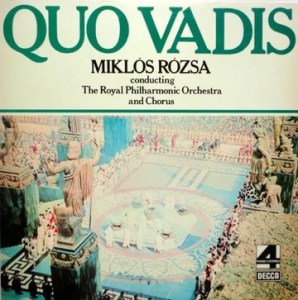
Miklós Rózsa – Quo Vadis (Music From the Film on Decca)

More Orchestral Spectaculars

  • This Decca Phase 4 Stereo pressing of Rózsa’s sweeping cinematic score boasts solid Double Plus (A++) sound or BETTER from start to finish
  • These TAS-approved sides are clear, full-bodied and present, with plenty of space around the players, the unmistakable sonic hallmark of the properly mastered, properly pressed vintage analog LP
  • This 1978 re-recording of Rózsa’s original work for the 1951 film, performed by the Royal Philharmonic, succeeds in achieving glorious Phase IV orchestral sound
  • 4 1/2 stars: “Rózsa gets spirited performances out of the orchestra and the chorus, but with the latter he also achieves a level of subtlety in their performance of his work which greatly enhances the finale to the piece.”

(more…)

Julie Is Her Name – A Boxstar Bomb from Bernie

Hot Stamper Pressings of Pop and Jazz Vocals Available Now

One question: Where’s the Tubey Magic?

We would never have pointed you in the direction of this awful Boxstar 45 of Julie Is Her Name, cut by Bernie Grundman in 2009, supposedly on tube equipment. I regret to say that we actually sold some copies, but in my defense I can honestly and truthfully claim that we never wrote a single nice thing about the sound of the record. That has to count for something, right?

We found the Tubey Magic on his pressing to be non-existent, as non-existent as it is on practically every Classic Record release he cut. If you have his version you are in for quite a treat when you finally get this one home and on your table. There is a world of difference between the sound of the two versions and we would be very surprised if it takes you more than ten seconds to hear it.

(more…)