Weak Sound or Music

These vintage records didn’t sound very good to us. Additionally, some made the list because the music or performances were not to our liking.

As to their sound quality, some of them are bad recordings, but some are no doubt just bad pressings of good recordings. Either way, audiophiles should avoid them.

Bad sounding Heavy Vinyl and Half-Speed mastered pressings can be found in their own sections.

Hey, Maybe Rudy Van Gelder IS as Bad a Mastering Engineer as Some Say

Hot Stamper Pressings of Recordings by Rudy Van Gelder Available Now

It’s certainly a proposition worth considering, mostly because so many audiophiles seem to believe it. Or maybe in spite of their believing it, skeptics such as myself being the troublemakers they always are.

So let’s dig down into the dirt of a record that Rudy both recorded and mastered.

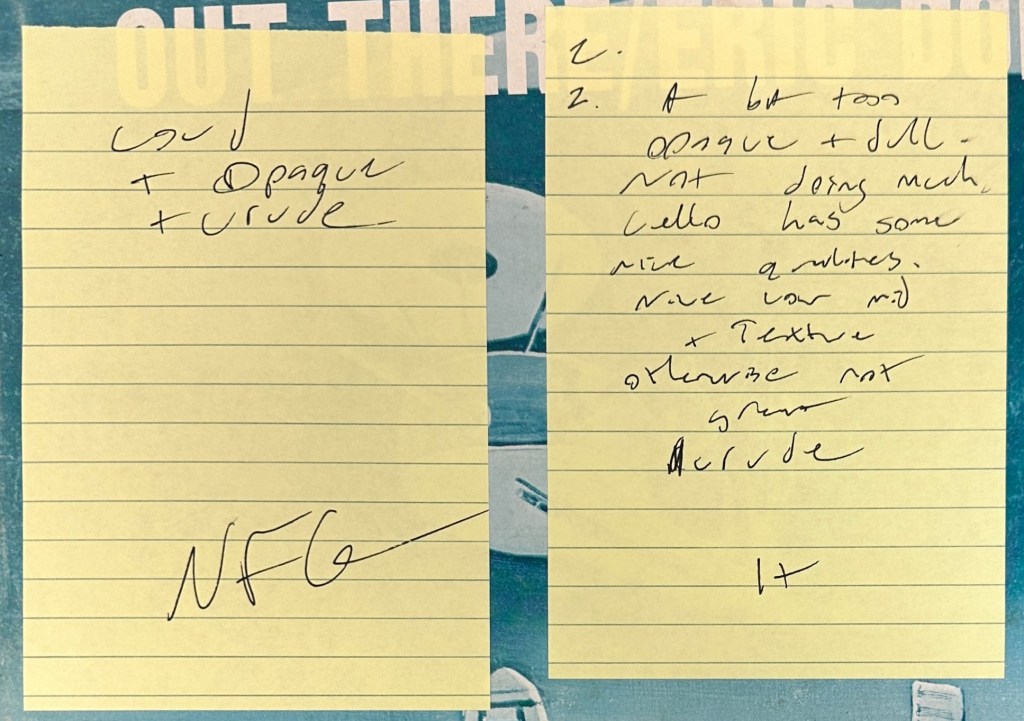
None of the Rudy Van Gelder cuttings we played of Eric Dolphy’s 1961 release of Out There were better than passable, and some had sides that were downright awful sounding, as you can plainly see from our notes.

The copies that won our most recent shootout were mastered by George Horn, and the best of them sound amazing. Here are some comments we made for the album years back as well as the Allmusic review:

Insanely good sound throughout with both sides earning Shootout Winning Triple Plus (A+++) grades. This copy was doing it all right: rich, full-bodied and Tubey Magical yet still super open and spacious.

“A somber and unusual album by the standards of any style of music, Out There explores Dolphy’s vision in approaching the concept of tonality in a way few others — before, concurrent, or after — have ever envisioned.” – 5 stars

As you will see from our notes, we played some very disappointing early pressings. All the early pressings we had on hand were expensive to acquire, the vintage jazz pressing market being what it is: expensive and full of optimistic record graders of questionable skill. (For these kinds of vintage pressings we probably return 70-80% of what comes our way.)
We have to pay top dollar to get copies that are clean, even on the 60s and 70s reissue labels. Noisy old jazz records are simply not saleable to audiophiles no matter how good they sound.

None of the early copies we played earned grades good enough to bother pursuing, not when there are wonderful sounding vintage reissues from the 80s available. On a more positive note, this being our first shootout for the album in many years, we certainly learned a lot, so let’s just chalk up the losses to the cost of doing business. Our newfound knowledge of the best pressings will continue to pay dividends for years to come now that we know what the right stampers tend to be.
(more…)

Nilsson’s Aerial Pandemonium Ballet Sounds Absolutely Awful

Hot Stamper Pressings of the Music of Harry Nilsson Available Now
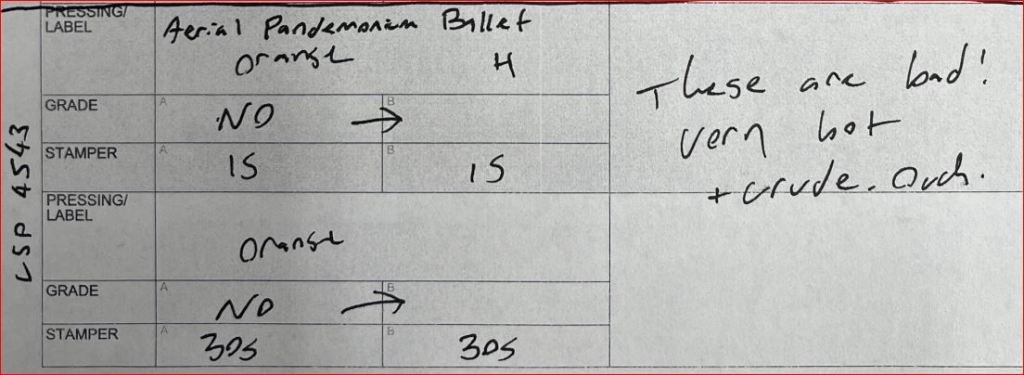
Tracks from the first two Nilsson albums were turned into this monstrosity in 1971. Some were remixed, some parts rerecorded, but whatever they did, they really screwed up the sound of the finished LP.

I cannot even say that the remixing and rerecording and editing are not an improvement on the songs found on the first album — they may be, it’s not a record I know well. What I do know is that this compilation is so bad sounding it doesn’t matter what they did or how well they did it. The record is simply unplayable.

We’ve never done a shootout for the first album, but the second album we know can have wonderful sound on the right pressings. We described a recent Hot Stamper of the second album this way:

Both of these sides are big, clear and full-bodied throughout – if you are a Nilsson fan, this copy is guaranteed to beat anything you’ve heard before, and by a wide margin.

All of the elements are working here – you get silky vocals, punchy bass, breathy brass, silky highs, superb immediacy, remarkable clarity, and the list goes on.

AMG writes:

4 1/2 stars: “As ‘Good Old Desk’ opens Aerial Ballet with a cheerful saunter, it’s clear that Harry Nilsson decided to pick up where he left off with his debut, offering another round of effervescent, devilishly clever pop, equal parts lite psychedelia, pretty ballads, and music hall cabaret.”

All true! Nilsson is one of my favorite artists to this day, 56 years after I first heard the album “Harry,” which is still a personal favorite and one I listen to regularly, along with many others, including a compilation I think is excellent, Personal Best — The Harry Nilsson Anthology.

However, this compilation is shockingly bad — It’s cut loud, and it’s very hot and crude. Ouch is right.

(more…)

For Audiophile Quality Sound on “Jaws,” You Might Want to Look Elsewhere

Hot Stamper Pressings of Top Quality Jazz Albums Available Now

For good music? We will leave that judgment to you. Music is personal. What moves me in music and what moves you in music may be related but they are surely not identical.

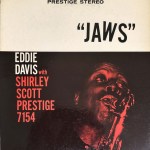
In 1959 Eddie Lockjaw Davis & Shirley Scott recorded an album for Prestige and they called it “Jaws.”

The sound of the vintage pressing we played was not very good, with hard panning to the left and right. It was also dry and had too much reverb.

We were playing an early stereo copy, mastered by Van Gelder, but I honestly cannot remember the label.

Maybe the mono is better? It would not surprise me. If we see a mono pressing for cheap we will probably pick it up and give it a spin.

If you’re a fan of either of these two fine players, you might want to do the same. I believe we played the OJC pressing years ago and were not impressed, so best to skip that one too.

What we can say is that any album with sound as weak as the pressing we played leads us to believe that finding top quality sound is too unlikely for us to pursue the album further. Maybe at a bargain price, but vintage jazz records are rarely found for cheap these days. Best to move on.

(more…)

The “Not-So-Golden-Age” of RCA, Mercury, London and Others

Hot Stamper Pressings of Living Stereo Titles Available Now

We ran into a number of copies of this title that had what we like to call “old record sound,” which is surprisingly common on even the most revered Golden Age labels, RCA included.

No top, no real bottom, congested climaxes and a general shrillness to the sound — we’ve played Living Stereos by the dozens that have these shortcomings and many more.

Some audiophiles may be impressed by the average Shaded Dog pressing, but I can assure you that we here at Better Records are decidedly not of that persuasion.

Something in the range of five to ten per cent of the major label Golden Age recordings we play will eventually make it to the site. The vast majority just don’t sound all that good to us. (Many have second- and third-rate performances and those get tossed without ever making it to a shootout.)

The One Out of Ten Rule

If you have too many classical records taking up too much space and need to winnow them down to a more manageable size, pick a composer and play half a dozen of his works.

Most classical records display an irredeemable mediocrity right from the start. It does not take a pair of golden ears to hear it.

If you’re after the best sound, it’s the rare record that will have it, which makes clearing shelf space a lot easier than you might imagine. If you keep more than one out of ten, you’re probably setting the bar too low, if our experience is any guide.

(more…)

The Original Jazz Classics Series Got Off to a Bad Start with Concorde

Here Are Some Potentially Good Sounding OJC Pressings

OJC-002! Fantasy’s second release in the series, but not a very good one.

The copy (or copies; who can remember?) we’ve auditioned in the past did not impress us sonically, so don’t expect to see Hot Stampers of this title on OJC coming to the Better Records website any time soon.

The music might be wonderful — we unreservedly follow the maxim de gustibus non est disputandum — but the sound of this pressing is not likely to be of audiophile quality.

There may be great sounding pressings of the album – how could we possibly know there aren’t without playing every version ever pressed — but we’re pretty sure the OJC pictured here will always fall short of the mark.

(more…)

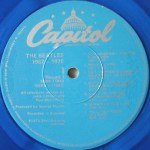
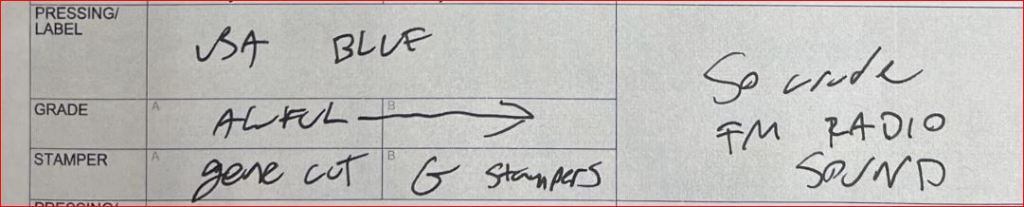
FM Radio Sound on Blue Vinyl, Courtesy of a Mr. Gene Thompson

Hot Stamper Pressings of the Music of The Beatles Available Now

Here is how we described a recent Shootout Winning copy of 1967-1970:

This vintage import 2-LP compilation set boasts STUNNING Shootout Winning Triple Plus (A+++) sound or close to it on all FOUR sides. These pressings are rich, smooth and sweet, with plenty of Tubey Magic and little of the grain and grunge of most Brits (and don’t get us started on the domestics).

You get clean, clear, full-bodied, lively and musical ANALOG sound from first note to last. Like most compilations, some songs sound better than others, but “Don’t Let Me Down” and “Come Together” are two that really stand out here. For those of you out there who have never tried one of our Hot Stamper Beatles records, this may be the best sound you’ve ever heard from them. The CDs — even the new ones — sure don’t sound like this!

We are on record as finding the British pressings of 1967-1970 too bright; certainly most of them are anyway. The original domestic pressings, as anyone who has ever played one can attest, mastered at Sterling no less, are absolutely godawful.

Allow us to add one more to that group of pressings to avoid, the blue vinyl domestic pressings mastered by Gene Thompson. Based on how awful this pressings sounds, it would probably be wise to avoid his work in general.

The only artists who have earned the honor (ahem) of having their very own page on this blog are The Beatles. For those of you interested in learning more about their often amazing recordings, feel free to dig in to your heart’s delight.

(more…)

These Two Return to Forever Albums Didn’t Make the Grade

Hot Stamper Pressings of Jazz Rock Fusion Albums Available Now

Pictured are two Return to Forever albums we auditioned at some point — who knows when? — and found wanting (especially at the prices we charge).

Without going into specifics — our notes are long gone at this point — we’ll just say these two albums suffer from weak music, weak sound, or both, and therefore do not deserve a place in most audiophile collections — unless that audiophile happens to be a huge fan of the band.

My guess is that if these two records are sitting in your collection, they have not been played in many years, if ever. If you own either of these two albums, pull them out and play them. You may find that making more room on your shelves for records you actually enjoy is easier than you thought.

Our Pledge of Service to You, the Discriminating Audiophile 

We play mediocre-to-bad sounding pressings so that you don’t have to, a free service from your record-loving friends at Better Records.

Having the wherewithal to audition so many records puts us in a unique position to help audiophiles looking for higher quality sound. (Or, more accurately, that small subset of audiophiles looking for the highest quality pressings who also have a great deal of disposable income to devote to them.)

Yes, we have the obvious resources that would be needed, the staff and the budget.

More important than either of those, we came up with a new (sort of) and much more successful (definitely) approach.

We’ve learned through years of experimentation that there is no reliable way to predict which pressings will have the best sound for any given album.

The impossibility of predicting the sound of pressings is something that we’ve learned to accept as axiomatic. As a scientifically-oriented person and a born skeptic, this was a concept I was quick to embrace.

The more time I spend in this hobby, the more I realize it is beyond dispute. Like it or not — and, based on what I read on forums and such, there are apparently a goodly number of audiophiles who don’t like it — it is the undeniable reality underlying the nature of vinyl pressings.

Our Seven Step Program

With that in mind, finding better sounding pressings of any given recording can be achieved by following these seven steps:

(more…)

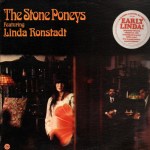
Take Our Advice and Skip the Original of The Stone Poneys

More of the Music of Linda Ronstadt

The originals from 1967 have never impressed us much.

Click on the links below for more records that sound best to us on the right reissue pressing 

Here are some Hot Stamper pressings that we think sound their best on the right reissue (the ones we sell, obviously; there are plenty of reissues that don’t have good sound, but the ones we offer handily beat the originals we’ve — and no doubt you’ve — heard).

Here are all the titles we’ve reviewed to date that have the potential to sound their best on the right reissue

On this album the sound varies quite a bit from track to track.

The best tracks are rich, tubey and clear; the worst thin, bright and hard. 

The first track on side one rarely stayed clean when loud, but here for the most part it does. It’s a good test for whether or not you have a copy with high quality, low distortion mastering.

Listen for the least amount of smear and congestion and the most resolution.

The second track is richer and tubier – it proves that side one is mastered correctly.

(more…)

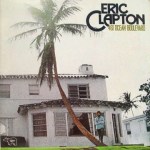
Why Are the Earliest Stampers on 461 Ocean Boulevard So Bad Sounding on Side Two?

Hot Stamper Pressings of the Music of Eric Clapton Available Now

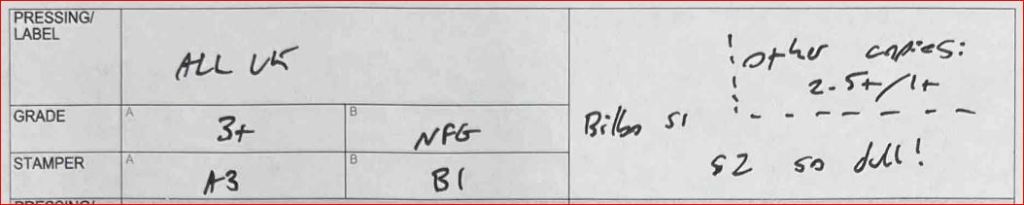
The UK pressings with the side two stampers shown below have not done well in our shootouts for a number of years now. If you own a copy with B-1 stampers on side two, the good news is that we can get you a much better sounding copy of 461 Ocean Boulevard than you have ever heard.

Stamper numbers are not the be-all and end-all in the world of records, a subject we discuss below, but after hearing too many copies with these stampers and substandard sound, from now on we are going to focus our attention on the stampers that do well and avoid copies with the B-1 marking on side two.

Bilbo cut the A-3 side one and did a great job; his side one won our most recent shootout.

Whoever cut side two really screwed it up, as you can see from our notes for our last two shootouts.

When it comes to stampers, labels, mastering credits, country of origin and the like, we make a point of revealing very little of this information on the site, for a number of good reasons we discuss here.

The idea that the stampers are entirely responsible for the quality of any given record’s sound is a mistaken one, and a rather convenient one when you stop to think about it. Audiophiles, like most everybody else on this planet, want answers.

In the world of records, there aren’t many, but B-1 for side two of this album is a clear exception to the rule that the stamper numbers are one part of a multi-faceted puzzle. In this case, B-1 is awful and is best avoided at all costs.

The Biz

Being in the shootout business means we have no way to avoid such realities, which is why it is so easy for us to accept them.

The amateurs and professionals alike who review records for audiophiles want there to be clear-cut answers for every album they write about. Uncertainty and trade-offs upset them no end.

We recognized twenty years ago that the empirical pursuit of record knowledge, practiced scientifically, must be understood as incomplete, imperfect, and provisional.

That is not going to change no matter how upsetting anyone may find it.

(more…)

Soultrane Sucks on the Early OJC

Hot Stamper Pressings of the Music of John Coltrane Available Now

The early OJC reissues from 1982 of this title are awful.

And whatever Heavy Vinyl they’re churning out these days is probably every bit as bad, but — I’m guessing, never played one so don’t hold me to it — in the opposite way.

The OJC is thin and bright, and the modern reissue (I’m assuming, based on playing scores of them) is probably thick, veiled, overly smooth, lacking in space and boosted in the bass — because that’s the sound that audiophiles record buyers seem to like these days.

Without the excellent sounding 60s and 70s reissues that we are still able to find in audiophile playing condition, all that we would have available to buy for our shootouts would be the originals. 

At the big bucks those records go for nowadays, shootouts would be impossibly expensive.

So our thanks go to Rudy for doing a good job on these later pressings!


UPDATE 2025

We were surprised to find that the right stampers on the new OJC pressings can have very good sound. Click on the link below to that Soultrane has joined the group of good sounding modern OJC pressings.

(more…)