Decca/London/Argo – Reviews, Commentaries, Letters, etc.

Chabrier – Our Four Plus Shootout Winner

Hot Stamper Pressings of the Music of Chabrier Available Now

The Espana side earned our rare and coveted Four Plus A++++ grade, which is strictly limited to pressings (really, individual sides of pressings) that take a given recording to a level we’ve never experienced before and had no idea could even exist. We estimate that about one per cent of the Hot Stamper pressings we come across in our shootouts earn this grade. You can’t get much more rare than that.

Our lengthy commentary entitled Outliers & Out-of-This-World Sound talks about how rare these kinds of pressings are and how to go about finding them.

We no longer give Four Pluses out as a matter of policy, but that doesn’t mean we don’t come across records that deserve them from time to time.

Here you will find monstrous size and dynamic power, thanks to the brilliant Decca engineering of Roy Wallace. Without a doubt the most spectacular sound we’ve ever heard from CS 6438.

This Beyond White Hot Stamper London pressing has some of the loveliest orchestral music reproduction we know of. Man, this copy sure has it going on: it’s super clean and clear, tonally correct from top to bottom, with all of the weight of the orchestra down low on side one which is very, very hard to come by on this record!

And all that weight and energy down low is what really makes Espana magical. You won’t believe the sound!  (more…)

A Must Own Performance of the 1812 Overture by Alwyn on Decca

Hot Stamper Pressings of Orchestral Spectaculars Available Now

Years ago we found a very special copy of this album in a shootout and gave it a grade of A++++. We don’t give out that grade anymore, but we gave it out to this side one back in the day. We describe the sound of that side one below.

A BEYOND White Hot Quadruple Plus side one – hear Tchaikovsky’s 1812 in Demo Disc sound. This is the most exciting and beautifully played 1812 we know of, with the best sound ever to boot on this copy. This is an exceptional Decca remastering of a superb Golden Age recording on very good vinyl.

The WHOMP FACTOR on this side one has to be heard to be believed. If you’ve got the woofers for it this record is going to rock your world!

Side One (1812 Overture)

Off the charts, the best we have ever heard this work sound. Big, rich, clean and clear barely begins to do this side justice. The strings are wonderfully textured and not screechy in the slightest.

The brass is big and clear and weighty, just the way it should be, as that is precisely the sound you hear in the concert hall, especially that part about being clear: live music is more than anything else completely clear. We should all strive for that sound in our reproduction of orchestral music.

Not many recordings capture the brass this well. (Ansermet on London comes to mind of course but many of his performances leave much to be desired. Here Alwyn is on top of his game with performances that are definitive.)

Here’s what you get on this side one:

The most dynamic sound we have ever heard for any side of this album.

The most weight and power we have ever heard for the 1812, and as you can imagine, for this work to have the kind of power this pressing has was nothing less than a THRILL to hear. Who knew? Until we played this copy, not us!

The most depth and space we have ever heard on this album.

To earn our coveted Three Plus (OR BETTER) rating here at Better Records all you have to do is be the best copy we’ve ever played. Just be right in every way (or almost every way; no record can be perfect, but some, such as this one, seem to us to get pretty darn close). (more…)

Neither the Sound Nor the Performance Here Make the Grade

Hot Stamper Pressings of the Music of Rimsky-Korsakov Available Now

In our experience this is not the recording of the work to buy, on either Decca or London. Of the two recordings by Ansermet, we much prefer the one made with the Suisse Romande in 1961 to that of the one he recorded with the Paris Conservatoire in 1954 (which was his second recording of the work with them).

We did a monster shootout for this music in 2014, one we had been planning for more than two years. On hand were quite a few copies of the Reiner on RCA; the Ansermet on London (CS 6212, his second stereo recording, from 1961, not the earlier and noticeably poorer sounding recording from in 1959); the Ormandy on Columbia, and a few others we felt had shown potential.

The only recordings that held up all the way through — the fourth movement being THE Ball Breaker of all time, for both the engineers and musicians — were those by Reiner and Ansermet.

This was disappointing considering how much time and money we spent finding, cleaning and playing those ten or so other pressings.

Here it is a year later and we’re capitalizing on what we learned from the first big go around, which is simply this: the Ansermet recording on Decca/London can not only hold its own with the Reiner on RCA, but beat it in virtually any area. The presentation and the sound itself are both more relaxed and natural, even when compared to the best RCA pressings.

The emotional content of the first three movements (all of side one) under Ansermet’s direction are clearly superior. The roller coaster excitement Reiner and the CSO bring to the fourth movement cannot be faulted, or equaled. In every other way Ansermet’s performance is the one for me.

There are other Deccas and Londons that we’ve cleaned and played recently that were disappointing, and they can be found here.

Our Pledge of Service to You, the Discriminating Audiophile 

(more…)

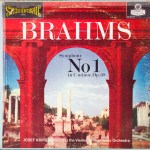
Brahms / Symphony No. 1 in C Minor / Krips

Decca and London Hot Stamper Pressings Available Now

Hot Stamper sound of both sides of this fairly quiet London Blueback pressing of CS 6110.

It has been our experience that good sounding Brahms Symphonies are exceedingly difficult to find on vinyl. This may in fact be the first one to make it to the site. This copy has many nice sonic qualities which we discuss in more detail below. It’s Old School but enjoyable. Krips’ performance with the Vienna Phil is excellent.

Side One

A+ sound, rich and full but a bit thick and congested, a sound that is quite common to Blueback pressings as a rule.

Side Two

A+, fairly clear and open, yet still rich, but there is quite a bit of compression, which makes the quiet passages sound amazing but causes the loudest sections to become congested.

A Reviewer Liked this London a Whole Lot More Than I Did – A Cautionary Tale

Hot Stamper Orchestral Imports on Decca & London

While digging around the web I ran into a site called From Miles to Mozart, which purports to be “An exploration of the incredible world of classical and jazz recordings”

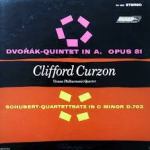
Fair enough. Here is what the reviewer had to say about a London we did not think sounded very good, CS 6357. At the time, he was most of the way through a fairly complete survey of London Bluebacks, and when those were done he went on to review a Whiteback pressing of this London, which appears to be the only pressing he had on hand. (We of course had only the one as well.)

I’d run out of blue so next up was CS 6357 with its retro FFSS label, a white back FFSS. Clifford Curzon scores a knockout with the Dvorak Quintet with a very refined late Blueback sound; truly transcendental sound of the highest order. Another white back FFSS followed in CS 6379 Mozart Clarinet Quintet with a magical clarinet but some edginess at times with some of the instruments. Overall the Clarinet Quintet had very strong sound to rival most any Blueback. Unfortunately, the Mozart Divertimenti on side 2 was not as assured with quite a few signs of strain in the highs indicative some early transistor changing the precious Blueback sound. CS 6379 was recorded by Smith and Parry October, 1963 at Sofiensaal, Vienna with the LP coming out in May of 1964. CS 6357 was recorded in Sofiensaal, Vienna by Culshaw and Parry in October 1962 with the LP in October 1963. Overall two strong LP’s without a Blueback! (Well, CS 6357 does exist with a Blueback.)

He has some ideas about “precious Blueback sound” and the half-speed mastering setup used to achieve them. I will leave that for others to discuss, mostly because I could not seriously entertain this fellow’s writing once I found out what he had to say about one of Mobile Fidelity’s earliest half-speed mastered releases:

Zubin Mehta Conducts Music from Star Wars and Close Encounters of the Third Kind (MFSL 1-008)

Comments: If you want to hear what audiophile vinyl sounds like, this is a great way to start. Whether you like science fiction movies or not, this record is a must hear … and try to turn up the volume if you can. This Mobile Fidelity Sound Lab pressing of Decca SXL 6885 (London ZM 1001) is one of the most incredible sounding orchestral recordings I have ever heard. It may not be the recording used for the movies (John Williams conducted those himself), but it sounds significantly better in terms of recording quality. Talk about lifelike presence, huge dynamic range, bass depth with real visceral impact — this record has DEMONSTRATION written all over it. Even the Cantina Band track gives you the impression of an alien jazz/pop band playing right before you. I was fortunate enough to get my copy for free from a friend, and only recently did I realize that this album sells for some money. Looking for a change from the same old EMI, Decca, RCA, Mercury, DG, or Philips? Try this one.

If this is your idea of an audiophile Demo Disc, you are setting the bar awfully low, about even with the height of the carpeting.

I consider it a piece of mid-fi audiophile trash, one that I never bothered to discuss on the blog.

Were I to grade it today I would probably give it a D for sound and an F for music. I remember playing it back in the late-70 or early-80s and wondering what on earth was the appeal of such a cheesy, lowest-common-denominator schlockfest.

If this London LP isn’t the perfect example of a pass/not-yet record, I can’t imagine what would be.

We Know the Record Well

Years ago I did a little shootout with a few of the early London pressings of the album — which were also mastered by Stan Ricker, not sure if many of you out there knew that — as well as some later pressings not cut by SR, and of course the MoFi.

The MoFi was clearly better than any of the three regular London pressings, as they were just not very good sounding at all, suffering from a problem which makes most later Londons hard to enjoy. That problem is opacity.

For classical and orchestral music, it’s the kiss of death.  It is also one of the main reasons we like so few orchestral recordings pressed on Heavy Vinyl. Most of them badly lack transparency, a sonic issue we wrote about more than a decade ago.

(more…)

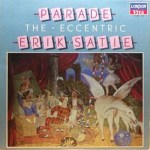
Satie / Parade – The Eccentric Erik Satie

This contains various works by Satie as performed by Camarata, Bernard Herrmann, London Philharmonic and The London Festival Players.

Obviously these were Phase 4 recordings which have been compiled on this album from 1973. The sound is quite good: very transparent and lively. It does not have the tubey magic that the best of the Golden Age recordings so often have in abundance, but the tonal balance is correct and the overall sound is quite good.

This album contains many of Satie’s most famous works on one LP. I can’t imagine that you will find this music easy to come by on other pressings.

Handel / The Water Music / Royal Fireworks / Szell / LSO

More of the music of George Frederick Handel (1685-1759)

The Royal Fireworks sound amazing on other copies I’ve heard of this album, the best I’ve heard. DEMONSTRATION QUALITY SOUND on Side 2. This copy should be the same.


UPDATE:

This was written 20 years ago, and now we know that that is not how records work! Still, if you see this record at a good price, pick it up and play side two.


This is an Older Classical/Orchestral Review

Most of the older reviews you see are for records that did not go through the shootout process, the revolutionary approach to finding better sounding pressings we started developing in the early 2000s and have since turned into a veritable science.

We found the records you see in these older listings by cleaning and playing a pressing or two of the album, which we then described and priced based on how good the sound and surfaces were. (For out Hot Stamper listings, the Sonic Grades and Vinyl Playgrades are listed separately.)

We were often wrong back in those days, something we have no reason to hide. Audio equipment and record cleaning technologies have come a long way since those darker days, a subject we discuss here.

Currently, 99% (or more!) of the records we sell are cleaned, then auditioned under rigorously controlled conditions, up against a number of other pressings. We award them sonic grades, and then condition check them for surface noise.

As you may imagine, this approach requires a great deal of time, effort and skill, which is why we currently have a highly trained staff of about ten. No individual or business without the aid of such a committed group could possibly dig as deep into the sound of records as we have, and it is unlikely that anyone besides us could ever come along to do the kind of work we do.

The term “Hot Stampers” gets thrown around a lot these days, but to us it means only one thing: a record that has been through the shootout process and found to be of exceptionally high quality.

The result of our labor is the hundreds of titles seen here, every one of which is unique and guaranteed to be the best sounding copy of the album you have ever heard or you get your money back.

An Extraordinary Recording of the Beethoven Septet – This Is Why You Must Do Shootouts

Hot Stamper Pressings of the Music ofBeethoven Available Now

My first note on side one is “HTF” — Hard To Fault, for the sound was both rich and sweet, with easily recognized, unerringly correct timbres for all seven of the instruments which are heard in the work. The legendary 1959 Decca Tree microphone setup had worked its magic once again.

And, as good as it was, we were surprised to discover that side two was actually even better! The sound was more spacious and more transparent; we asked ourselves, how is this even possible?

Hard to believe but side two had the sound that was TRULY Hard To Fault.

This is precisely what careful shootouts and critical listening are all about.

If you like Heavy Vinyl, what exactly is your frame of reference? How many good early pressings could you possibly own, and how were they cleaned?

Without the best pressings around to compare, Heavy Vinyl can sound fine. It’s only when you have something better that its faults come into focus. (We, of course, have something much, much better, and we like to call them Hot Stampers!)

Side One

A++, so good, yet in comparison to side two we realized that it was not as present, spacious and transparent as it SEEMED.

Side Two

A+++, White Hot!

Ah, here was the sound we didn’t know we were missing. So big and open, with space for every player, each clearly laid out across the stage. This is Hi-Fi at its best.

(more…)

Witches’ Brew – Reviewed in 2007

Hot Stamper Pressings of Living Stereo Titles Available Now

This review from 2007 is way off the mark. We see now just how wrong we were.

To be honest, in 2007 we had a lot to learn. We’ve worked very hard to learn it over the ensuing years, and we have no intention of stopping as long as people keep buying our Hot Stamper pressings.

2007, Here Goes

DEMONSTRATION QUALITY SOUND, of a sort. As I’ve said elsewhere on the site, this is not my idea of natural tonality. It’s not trying to be a realistic recreation of music performed in the concert hall. It’s a blockbuster to be impressive when played on an audio system in your home. On that level is succeeds.

As for the music, I have long held that the Danse Macabre on this album is the best ever. I probably still agree with that [not anymore, here’s a better one], but so much of the material on this record is amazingly good that that’s actually kind of a left-handed compliment. The entire side 2 is outstanding from start to finish.

The excerpt on side 1 from Pictures at an Exhibition and the complete A Night on Bare Mountain are both played with a kind of energy and orchestral technical quality that makes these pieces come alive right in your living room.

(more…)

The Music of Leonard Bernstein – Our Four Plus Mind Blowing Shootout Winner

More music written or performed by Leonard Bernstein

This London Phase 4 British import has some of the most SPECTACULAR sound I have ever heard reproduced from disc. The sound is so BIG and BOLD that it handily puts to shame 95% or more of all the Golden Age Shaded Dogs, London Bluebacks, Mercury Living Presence’s, EMI’s and Decca’s we’ve ever played. If we had a Classical Top 100 list, this record would belong in a Top Ten taken from it, right near the top judging by what I heard when I played it.

Side two here is BEYOND White Hot, earning a sonic grade of A++++! I don’t know that any other copy has earned such a high grade for side two but this one sure did. It blew our minds.

If you have a system with the speed, power and size to play this record properly (yes, you will need all three and a whole lot more), it’s hard to imagine it would not qualify as the best sounding classical recording you’ve ever heard. Demo Disc barely begins to do it justice. What sound. What music. What a record! Side two is where the real action is on this album, and it is presented here with SPECTACULAR AUDIO FIDELITY the likes of which you may have never experienced.

(more…)