Albums to Improve Your Playback

Putting Your System to the (Violin and Piano) Test

Hot Stamper Pressings with Jascha Heifetz Performing

Do you want a recording that is going to put your system to the test? Well this is that record! The violin is REAL. As you compare equipment or tweak your system, you will hear the sound of that violin change and it should be obvious when it gets better and when it gets worse. 

The piano is also very well recorded.

If you lose some body to the piano you’re probably going in the wrong direction.

But since that direction would make the violin almost unbearable sounding, I’m going to guess that would be easily recognized as a mistake.

The balance between those two instruments on this recording is perfection, so if you get this record right, you’re making progress of the most important kind: toward musical naturalness.

Otherwise this violin, at least on the Kreutzer Sonata, is going to tear your head off.

Our previous Hot Stamper review follows.

The Beethoven, which takes up side one, is recorded in a fairly dry acoustic. The sound of the violin is very immediate. It’s quite a showpiece for Heifetz.

I much prefer the Bach on side two, however, which is recorded within a more natural hall acoustic. Sir Malcom Sargent conducts and Eric Freidman plays the second violin in this concerto, which is also his debut for RCA, according to the liner notes.

This piece was recorded in England and to me it has the rich, sweet, glorious sound of Living Stereo at its best.

(more…)

On Discovered Again, Does It Sound Like the Snare Is Wrapped in a Towel on Your Copy?

Hot Stamper Pressings of Direct-to-Disc Recordings Available Now

The bulk of this commentary was written in 2008 and is based on the shootout we had just done, our first for the album. It has been amended a number of times since.

I bought my first copy of Discovered Again in 1976 upon its release. I was a big fan of the label at the time. The Missing Linc had been a revelation to me years before in terms of how good music could sound in the home (or apartment as the case may be). I wrote a bit about it here.

I credit that amazing record as well as Discovered Again as fundamentally important in helping me advance in this devilishly difficult hobby of ours. Back in those dark days of the 70s, although I was completely clueless at the time about pretty much everything having to do with vinyl and equipment, I can take some solace in the fact that everybody else was every bit as clueless as I was too.

This blog is dedicated to sharing some of what I’ve learned — with the unflagging help of my staff of course — about records and audio over the last fifty years.


The sound quality of the typical pressing of Discovered Again leaves much to be desired.

Two areas are especially lacking as a rule: the top end tends to be rolled off, and there is a noticeable lack of presence, which can easily be heard in the drum sound.

The snare sounds like it’s covered with a towel on most copies of this album.

How does that even happen?

Who knows? Even though the mastering is fixed at the live event, there are many other variables which no doubt affect the sound. The album is cut on two different lathes — M (Master) and S (Slave), and pressed in two different countries: Japan and Germany. Many mothers were pulled from the acetates and many, many stampers made from those mothers. (I saw one stamper marked number 15!)

Bottom line? You got to play ’em to know how they sound, just like any other pressing. If no two records sound the same, it follows that no two audiophile records sound the same, a fact that became clear early on in the listening.

Of course not many audiophiles are in a position to shootout six copies of Discovered Again, and I’m not sure most people would have the patience to do it. Here at Better Records we have a whole system set up to do that, so we waited until we had a pile of them, got them all cleaned up, and off to the races we went.

What Else to Listen For

Listen to the harmonics around the cymbals and bells on Git Along Little Dogies — on the best copies you can really hear the transients of the cymbals and percussion, so important to the actual sound of those instruments. (More records that are good for testing percussion can be found here.)

The stand-up acoustic bass is amazingly well recorded on this album; it’s so rich and full-bodied. You will have a hard time finding a string bass that sounds better.

Track after track, the sound is surprisingly open and airy. Dave’s keyboards throughout have wonderful presence; on the best copies they really jump out of the speakers. (A good test for midrange presence.)

(more…)

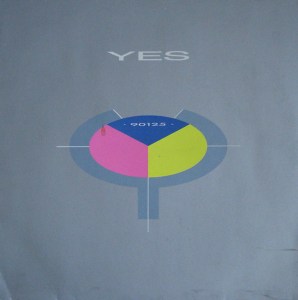
Yes – 90125

More Yes

  • A vintage Atco import pressing that was giving us the big and bold sound we were looking for, earning solid Double Plus (A++) grades or close to them from top to bottom – exceptionally quiet vinyl too
  • This side one is spacious, solid and dynamic with huge bass and analog richness that’s hard to find on this album, and side two is not far behind in all those areas
  • There’s an abundance of life and energy here, and the vocals sound just right (particularly on side one)
  • 4 1/2 stars: “A stunning self-reinvention by a band that many had given up for dead, 90125 is the album that introduced a whole new generation of listeners to Yes… there’s nary a duff track on the album.”

I’m pleased to report that we can now add 90125 to our small list of 80s albums that can sound excellent on the right pressing. Drop the needle on “Owner Of A Lonely Heart” and we bet you’ll agree!

So many copies we played were full of that digital grit and grain that we hear on so many records from the era. This one is an entirely different story. It has wonderful analog qualities, with more richness and smoothness than most pressings.

The recording itself is outstanding: punchy and lively with an especially beefy bottom end, the kind a good rock record needs. But you would never know it by playing the average pressing you might pick up for five bucks at your local used record store. The typical copy of this record is pretty average sounding. Let’s face it: every mastering mistake that can be made will be made sooner or later with mass-produced vinyl like this.

(more…)

In the Market for New Speakers? See How Well They Handle the Energy of Far More Drums

Hot Stamper Pressings of the Music of Dave Brubeck Available Now

The drum solo Joe Morello lets loose on Far More Drums is one of the best on record. I was playing that song recently and it occurred to me that it is practically impossible for a screen or panel speaker of any design to reproduce the sound of those drums properly, regardless of how many subs you have.

Most of the music is not in the deeper bass anyway. It’s the whack of instruments whose energy is in the lower midrange and mid-bass that a screen speaker will struggle with.

A good large-driver dynamic speaker fed by fast electronics can handle the energy in that range with ease.

This is the album you need to take with you next time you head to your local stereo store to audition speakers.

It will help clarify the issues. Screen speakers do many things well, but drums are not one of them, at least in my experience they aren’t. If drums are important to you, do yourself a favor and buy a dynamic speaker, the bigger the better.

brubeck in the studio733

Time Further Out, like most of the classic Brubeck albums, is a big speaker record. It requires a pair of speakers that can move air with authority below 250 cycles and play at fairly loud levels. If you don’t own speakers that can do that, this record will never really sound the way it should.

(more…)

The Yes Album – Another Good Reason to Get Deeper into Audio

Hot Stamper Pressings of the Music of Yes Available Now

At its best, this album is a Big Speaker Prog-Rock opus with tremendous power and dynamic range, but it takes a special pressing to really bring the album to life. 

These guys — and by that I mean this particular iteration of the band, the actual players that were involved in the making of this album — came together for the first time and created the sound of Yes on this very album, rather aptly titled when you think about it.

With the amazing Eddie Offord at the board, as well as the best batch of songs ever to appear on a single Yes album, they produced both their sonic and musical masterpiece — good news for audiophiles with Big Speakers!

Drop the needle on a top copy and you will find yourself on a Yes journey the likes of which you have never known.

And that’s what I’m in this audiophile game for.

The Heavy Vinyl crowd can have their dead-as-a-doornail, wake-me-when-it’s-over pressings that are typically cheap to buy and tend to play quietly.  (Here’s one I couldn’t sit through with a gun to my head.)

The amount of effort that went into the recording of this album is comparable to that expended by the engineers and producers of bands like Supertramp, ELP, The Who, Jethro Tull, Ambrosia, Pink Floyd and far too many others to list.

It seems that no effort or cost was spared in making the home listening experience as compelling as the recording technology of the day permitted. Tubey Magical British Prog Rock just doesn’t get any better.

(more…)

This Carmen Ballet Is a Great Test Disc for Shrill, Gritty Strings

Hot Stamper Pressings of the Music of Georges Bizet Available Now

UPDATE 2025:

I’ve added some tubes-versus-transistors commentary at the bottom of this posting.


This Angel Melodiya pressing of Bizet’s Carmen, rearranged by Soviet composer Rodion Shchedrin for strings and 47 percussion instruments, has two incredible sides. Demo Quality Sound barely begins to do it justice. If you have the system to play it, this copy is a KNOCKOUT.

But boy is it a difficult record to reproduce. You better have everything working right when you play this one — it’s guaranteed to bring practically any audiophile system to its knees.

Speed, resolving power and freedom from distortion are what this record needs to sound its best.

Is your system up to it? There’s only one way to find out.

And if you have any peaky audiophile wire in your system, the kind that is full of detail but calls attention to itself, you are in big trouble with a record like this.

More than anything, this is a record that rewards your system’s neutrality.

Testing

This is a superb Demonstration Disc, but it is also an excellent Test Disc. The sound of the best copies is rich, full-bodied, incredibly spacious, and exceptionally extended up top. There is a prodigious amount of musical information spread across the soundstage, much of it difficult to reproduce.

Musicians are banging on so many different percussion instruments (often at the far back of the stage, or, even better, far back and left or right) that getting each one’s sonic character to clearly come through is a challenge — and when you’ve met it, a thrill. If you’ve done your homework, this is the kind of record that can show you what you’ve accomplished.

On the best copies the strings have wonderful texture and sheen. If your system isn’t up to it (or you have a copy with a problem in this area), the strings might sound a little shrill and possibly gritty as well, but I’m here to tell you that the sound on the best copies is just fine with respect to string tone and timbre. You will need to look elsewhere for the problem.

(more…)

Key Tracks to Play on Belafonte at Carnegie Hall

Hot Stamper Pressings of Pop and Jazz Vocal Albums Available Now

Harry Pearson brought this record to the attention of audiophiles with his TAS list a long time ago, and rightfully so: it’s an amazing recording.

We happen to love the music too, which makes it one of the most recommendable records we have ever offered. If you can find a better combination of demo disc sound, with music worth the hassle and expense of reproducing it properly, more power to you. We sure can’t.

Because this is a live recording, because it has lots of natural instruments as well as a vocal, because it was recorded in the Golden Age by one of the greatest labels of all time, RCA, by Bob Simpson no less — for this and many other reasons, it has to be considered one of the most amazing recordings in the history of the world.

That said, it is our contention (and the basis of our business model) that the brilliant quality of the recording can only be appreciated if you have the pressing that captured the sound that the engineers recorded. In other words, a Hot Stamper.

From an audiophile point of view, you get to hear live musicians and all the energy they bring to this music, all on the stage at the same time: strings, brass, percussionists, and Harry Belafonte front and center. Tube mics (and not too many of them), a tube tape recorder, RCA’s superb engineering and all-tube mastering chain ensure that the “breath of life” is captured intact.

I know of no better live popular vocal recording on the planet.

(more…)

Listening in Depth to Country Life

Hot Stamper Pressings of the Music of Roxy Music Available Now

The domestic, German, Japanese and Dutch pressings are not remotely competitive with the Brits on this album (which is not true for all Roxy’s albums but clearly true for this one, Siren being the obvious exception to the rule).

Now for those of you who are not big Roxy Music fans and don’t know this music, this album may take a bit of getting used to. We assure you it will be well worth your while. We think it’s brilliant.

And if you do consider yourself a fan of Art Rock, every Roxy album should be on your shelf, right up there with your Bowie, Pink Floyd, Supertramp, Eno, Peter Gabriel, 10cc and too many others to list. (Most are personal favorites of mine, albums I have played hundreds of times over the last 40 years and plan to keep playing until my ears give out.)

Side One

The Thrill of It All
Three and Nine

On the best copies this track is the very definition of Tubey Magical richness and smoothness.

All I Want Is You

A little thinner and brighter than the other tracks on this side as a rule.

Out of the Blue

The best guitar solo ever played on the violin. Go Eddie!

If It Takes All Night

Side Two

Bitter Sweet

The best copies have monstrous bass on this track, along with huge amounts of space. Again, the Tubey Magic can be off the charts here.

Triptych
Casanova

The vocals on this track will always spit to some degree. The cleanest, most tonally correct sibilance is what you are looking for on this track. That, and amazing rock energy!

A Really Good Time
Prairie Rose


Want to find your own top quality copy?

Consider taking our moderately helpful advice concerning the pressings that tend to win our shootouts.

(more…)

Creedence Clearwater Revival – Green River

More Creedence Clearwater Revival

  • Amazing sound throughout this early Fantasy pressing of CCR’s Roots Rock classic, with both sides earning INSANELY GOOD Shootout Winning Plus (A+++) grades
  • Here are just a few of the things we had to say about this incredible copy in our notes: “big and tubey and 3D”…”jumping out of the speakers”…”huge and rich and open”…”great energy and weight”…”crazy bass and snare”…”massive and tubey”
  • An essential Must Own for every Classic Rock collection, this LP includes some of the band’s biggest hits: “Green River” and “Bad Moon Rising,” “Lodi,” “Wrote a Song for Everyone,” and plenty more
  • Problems in the vinyl are sometimes the nature of the beast with these vintage LPs, but once you hear how incredible sounding this copy is, you might be inclined, as we were, to stop counting stitches and just be swept away by the music
  • 5 stars: “If anything, CCR’s third album Green River represents the full flower of their classic sound initially essayed on its predecessor, Bayou Country. One of the differences between the two albums is that Green River is tighter, with none of the five-minute-plus jams that filled out both their debut and Bayou Country, but the true key to its success is a peak in John Fogerty’s creativity.”

(more…)

Brewer & Shipley / Down In L.A.

More Brewer and Shipley

  • Brewer & Shipley’s debut LP is back on the site for only the second time in years, here with solid Double Plus (A++) grades or close to them throughout this vintage A&M pressing
  • Fairly quiet vinyl too – we can hardly believe that we found one that plays like a normal rock and pop record after finding one stitchy, ticky, groove-damaged pressing after another for the last ten years
  • Side one has the smooth sweet analog sound we were listening for – it’s rich and tubey, with clarity and freedom from smear that make it the best of both worlds, and side two is not far behind in all those areas
  • “Of all the many folkys to make a transition to electric folk-rock in the 1960s, Brewer & Shipley retained more of the wholesome qualities of early-60s folk revival harmonizing than almost anyone.”

Brewer and Shipley’s first and only release for A&M has long been a Desert Island Disc in my world. I consider it one of the top debuts of all time, although it’s doubtful many will agree with me about that since I have yet to meet anyone who has ever even heard of this album, let alone felt as passionate as I do about it.

To me this is a classic of Hippie Folk Rock, along the lines of The Grateful Dead circa American Beauty, surely a touchstone for the genre. It’s overflowing with carefully-crafted (B and S apparently were obsessive perfectionists in the studio) inspired material and beautifully harmonized voices backed by (mostly) acoustic guitars. The Beatles pulled it off masterfully on Help and Rubber Soul.

All three are built on the same folk pop sensibilities. Tarkio, album number three, is clearly the duo’s masterpiece, but this record comes next in my book, followed by Weeds, their second album and first for Kama Sutra. After Tarkio it’s all downhill.

(more…)