Focus-Rock, Pop and Soul

Here you will find rock, pop, soul, etc. albums we think we know well, having cleaned and played them by the score over the course of many decades.

There are currently more than 200 entries, but the number could easily exceed 1000 considering how many records we play every week in our shootouts. This is how we learn what we know, — because there is no other way.

The Best Pressings of Brothers in Arms Are Not Hard to Recognize

We try to be upfront with our customers that the Hot Stamper pressings of Brothers in Arms on our site have many nice qualities, but some of the best qualities of analog recordings from the 50s, 60s and 70s are not among them.

It would be foolish to pretend otherwise. We want our customers to know what to expect when they buy a modern recording, and, having played copies of this album (as well as Love Over Gold) by the score, we are qualified to tell them what even the best pressings do not do as well as we might like. In a recent listing we introduced one of the best sounding pressings from our last shootout this way:

  • Tonally correct from start to finish, with a solid bottom and fairly natural vocals (for this particular recording of course), here is the sound they were going for in the studio
  • Drop the needle on “So Far Away” – it’s airy, open, and spacious, yet still rich and full-bodied
  • We admit that the sound may be too processed and lacking in Tubey Magic for some
  • When it comes to Tubey Magic, there simply is none — that’s not the sound Neil Dorfsman, the engineer who won the Grammy for this album, was going for
  • We find that the best properly-mastered, properly-pressed copies, when played at good loud levels on our system, give us sound that was wall to wall, floor to ceiling, glorious, powerful and exciting — just not Tubey Magical

The notes you see below catalog the qualities of our 2025 Shootout Winner.

Side One

Track One (So Far Away)

(more…)

I Don’t Care What Anybody Says, One Eighty Is a Great Album

Hot Stamper Pressings of the Music of Ambrosia Available Now
This is smooth, rich ANALOG at its best.  Easy on the ears as we like to say.

One Eighty is clearly the poppier side of Ambrosia, containing as it does two of their highest-charting mainstream hits, Biggest Part of Me (#3) and You’re the Only Woman (#13). 

I myself of course prefer the proggy first two albums, which fallinto the broad category of Art Rock, where my favorite albums by Bowie, Peter Gabriel, Roxy Music, Supertramp, 10cc, later-period Beatles, Jethro Tull, Pink Floyd, Traffic and so many others from the last forty-plus years can be found.

These artists’ recordings tend to be big, powerful and exceedingly hard to reproduce, which, probably more than anything else, accounts for my becoming a serious stereo enthusiast right out of my teens.

(My mother had to co-sign the loan I needed to purchase the currently-state-of-the-art ARC SP3A-1 preamp I coveted. I remember it being $600+ at a time, back when I was earning roughly $2 an hour. That had to hurt, but I did it. Bought a D-75 amp after I paid it off too.)

The Music

One Eighty (recorded on 1/80, get it?) kicks off with a real rocker: Ready, which is a great name for an opening track and really gets the album off to a high-energy start. Side two opens with my favorite track on the album, Livin’ On My Own. I actually used to demonstrate my system with it: the bass is huge, way up in the mix and really punchy. Additionally there are powerful multi-tracked vocal harmonies in the chorus that are wall-to-wall, surprisingly dynamic, yet sweet (all things considered; this is a modern recording after all).

One Eighty has an excellent mix of rock and softer pop ballads. The last track, Biggest Part Of Me, no matter how many times you’ve heard it, on the radio or elsewhere, is an exceptionally well-produced (designed?) piece of songcraft that will tug at anyone’s heartstrings, anyone who has a heart that is (if I may quote the title of the best song Burt Bacharach ever wrote). On a big audiophile system it should be both powerful and emotional. (more…)

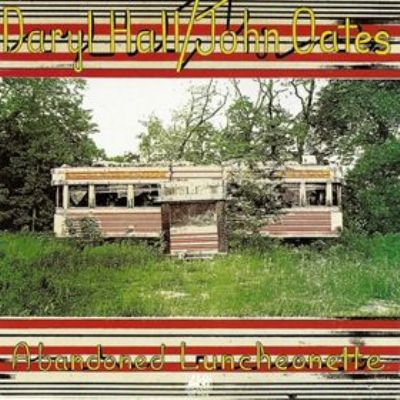
This Is the Most Amazing Record the Dregs Ever Made

dixiedregsHot Stamper Pressings of Jazz Rock Fusion Albums Available Now

This is the band’s Masterpiece as well as a personal favorite of yours truly.

It’s also a clear case of one and done, at least when it comes to vinyl. (The live album, Bring ‘Em Back Alive, shown below, is only available on CD, but it comes highly recommended as well. I listen to it regularly.)

If you want to hear what happens when five virtuoso instrumentalists manage to combine their talent for Jazz, Rock, Classical and Country (thanks god there aren’t any vocals) into a potent mix that defies classification and breaks all the rules, this is the one. It reminds me of Ellington’s famous line that there are only two kinds of music: good music and bad music. This is the kind of music you may have trouble describing, but one thing’s for sure — it’s good. In fact it’s really good.

This is the most AMAZING album the Dregs ever recorded, and now this wild amalgamation of rock, jazz, country, prog and classical music has the kind of sound I always dreamed it could have. It’s rich and smooth like good ANALOG should be. It’s also got plenty of energy and rock and roll drive, which is precisely where the famous half-speed falls apart.

Few audiophiles know this music, and that’s a shame. This record is just a delight from beginning to end.

I’m apparently not the only one who noticed how good the album is. In 1980 Dregs of the Earth received a Grammy nomination for Best Rock Instrumental Performance.

The notes for our recent shootout winner are shown below:

More amazing finds like this one can be found here.

(more…)

Room Treatments Bring Out The Big Speaker Whomp Factor

Hot Stamper Pressings of the Music of Sergio Mendes Available Now

UPDATE 2025

The first Sergio Mendes and Brasil ’66 album is one of those records that helped us dramatically improve the quality of our playback.


Only the best copies are sufficiently transparent to grant the listener the privilege of hearing all the elements laid out clearly, each occupying a real three-dimensional space within the soundfield. 

With recent changes to some of our room treatments, we now have even more transparency in the mids and highs, while improving the whomp factor (the formula goes like this: deep bass + mid bass + speed + dynamics + energy = whomp) at the listening position.

There’s always tons of bass being produced when you have three 12′ woofers firing away, but getting the bass out of the corners and into the center of the room is one of the toughest tricks in audio.

For a while we were quite enamored with some later pressings of this album — they were cut super clean, with extended highs and amazing transparency, with virtually none of the congestion in the loud parts you hear on practically every copy.

But that clarity comes at a price, and it’s a steep one. The best early pressings have whomp down below only hinted at by the “cleaner” reissues. It’s the same way super transparent half-speeds fool most audiophiles. For some reason audiophiles rarely seem to notice the lack of weight and solidity down below that they’ve sacrificed for this improved clarity. (Probably because it’s the rare audiophile speaker that can really move enough air to produce the whomp we are talking about here.)

But hey, look who’s talking! I was fooled too. You have to get huge amounts of garbage out of your system (and your room) before the trade-offs become obvious.

When you find that special early pressing, one with all the magic in the midrange and top without any loss of power down below, then my friend you have one of those “I Can’t Believe It’s A Record” records. We call them Hot Stampers here at Better Records, and they’re guaranteed to blow your mind. (more…)

Thick as a Brick Is a Top Test Disc for System Accuracy

Hot Stamper Pressings of the Music of Jethro Tull Available Now

From 2009 to 2010 this was our single go-to record for testing and tweaking our system.

Although we now use an amazing copy of Bob and Ray (the big band version of The Song of the Volga Boatmen located therein has to be one of the toughest tests we know of), we could easily go back to using TAAB.

Artificiality is the single greatest problem that every serious audiophile must guard against with every change and tweak to his stereo. cleaning system, room, electricity and everything else.

Since TAAB is absolutely ruthless at exposing the slightest hint of artificiality in the sound of the system, it is clearly one of the best recordings one can use to test and tune with. Here are just some of the reasons this was one of our favorite test records back in the day:

Dynamics

The better copies are shockingly dynamic. At about the three minute mark the band joins in the fun and really starts rocking. Set your volume for as loud as your system can play that section. The rest of the music, including the very quietest parts, will then play correctly for all of side one. For side two the same volume setting should be fine.

Bass

The recording can have exceptionally solid, deep punchy bass (just check out Barrie “Barriemore” Barlow’s drumming, especially his kick and floor toms. The guy is on fire).

Midrange

The midrange is usually transparent and the top end sweet and extended on the better pressings.

Tubey Magic

The recording was made in 1972, so there’s still plenty of Tubey Magic to be heard on the acoustic guitars and flutes.

(more…)

Jump Into the Fire with Harry Nilsson

Hot Stamper Pressings of the Music of Harry Nilsson Available Now

This commentary was written more than ten years ago.


Jump Into The Fire is one of the best tests we use for side two.

Copies that are too smooth make the “just bass and drums” intro sound thick and smeared.

Too bright and the vocals will tear your head off.

The “just right” copies rock from the start and never get too far out of control, even when Harry does. The best we can hope for is that the loudest vocal parts stay tolerable. Believe me, it is not that easy to find a copy that’s listenable all the way through, not at the high volume I play the record at anyway!

Again, with Nilsson screaming at the top of his lungs, you better have a good copy to get through this track, and even then it’s a bit of a problem.

A tough test for the old stereo, that’s for sure. Make sure your equipment is tuned up and the electricity is good before you get anywhere near a pressing of this album.

Big production pop like this is hard to pull off. Harry did an amazing job, but the recording is not perfect judging by the dozen or so copies I played this week and the scores I’ve suffered through before.

Let’s face it: Jump Into The Fire will never be smooth and sweet; neither will Down on side one. But other tracks on this album have Demo Disc quality sound, and, of course, the music is to die for.

Side One

Gotta Get Up

A tough one right off the bat. If you have an aggressive sounding copy, you’ll know it pretty quick!

Driving Along (more…)

The Last Consistently Good Elvis Costello Album

Some reviewers think that this sprawling album with widely diverse musical styles lacks focus, but that’s precisely what makes it a work of genius.

On Spike, Elvis Costello tries his hand at every style of pop music he can think of and succeeds brilliantly with each and every one of them. This is one of the few compelling albums of the ’80s. I still play mine regularly on CD in the car.

Any King’s Shilling on side two with its authentic Irish instrumentation (fiddle, uilleann pipes, Irish harp, bodhran) has Demo Disc Quality sound of the highest order.

Another song on side two with top audiophile recording quality was Satellite. (For those of you who know Jellyfish, this has to be where they found some of the sound they would put to such good use on Bellybutton and Spilt Milk a few years later.

One side one God’s Comic is Demo Quality — so rich and natural. Where has this kind of sound gone? The way of the Dodo, baby, and it ain’t coming back. Mitchell Froom, the man who gave Crowded House such a polished pop sound, plays some wonderful keyboards here and elsewhere on the album. He’s joined by a slough of notables.

Elvis searched far and wide for this group and managed to find top players for every position on his team. The musicianship is top drawer all the way. Elvis clearly knows talent when he hears it.

(more…)

News of the World Was a Major Discovery We Made in 2007

Hot Stamper Pressings of the Music of Queen Available Now

We discovered a killer copy of News of the World in 2007. Our Hot Stamper review can be seen below.

It was a clearly a breakthrough for us, the kind of record that, out of the blue, revealed to us sound of such high quality that it dramatically changed our appreciation of the recording itself.

We found ourselves asking “Who knew?” Perhaps a better question would have been “How high is up?”

This was Demo Disc quality sound by any measure, especially on big speakers at loud levels.

2007 was the year we made many important breakthroughs. In fact, we made more breakthroughs in that year than in any other in the history of the company, including this singularly important break with the past.

News of the World is one of those records that helped me make real progress in audio.

(more…)

Remembering the Glorious Sound of Tubes

Hot Stamper Pressings of the Music of Hall and Oates Available Now

This record has the sound of TUBES. I’m sure it was recorded with transistors, judging by the fact that it was made after most recording studios had abandoned that “antiquated” technology, but there may be a reason why they were able to achieve such success with the new transistor equipment when, in the decades to come, they would produce nothing but one failure after another.

In other words, I have a theory.

They remember what things sounded like when they had tubes. Modern engineers appear to have forgotten that sound. They seem to have no reference for Tubey Magic. If they use tubes in their mastering chains, they sure don’t sound the way vintage tube-mastered records tend to sound.

Transistor Audio Equipment with Plenty of Tubey Magic

A similar syndrome was then operating with the home audio equipment manufacturers as well. Early transistor gear by the likes of Marantz, McIntosh and Sherwood, just to name three I happen to be familiar with, still retained much of the smooth, rich, natural, sweet, grain-free sound of the better tube equipment of the day.

I once owned a wonderful Sherwood receiver that you would swear had tubes in it. In fact it was simply an unusually well-designed transistor unit. Anyone listening to it would never know that it was solid state. It has none of the “sound” we associate with solid state, thank goodness.

Very low power, 15 watts a channel. No wonder it sounded so good.

Stick with the 4 Digit Originals (SD 7269)

If you’re looking for a big production pop record that jumps out of your speakers, is full of TUBEY MAGIC, and has consistently good music, look no further. Until I picked up one of these nice originals, I had no idea how good this record could sound. For an early ’70s multi-track pop recording, this is about as good as it gets (AGAIG as we like to say). It’s rich, sweet, open, natural, smooth most of the time — in short, it’s got all the stuff we audiophiles LOVE.   

(more…)

Listening for Energy and Rock and Roll Firepower on Bad Company’s Debut

Hot Stamper Pressings of Rock Classics Available Now

The drums on this album are so solid, punchy and present, they put to shame 99% of the rock records on the planet.

As well as having great drums, the overall sound of the best pressings is raw, real and wonderfully unprocessed.

Here you will find none of the glossy artificiality you might hear on many of the rock and pop records we sell.

There’s nothing wrong with that sound, mind you, but this recording captures much more of what the real instruments sound like in the studio.

And, if you’re playing this album good and loud, you’ll feel like you’re in the room with the boys as they kick out the jams. “Ready For Love” sounds great here — shocking clarity, tons of ambience, and silky sweet highs.

This album was one of Ron Nevison‘s early engineering jobs.

The year before (1973) he had been behind the board at Ronnie Lane’s Mobile Studio for Quadrophenia, one of the best sounding Who albums we know of, and a longtime member of our Top 100 (as is this album).

He also knocked it out of the park on Bad Company’s follow-up, 1975’s Straight Shooter.

He worked on the sprawling mess that turned into Physical Graffiti the same year.


Want to find your own killer copy?

Consider taking our moderately helpful advice concerning the pressings that tend to win our shootouts.

(more…)