*Stereo, Playback, Setup, etc.

Letter of the Week – John Wesley Harding Has Playback Issues

Hot Stamper Pressings of the Music of Bob Dylan Available Now

One of our good customers had this to say about a Hot Stamper pressing of John Wesley Harding he purchased a while back:

Hey Tom,   

So many great records in this batch, but some solid misses too — details coming. John Wesley Harding for example sounds great but has some serious distortion through much of side two; a bit ’too vintage’, in spite of the sound it seems once to have had.

Dear Sir,

Definitely check your front end setup on this one, there is no actual distortion on the record, just sound that may be hard to reproduce.

My advice would be to make sure you have replaced your cartridge recently.

Carts that get old have a problem with records like these. We know, we replace our cartridge every three months when hard-to-play records start to sound strained or congested and gritty.

The sheen of massed strings, a sound critical to the orchestral recordings we play, are impossible to reproduce correctly with an older-than-it-should-be unit. A fresh cartridge can make all the difference in the sound of  difficult to reproduce records.

Keeping a cartridge installed for too long is a mistake made by 100% of the audiophiles I have ever known.

The other explanation could be that our microfine tip is playing deeper in the groove and missing whatever damage is encoded above it, damage which may have been caused by the older cartridges of the day that were used to play the record by the previous owner or owners. We can’t say it doesn’t happen.

We can say that if you bring this record back, the next person to buy it has a roughly 98% chance of keeping it. Maybe one out of five hundred or so ever come back a second time. At least that’s how it has worked out over the last twenty-five years.

(more…)

With the Right VTF the Record Comes to Life

Robert Brook runs a blog called The Broken Record, with a subtitle explaining that the aim of his blog is to serve as:

A GUIDE FOR THE DEDICATED ANALOG AUDIOPHILE

We know of none better, outside of our own humble attempt to enlighten that portion of the audiophile community who love hearing music reproduced with the highest fidelity and are willing to go the extra mile to make that happen.

Here is Robert’s latest posting.

With the RIGHT VTF the Record COMES to LIFE

Robert writes:

The other day I checked the VTF, yet again, and my scale showed it was set at 1.807. I adjusted it to 1.800 and went back to playing records. Was it now actually at 1.800? Impossible to really know for sure.

But it did seem, if 1.800 is the indeed the magic number, that I’d finally hit it.

I was playing Miles Davis Friday Night At The Blackhawk, an extremely well recorded live album. My copy had generally sounded excellent. On this occasion, the record sounded . . . imagine this, exactly like a live performance.

Of course there was some occasional surface noise and, of course, I wasn’t actually listening to a live performance. It was a record after all.

But never before that moment had a record convinced me so completely I was hearing something I wasn’t. Somehow one tiny little change had managed to strip away just enough of the remaining artifice to lift the experience of hearing a record from very live sounding to uncannily real.

(more…)

When Did You First Hear that 10k Boost on Sittin’ In?

Hot Stamper Pressings of the Music of Loggins and Messina Available Now

UPDATE 2026

It took us a long time to recognize it, I can tell you that. 30 years? Maybe even more.

And how about the boost to the low end?

This commentary is from many years ago, perhaps as far back as 2010.

Of course it could not have been written until the stereo had reached the level where these anomalies and others like them could be easily recognized, the clearest kind of evidence of progress in audio.

If you’re not noticing these kinds of things on the vintage vinyl you play, then it’s probably time for a serious upgrade or two.

The anomalies are there, of that there can be no doubt. They’re everywhere. You just need a more accurate and revealing system and room to show them to you.

In that respect, you my find our shootout notes are helpful at pointing you in the right direction as to what you should be listening for. They are especially helpful in recognizing when one side or another falls short in some specific area.

(more…)

Some Thoughts on Testing in Audio

Robert Brook runs a blog called The Broken Record, with a subtitle explaining that his blog is:

A GUIDE FOR THE DEDICATED ANALOG AUDIOPHILE

Some THOUGHTS on TESTING in AUDIO

My Two Cents

I made a couple of quick notes and sent them by email to Robert, as follows:

  • One record is not enough for this test, or any other for that matter, and
  • Tests need to be blinded.

Without blinding all you are doing is confirming your prejudices, which is something you correctly point out in your piece, and no matter how much you want to think you aren’t doing that because you are trying so hard to guard against it, it is almost surely what you will end up doing.

Confirmation bias is at the heart of most mistaken audio judgments, something I learned a very long time ago, and only after making every kind of mistake there is to make, over the course of decades no less. Only one thing had the power to set me on the right path, and without it I would never have learned how to make any real progress in audio, or find better sounding records for that matter.

If you don’t know how to run good experiments, how can you be sure your results are of any value?

(more…)

VTA – A Few Moments of Experimentation Can Really Pay Off

Basic Audio Advice — These Are the Fundamentals of Good Sound

Here we discuss what to listen for as you critically adjust your VTA.

While experimenting with the VTA for this record, we found a precise point where it all came together, far beyond whatever expectations we might have had for the sound at the time.

Practically out of nowhere we heard a solid, full-bodied, palpable violin that appeared to be floating between the speakers, an effect that, speaking for myself as a lifelong, obsessive audiophile — I fully appreciated for the magic trick that it is.

The sound of the wood of the instrument became so clear, the harmonic textures so natural, it was quite a shock to hear a good record somehow become an amazing one.

And all it took was a few moments of experimentation.

With the right VTA setting we immediately heard more harmonic detail, achieved, as is often not the case, with no sacrifice in richness.

That’s the clearest sign that your setup is right, or very close to it.

By the way, Robert Brook can get your front end tuned up and working right. We highly recommend his new service. It might just put you on the path to achieving the next level in audio. (You will definitely struggle to get there with a table, arm and cartridge that aren’t set up with a high degree of precision by a person who knows what they are doing, and Robert has been doing this work for years now.)
(more…)

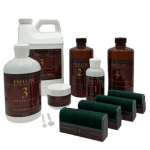
The Prelude Cleaning System – Always in Stock

Proper Record Cleaning Can Help You Find Your Own Hot Stamper Pressings

Better Records is now the exclusive distributor for The Prelude Record Cleaning System (formerly produced by Walker Audio).

Prelude is the only fluid we recommend for serious sound enhancement and cleaning of your LPs.

It is our strongly held belief that you have never really heard what’s in the grooves of your records until you’ve cleaned them using Prelude’s enzyme-based system. There is nothing in our experience that works as well.

The Prelude Record Cleaning System can be used with any vacuum record cleaning machine.

(more…)

Get the Phono Finish!

Robert Brook runs a blog called The Broken Record, with a subtitle explaining that his blog is:

A GUIDE FOR THE DEDICATED ANALOG AUDIOPHILE

We know of none better, outside of our own humble attempt to enlighten that portion of the audiophile community who love hearing music reproduced with the highest fidelity and are willing to go the extra mile to make that happen.

Get the PHONO FINISH!

Robert’s Approach

Robert has methodically and carefully — one might even say scientifically — approached the various problems he’s encountered in this hobby by doing the following:

(more…)

The Fascinating Lifecycle of Our Stereo Cartridge

Robert Brook runs a blog called The Broken Record, with a subtitle explaining what the aim of his blog is:

A GUIDE FOR THE DEDICATED ANALOG AUDIOPHILE

We know of none better, outside of our own humble attempt to enlighten that portion of the audiophile community who love hearing music reproduced with the highest fidelity and are willing to go the extra mile to make that happen.

The FASCINATING LIFECYCLE of Our Stereo CARTRIDGE

An excerpt:

Whatever the number of hours our cartridge will last, and however long we can expect it to perform well, I’d say most of us who do avoid breaking it will run it too long. Which is completely understandable and not totally without its merits. Great cartridges are expensive and the degradation of their sound is often gradual and not necessarily universal across every record in our collection. Plus it’s really not all that easy to know exactly when our cartridge is starting to sound audibly worse.

So how do we know when it’s time to replace our cartridge? Before I answer that question I need to point out that audiophiles are too focused on stylus wear and not enough on degradation of the cantilever assembly, which plays a sizable role in the quality of sound our cartridge delivers.

As Robert makes clear in his piece, a properly setup, fresh-sounding cartridge is fundamental to achieving high quality playback.

In both his system and mine, it starts with this little fellow right here.

If you are interested in acquiring what we consider to be the best sounding cartridge on the market, please contact us. We are dealers for Dynavector and can get you a 17dx at a good price, and typically in short order.

(more…)

The Best Approach to Audio

“Doing” Audio Is the Only Workable Approach to Better Sound

Best-selling author Nassim Taleb (“The Black Swan,” among many others) on why earned knowledge and immersing oneself in the smallest details of any subject lead to success:

“The knowledge we get by tinkering, via trial and error, experience, and the workings of time, in other words, contact with the earth, is vastly superior to that obtained through reasoning…”

This idea ties in to a great many commentaries we’ve written on this blog, more about records than the pursuit of higher quality audio in the home. We are, after all, in the record business, not the audio business.

This commentary describing how big questions rarely have good answers gets to the heart of why predicting which record pressings should be the best is a fool’s errand. An excerpt:

We’re really not that interested in big questions, mostly because there aren’t any big answers for them.

When it comes to records, being able to reveal deep underlying truths about a wide range of vinyl pressings is simply not possible. To be honest, we don’t think it can be done.

It’s not that we don’t have plenty of working knowledge. It’s that we have so much of it that we needed a blog to hold it all so that we could share it with others.

No, our working knowledge is made up of lots of little bits of data that guide us in discovering the best sounding pressings for the individual titles we choose to play.

It would be nice to have general rules to help us in our search for better sound on vinyl, but our experience tells us that general rules are so unreliable that they fail to function as rules at all.

And the same thinking applies to audio equipment, room treatments, turntable setup and everything else having to do with reproducing music in the home. We made the point years ago that tuning and tweaking — in other words, getting your hands dirty — is one of the best ways to improve your listening skills, which can’t help but lead to improvements in your ability to reproduce your favorite recordings. An excerpt:

Since we play all kinds of records all day, practically every day, as part of our regular shootout regimen, tweaking and tuning are much easier for us to do than they would be for most audiophiles. As I have told many in this hobby over the years, if you don’t do the work, the only person who doesn’t get to hear better sound is you. I can come home to my good sounding stereo — I’ve put in the work — but you’re stuck listening to all the problems you haven’t solved, right?

(more…)

A Better Way to Get Rid of Grit and Grain on Jumpin’ Jive

More Records that Are Good for Testing Grit and Grain

Jumpin’ Jive is one of the clearest examples of an album where it is critically important to make sure your stereo is running on good electricity before you make any attempt to play it. This is the kind of recording — bright, full of energy — that will bring most stereo systems to their knees. Of course, when you play a good copy and it really sounds good, it’s a record that rewards all the time and effort you’ve put into your system.

So much of the aggressiveness, grit and grain that we hear in immediate, high-energy recordings such as this are really the fault of the electricity feeding the stereo, not the fault primarily of the record or even the equipment used to play it.

Now it should be noted that this recording has a ton of high frequency information that will be difficult to reproduce on most systems. If you leave a lot of appliances and electronic devices plugged in around the house when you listen to your stereo, you can forget ever hearing this record right. The grit and grunge caused by polluted electricity will make this record practically unlistenable, at the levels we listen at anyway. (At lower levels most of the garbage is masked, one reason no doubt that audiophiles rarely turn their stereos up to anything approaching live levels.) 

So do as we do: unplug everything you can get your hands on before you sit down to listen. Make sure your tubes (if you have tube equipment) are nice and warm too.

(more…)