Focus-Rock, Pop and Soul

Here you will find rock, pop, soul, etc. albums we think we know well, having cleaned and played them by the score over the course of many decades.

There are currently more than 200 entries, but the number could easily exceed 1000 considering how many records we play every week in our shootouts. This is how we learn what we know, — because there is no other way.

Punch The Clock – Drums, Bass and Horns Are Key to the Best Imports

Hot Stamper Pressings of Elvis’s Albums Available Now

The bottom end is as punchy, well-defined and powerful as they come. There’s plenty of low-end on this record; regrettably most copies suffer from either a lack of bass or a lack of bass definition. I can’t tell you how much you’re missing when the bass isn’t right on this album. (Or if you have the typical bass-shy audiophile speaker, yuck.) When the bass is lacking or ill-defined, the music seems labored; the moment-to-moment rhythmic changes in the songs blur together, and the band just doesn’t swing the way it’s supposed to.

The bass, along with the horn sound, are the two key elements to getting a good copy of this record.

The horns are often compressed, making them lose their bite and smearing them together.

On some copies you can pick out the trombones and on some copies you can’t; you just hear horns because the individual instruments are smashed into a congested mess. This is Elvis’ Motown Album; the horns are what bring the music to life. They’re what make this album fun.

On this copy, you get the full-on bottom end WHOMP you paid for, with no loss in control. You can clearly follow Bruce Thomas’s bass lines throughout the songs, a real treat for any music lover. (He and Elvis don’t get along, hence the end of the Attractions as his backing band. I guess we should be thankful for the nine albums on which they were together; many of them are Desert Island Discs for me.)

Not only that, but the drums have real body and resonance, a far cry from the wimpy cardboard drums so many rock records have. Listen to the drum sound on Charm School. Man, those are some BIG FAT PUNCHY DRUMS. Very reminiscent of Bowie’s Let’s Dance. The drum sound on that album is some of the best we’ve ever heard, bar none.

Right out of the gate, Let Them All Talk is lively and full of energy. Elvis’ vocals have all the presence and clarity you could hope for. Since the drums are such a driving force for the Attractions, you have got to have room and spaciousness around them. This copy showcases the percussion with weight down low and harmonics on the cymbals.

The female background singers are clear, another tough test.

It should be noted that this is not an easy record to reproduce well. Everything needs to be working at its best to bring this recording to life, especially in the range of 200 cycles and under, an area where most audiophile systems are at their weakest. If you’ve got power to spare down there, this one will really rock.

Heart Like A Wheel Is an Album Everyone Needs to Hear

More of the Music of Linda Ronstadt

Reviews and Commentaries for Heart Like a Wheel

We’ve recently compiled a list of records we think every audiophile should get to know better, along the lines of “the 1001 records you need to hear before you die,” but with less accent on morbidity and more on the joy these amazing audiophile-quality recordings can bring to your life.

The list is purposely wide-ranging. It includes some famous titles (Tumbleweed Connection, The Yes Album), but for the most part I have gone out of way to choose titles from talented artists that are less well known (Atlantic Crossing, Kiln House, Dad Loves His Work), which simply means that you won’t find Every Picture Tells a Story or Rumours or Sweet Baby James on this list because masterpieces of that caliber should already be in your collection and don’t need me to recommend them.

Which is not to say there aren’t some well known masterpieces on the list, because not every well known record is necessarily well known to audiophiles, and some records are just too good not to put on a list of records we think every audiophile ought to get to know better.

Out of the thousands of records we have auditioned and reviewed, there are a couple of hundred that have stood the test of time for us and we feel are deserving of a listen. Many of these will not be to your taste, but they were to mine.

Heart Like A Wheel

I’ve been playing HLAW since the year it came out, roughly 48 years by my calculation, and I can tell you it is no easy task to find this kind of smooth, sweet, analog sound on the album. Folks, we heard it for ourselves: the Heart Like A Wheel magic is here on practically every song.

A Must Own Pop Record

Linda’s Masterpiece, and a recording that should be part of any serious Popular Music Collection. Others that belong in that category can be found here.

What We Listen For on Don’t Cry Now

More of the Music of Linda Ronstadt

Hot Stamper Pressings on the Asylum Label

Linda’s vocals on both sides can be very DYNAMIC, but only the best copies will present them with no hint of STRAIN or GRAIN, two problems that make most pressings positively painful to listen to at the loud volumes we prefer.

Linda really belts it out on this album — face it, it’s what she does best — and only the rarest copies allow you to turn up the volume good and loud and let her do her thing.

Another key to recognizing the best copies is the fact that they tend to be highly resolving.

Two places to check:

  1. Note how breathy her voice is in the quiet passages. Only the least smeared, most transparent copies reproduce that breathy quality in her voice.
  2. Next check out the tambourine on Silver Threads and Golden Needles. If the sound is delicate, not gritty or transistory, you have yourself a winner in the resolution department.

Side One

The vocals on side one are often recessed and a bit dark on this album.

Linda’s Problems in the ’70s

The most common problem with these Ronstadt records from the ’70s is grainy, upper-midrangy sound. The smooth copies that still have plenty of presence, life, energy and top end extension are the ones that really get this music sounding RIGHT.

Every copy we played had problems on the last track of side one, Don’t Cry Now. Linda is singing at the top of her lungs practically from beginning to end, so both cutting the record and playing back the record would be difficult. The result is that there will usually be some coarsening of her vocal.

Some copies had the same problem on side two for I Believe in You, but not all.

(more…)

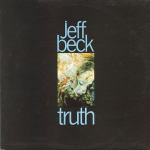
Side Two of Truth Tends to Sound Better than Side One

More of the Music of Jeff Beck

UPDATE 2026

This was written circa 2014, so we’re not actually sure if this is still true.

Take this commentary with a grain of salt and see for yourself when you play whatever copies you own.


An interesting bit of trivia: many side twos earned a sonic grade that was a full plus higher than any given copy’s grade for side one. A half plus higher was quite common too.

Side two most of the time just plain sounds better than side one, so when evaluating your copy be sure to check side two first to hear what is probably going to be the best sound on the album. 

In many ways it sounds like the first Zep album, and that’s a good thing. The sound is a perfect fit for the music. In recent interviews Jeff Beck has been saying that Jimmy Page stole his idea for a Heavy Rock Band playing electrified blues. Based on the evidence found on the two sides of this very album I would say he has a point.

(more…)

Talking Heads’ Masterpiece – More Songs About Buildings and Food

More of the Music of Talking Heads

Presenting another entry in our extensive listening in depth series with advice on what to listen for as you critically evaluate your copy of More Songs.

Here are some albums currently on our site with similar Track by Track breakdowns.

I don’t think these guys (and gal) ever put together a better group of songs. The ultimate pressings of Little Creatures go a step further sonically, but the best copies of this one can sound incredible, if not quite Demo Disc worthy.

We’re huge fans of late ’70s / early ’80s Art Rock and New Wave music, and these guys are obviously some of the best in the biz. I’d be hard pressed to name another act from the era who put out so many good records.

Along with this album, More Songs About Buildings And Food, Fear Of Music, and Little Creatures are all works of genius. ’77 is full of good ideas, but it doesn’t sound like a fully realized work of art the way the next four albums did.

Key Test Tracks

With Our Love turned out to be one of the better tests for side one. The picking of the rhythmic guitar in the intro told us just about everything we needed to know about smear, veiling and resolution. On most copies the instrument is simply blurry, the notes mashed together. When you get a copy with its transients intact, resolving properly and clearly right there in front of you, you have the makings of a Hot Stamper side one.

My other test track for side one was Warning Signs. This is a great track for evaluating transparency and bass. On the average copy you’d never know how much ambience exists around the drums. Hint: it’s a lot.

Our favorite copies have a fair amount of WHOMP down low, giving the bass guitar that rich, beefy sound that we’re simply crazy for here at Better Records. Once you’ve heard a copy with well-defined, note-like bass, nothing less will do.

Artists Only

A great test track for side two is Artists Only. The guitars in the intro section are almost unbearable to listen to on most copies. I recognize that I am somewhat sensitive to harsh high frequencies, but I’m literally in pain when I listen to an overly compressed, overly midrangy copy. There’s got to be a better way!

Wait, there is. Find a copy that actually has a sweet top end. It makes all the difference.

Take Me to the River

One of the best sounding tracks on the album is the awesome cover of Al Green’s Take Me To The River. Most copies are very skimpy with the amount of bottom end information you get.

Pay attention to the opening before the keys start. The best pressings give you texture on the bass that you won’t find on most. When everything’s working right you’ll also hear ambience around the organ that’s nowhere to be found on the average pressing.

The bass should be tight, punchy, and fairly deep. We wouldn’t mind if some of the tracks were mixed with a bit more punch to the bottom end, but far be it from us to tell Brian Eno and Rhett Davies how to do their jobs. At least on some copies the bass has the kind of power that brings a song like Take Me To the River to heights you probably never imagined it could go.

(more…)

Roundabout Vs. South Side of the Sky

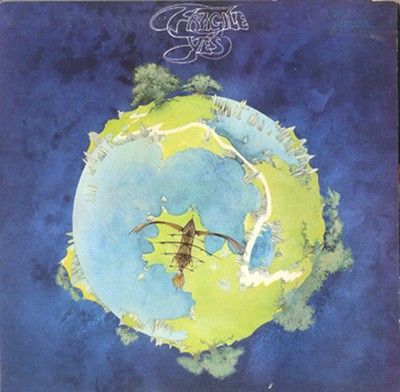
yes__fragiHot Stamper Pressings of the Music of Yes Available Now

Fragile is yet another record the deserves some of the credit for helping me become a better listener.

This shootout taught us that track one is not as well recorded as the rest of side one. On copy after copy, and there were well over a dozen, it was the other big track on side one, South Side of the Sky, that had consistently better sound.

You really hear it in the choruses, where the voices are especially full-bodied, powerful, rich and energetic on that fourth track.

A lesser amount of these qualities can be heard on the first.

We play both songs, but we play them in reverse order, knowing that the mind-boggling sound is really going to be on South Side, not so much Roundabout.

This record should give any record you own a run for its money. It’s as BIG and as BOLD a statement about raising the bar for rock recordings as any I know. Without a doubt one of the Best Rock Recordings of all time.

A well known audiophile record reviewer opined on his website that Fragile “was never a very good recording to begin with… cardboardy, compressed and somewhat cloudy and distant.”

Perhaps his old copy sounded like that, or maybe it sounded like that on his stereo, but our Hot Stampers sure don’t. The typical pressing of Fragile can be painful — smeary and dull with plenty of distortion. If you know the magic stamper numbers and you spend the time to clean and play enough copies, you’re bound to hear some serious magic.

Of course, that’s a lot of work, and some people are probably too busy typing out lists of their pricey equipment to be bothered with such things.

Evolution

My equipment was forced to evolve in order to be able to play the scores of challenging recordings issued by Yes and other groups in the ’70s. You could say that the albums of Yes informed not only my taste in music but the actual stereo I play that music on.

I’ve had large scale dynamic speakers for the last four decades, precisely in order to play records like this, the kind of music I fell in love with fifty years ago.

Identical Stampers and New Vinyl Somehow Produce Clearly Different Sounding Records?

nirvaneverMore Milestone Events in the History of Better Records

In this listing from 2007 we recount our experience with some copies of Nirvana’s Nevermind album. It was an important milestone in the evolution of Better Records.

We learned our lesson – no more sealed records.

Not if you’re the kind of audiophile record dealer who cares what his records sound like (which appears to put us in a class of our own.)

That same year we decided to stop carrying any new Heavy Vinyl release, prompted mostly by the mediocrity of the Rhino reissue of Blue.

So, all in all 2007 was a good year for us. We stopped playing their game and invented a new one all our own. Judging by the enthusiastic response of our customers we think we did the right thing.

Nevermind Circa 2007

The dirty little secret of the audiophile record biz is that the purveyors of these pressings cannot possibly know with any certainty the quality of the sound of any sealed record they are selling. (Whether they can tell what the sound quality is of any record they sell is an open question, and one we would have to answer in the negative based on the hundreds of audiophile pressings we’ve auditioned over the last 40 years.)

They turn a blind eye to the fact that some copies are simply not going to measure up to the sound of the review copy that they auditioned and described.

This is a good reason not to sell sealed records, which, of course, we don’t.

That’s because we’ve done the experiments and found out the things they cannot be bothered to learn.

But wait a minute. Even that’s giving audiophile record dealers far too much credit.  Only a small fraction actually review the records they sell. Most cut and paste a review from the manufacturer and let it go at that. And the few that do write reviews are often so far off the mark that they might as well be talking about another pressing entirely.
(more…)

If You Want to Hear The Band Playing Live in the Studio, Just Turn Up Your Volume

Hot Stamper Pressings of the Music of Black Sabbath Available Now

We played the album very loud, as loud as we could, and still we wanted more volume!

That’s what a good record is all about — the louder you play it the better it sounds.

If you like the raw, rockin’ sound of early Zep, you should have a blast with this album. It’s a shockingly good recording, and the music is of course as heavy as it gets for 1970.

This Warner Brothers Green Label domestic pressing DESTROYED the import copies we played it against, with startling immediacy, tons of ambience, and loads of texture.

The soundfield is HUGE — back wall to front wall, floor to ceiling, and WIDE.

The bass is deep, well-defined, and punchy.

If you want to feel this effect:

“Sabbath’s slowed-down, murky guitar rock bludgeons the listener in an almost hallucinatory fashion, reveling in its own dazed, druggy state of consciousness.”

You need a copy that sounds the way our best Hot Stamper pressings do.

(more…)

Led Zeppelin / II – A Milestone Event from the 90s

More of the Music of Led Zeppelin

More Milestone Events in the History of Better Records

Here’s the story of my first encounter with a Hot Stamper Zep II.

I had a friend who had come into possession of a White Label Demo pressing of the second album and wanted to trade it in to me for the Mobile Fidelity pressing that I had played for him once or twice over the years, and which we both thought was The King on that album.

To my shock and dismay, his stupid American copy KILLED the MoFi. It TROUNCED it in every way. The bass was deeper and punchier. Everything was more dynamic. The vocals were more natural and correct sounding. The highs were sweeter and more extended. The whole pressing was just full of life in a way that the Mobile Fidelity wasn’t.

The Mobile Fidelity didn’t sound Bad. It sounded Not As Good. More importantly, in comparison with the good domestic copy, in many ways it now sounded Wrong.

Let me tell you, it was a milestone event in my growth as a record collector. I had long ago discovered that many MoFi’s weren’t all they were cracked up to be. But this was a MoFi I liked. And it had killed the other copies I had heard in the past.

So I learned something very important that day. I learned that hearing a good pressing is the best way to understand what’s wrong with a bad pressing..

Needless to say, the trade didn’t go through: he kept his copy and I was stuck with mine. But I knew what to look for. I knew what the numbers were in the dead wax. And I started hunting them down.

(more…)

The Freewheelin’ Bob Dylan – Our Favorite from His Early Days

Hot Stamper Pressings of the Music of Bob Dylan Available Now

The Freewheelin’ Bob Dylan is clearly our favorite of the early Dylan albums for both music and sound. We’re picking up both mono and stereo copies when we see them clean (which is rare) and both the mono mix and the stereo mix can sound out of this world.

Hearing these great songs sound so intimate and lifelike on a top-quality pressing can be a sublime experience. We should know; we enjoyed the hell out of this very copy.

The best sides are amazingly spacious, full-bodied, natural and clear with great presence.

It’s clear these classic songs have stood the test of time: Blowin’ in the Wind; Girl from the North Country; Masters of War; A Hard Rain’s A-Gonna Fall; Don’t Think Twice, It’s All Right and many more. A Folk Classic from 1963 that should appeal to any fan of early Dylan.

Did I mention all the great songs?

  • Blowin’ in the Wind
  • Girl from the North Country
  • Masters of War
  • A Hard Rain’s A-Gonna Fall
  • Don’t Think Twice, It’s All Right
  • Bob Dylan’s Dream
  • Talking World War III Blues

… and five more

These modern classics make this Dylan album, his second, clearly the strongest of his first four. You have to wait for his fifth album, Bringing It All Back Home, to find material this consistently brilliant and groundbreaking.

(more…)