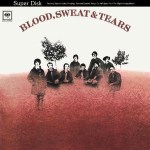
Roy Halee, Engineer – Reviews and Commentaries

Blood Sweat and Tears – Direct Disc Labs Half-Speed Reviewed

More of the Music of Blood, Sweat and Tears

Reviews and Commentaries for Blood, Sweat and Tears

Sonic Grade: C [not sure it would rate that highly today, my guess it would not]

Back in the ’80s, I thought this DD Labs version smoked domestic copies, because the only domestic copy I had ever bought was a bad sounding one. This was many years before I came to understand that no two domestic copies were the same and that there were dozens of pressing variations.

I believe it was not until about 1990 that I heard my first Hot Stamper of BS&T. Oddly enough, those stamper numbers managed to best all comers for about the next 15 years. Now we know that although they can be awesome, there is actually another stamper that is potentially even better. It’s so good in fact that it has been awarded our Four Plus grade. 

The reason this pressing doesn’t get a lower grade is that, regardless of how compressed and veiled the sound is, the average Columbia pressing is surely no better.

When it comes to finding your own great sounding pressing, sure, you can do it, but it’s a lot of hard work. I’m guessing most of you already have a job and don’t need another one. I do this for a living as well as for a hobby, so I’m willing to put in the time and effort to slog through all the trash in order to find the treasure.

Also, we have a big advantage over our customers. I’ve been doing this for a very long time. I have a big head start on all of you. I know many stampers that are good and many that are bad. I found out the hard way. On BS&T I know exactly which copies to buy and which copies to avoid. I have literally played more than 100 copies of this record.

This is true for scores if not hundreds of other albums. Why did I bother to listen to so many different pressings? The overriding reason is because I wanted to find a better sounding version for myself.

It’s not worth the effort if it’s not music you love.

This is also the reason you will never find Hot Stamper pressings of some artists’ records on the site. I don’t like their music and I will just never make the effort to listen to enough pressings of their albums in order to find a hot one.

[Most of this was written way back in 2005.]


Further Reading

Half-Speed Mastered Disasters

(more…)

Blood Sweat and Tears – The 30 Second Spinning Wheel Test

Hot Stamper Pressings of the Music of Blood, Sweat and Tears Available Now

This test is found in the track commentary for side two of our Hot Stamper listings for the album.

If you think you have a hot copy, see if yours does what our best copies do.

We also think that a record like this — a dynamic, full-spectrum recording, not overly concerned with detail — makes a much better Test Disc than the kind most audiophiles seem to prefer.

Patricia Barber it is not.

If you’re in the market for new speakers, take this record — or one like it — with you to the audition. Any speaker that can play this record properly deserves your consideration, or at the very least your respect.

In my experience not many speakers have what it takes to do this album justice.

The Blood, Sweat and Tears Spinning Wheel Test 

The first thirty seconds are key. Here is what you should be listening for.

Piano, Cowbell, Snare

Side two starts off with a bang; note that the piano has real weight to it right from the git go. When the cowbell comes in it should not sound muffled in any way (it’s a bell, don’t you know), quickly followed by the solid-as-a-rock-snare (the best on record.)

The Brass

On the killer copies that first blast of brass will be completely free of grain or grunge, yet the brass instruments themselves (trumpets and trombone) have all their leading edge transients, their “bite,” fully intact. They’re not in any way muffled or smeared, yet the sound is never aggressive. If anything, the brass is so free from distortion and so tonally correct it should actually sound smooth.

(more…)

Bridge Over Muddy MoFi Water

More of the Music of Simon and Garfunkel

This pressing is the poster boy for muddy sound.

Naturally, it has to be one of the worst sounding versions of the album ever made.

It was mastered by Jack Hunt, a man we know to be responsible for some of the thickest, dullest, most dead MoFi crimes against good sound from their shameful catalog.

(The CBS Half-Speed is actually quite good by the way.)

(more…)

Still Crazy After All These Years – Our Four Plus Winner

This KILLER pressing earned Shootout Winning QUADRUPLE Plus (A++++) sound on the first side and Triple Plus (A+++) sound on the first

The immediacy of the vocals is striking, putting a living, breathing Paul Simon right between your speakers

An extremely tough album to find with the kind of big, spacious, Tubey Magical sound this pressing offers

Clean, clear and open are nice qualities to have, but the richer, smoother, more natural sounding copies are the ones that win our shootouts

4 1/2 stars: “…he was never more in tune with his audience: Still Crazy topped the charts, spawned four Top 40 hits, and won Grammys for Song of the Year and Best Vocal Performance.

Please note: we award the Four Plus A++++ grade so rarely that we don’t have a graphic for it in our system to use in the grading scale shown above. So the side one here shows up on the chart as A+++, but when you hear this copy you will know why we gave it a fourth plus! (more…)

Blood, Sweat & Tears / 3 – One Good Side, One Not So Good

More of the Music of Blood, Sweat and Tears

This White Hot Stamper side one shows you just how good Roy Halee’s engineering used to be, comparable to his brilliant work on BS&T’s previous album, the one we extol to this day as (probably) the best sounding rock record ever made. (Dark Side of the Moon is its only competition in my mind. Both are staggering in every way.)

This side one has the BIG JAZZ-ROCK sound — stretching from wall to wall and floor to ceiling, with energy and power that only a handful of albums can begin to compete with.

The brass is rich, solid, and present, with correct timbre for every instrument from the bass trombone all the way up the scale to piccolo trumpet. This is exactly the sound we were looking for and couldn’t find — until we played this copy. No other side one could touch it.

Side One

A+++, and, in addition to what we’ve already noted, BIG down low, bigger than any other copy by far. The vocals are clear and present. The huge 30+ member chorus on the first track works on this copy; it doesn’t most of the time. It obviously presents a real challenge to any engineer, but Halee is up to it, judging solely by the sound on this very copy. Mastering and pressing issues end up making that chorus sound small, thin and opaque most of the time.

Lucretia MacEvil, a minor hit, has more compression than the rest of the side, to make it more radio-friendly of course, but here it holds up much better than on most copies.

Side Two

A+, and a big step down from side one. The mids and highs are pretty good, which helps the percussion, but the whole enterprise lacks bass and size compared to the best we heard. (more…)

Blood Sweat and Tears – An In-Depth Review of the 1996 MoFi LP

Blood, Sweat and Tears’ Second Album Is a Top Test Disc

Sonic Grade: D

We found a Hot Stamper copy for one of our best customers a while back and he wrote an incisive commentary which may be of interest to you. To see the results of his comparison between the Direct Disc Labs Half-Speed, the MOFI Anadisq, his original domestic pressing, and the Hot Stamper he bought from us, check out his letter.

I want to thank Roger Lawry for his extensive commentary on the BS&T’s second album. His critical listening skills are obviously quite well developed, especially since he agrees with me about what is the best sounding BS&T — the one I sold him! I have added some caveats in places to clarify a few issues, but basically Roger’s assessment is right on the money.

Hi, Tom:

I listened to 3 versions of the BS&T record and here is what I found (I wrote up a little review–you can use it on your website or laugh and delete it, whatever). (more…)

Bookends – Album Background and Reviews

More of the Music of Simon and Garfunkel

Reviews and Commentaries for Bookends

Wikipedia on the Music

The “Bookends Theme” that opens and closes side one is played on the acoustic guitar, with no additional instruments. An audio sample of the band’s first hit, “The Sound of Silence”, softly plays during a cacophony of sounds near the end of the second track, “Save the Life of My Child”. John Simon, who was credited with production assistance on the song, created the bassline by playing a Moog synthesizer with help from Bob Moog himself.

James Bennighof, author of The Words and Music of Paul Simon, finds that “textural elements are variously supported by a churning groove, percussive, and distorted electronic sounds” that compliment the song’s subject matter, suicide suburban youth. “Overs” explores a more jazz-oriented style, with a larger selection or chords and looser form than the group’s previous styles.

“Voices of Old People” is a sound collage, and was recorded on tape by Garfunkel at the United Home for Aged Hebrews and the California Home for the Aged at Reseda. The collection of audio recordings of the elderly find them musing on treasured photographs, illness and living conditions.

In “Old Friends”, the title generally conveys the introduction or ending of sections through repetition, and the song builds upon a “rather loose formal structure” that at first includes an acoustic guitar and soft mood. An additional element is introduced midway through the track: an orchestral arrangement conducted by Jimmie Haskell, dominated by strings and xylophone notes. Horns and other instruments are added when the duo cease singing, creating a turbulence that builds to a single high, sustained note on the strings. The song then segues into the final song of side one, the reprise of the “Bookends Theme”.

(more…)