*The Audiophile Skeptics

The Townshend Seismic Platform: Essential in Analog Playback

Robert Brook has a blog which he calls

A GUIDE FOR THE DEDICATED ANALOG AUDIOPHILE

The Townshend Seismic Platform: ESSENTIAL in ANALOG Playback

Robert mentions that his original commentary for the Seismic Platform has been lost. Here is what’s left of it.

I shared my story of starting out with the ‘bladder” version of the sink (now called a platform) back in the early 2000s, noting what a pain it was and how the amount of air in each of the three bladders changed the sound of the turntable.

Fortunately, those days are gone. It is now set and forget (although, like everything else in audio, you need to tweak it a bit to get the most benefit from it). You can contact Townshend for pricing and the cost of shipping direct to you, no middleman (that used to be us!) involved. We cannot recommend any piece of audio gear more highly.

(Please note that we do not make a dime from this product. We want you to buy them — yes, ideally you’re going to need more than one — so that your stereo can show you just how much better our vintage vinyl pressings are when directly compared to any and all others.)

Some background:

A few years back I discovered something wonderful about the Seismic Sink I was using under my turntable to control vibration. In our experience, vibration control is one of the most important revolutionary advancements in audio of the last twenty years or so. This commentary should help to give your tweaking efforts more context.

(more…)

Nina Simone Sings Ellington – Wow!

Robert Brook runs a blog called The Broken Record, with a subtitle explaining that the aim of his blog is to serve as:

A GUIDE FOR THE DEDICATED ANALOG AUDIOPHILE

Nina Simone Sings Ellington – WOW!

Robert gets off to a good start with his opening paragraph:

Even though I still regularly buy and add records to my collection, my long term goal is to have fewer and fewer of them. So from time to time I go looking through my bins for records that I might just as soon part with. When I recently ran across a copy of Nina Simone Sings Ellington sitting at the very back of my jazz section, I fully expected to give it one last spin and place it in the “sell” pile. Instead, it ended up landing right at the very front of my current rotation.

Readers of this blog know how often I stress that records that spend their lives sitting on a shelf aren’t doing anybody any good.

As for Nina herself, we rarely do shootouts for her records because they rarely sold well upon release, which means they are hard to find and they therefore command relatively high prices among collectors. They are also rarely in audiophile playing condition. (Colpix vinyl? We wish you good luck — you’re going to need it.)

For those who would like to know more about the lady and her recordings, here are reviews for the albums of Miss Nina Simone.

And the 2015 documentary What Happened, Miss Simone? comes highly recommended as well.

(more…)

With the Right VTF the Record Comes to Life

Robert Brook runs a blog called The Broken Record, with a subtitle explaining that the aim of his blog is to serve as:

A GUIDE FOR THE DEDICATED ANALOG AUDIOPHILE

We know of none better, outside of our own humble attempt to enlighten that portion of the audiophile community who love hearing music reproduced with the highest fidelity and are willing to go the extra mile to make that happen.

Here is Robert’s latest posting.

With the RIGHT VTF the Record COMES to LIFE

Robert writes:

The other day I checked the VTF, yet again, and my scale showed it was set at 1.807. I adjusted it to 1.800 and went back to playing records. Was it now actually at 1.800? Impossible to really know for sure.

But it did seem, if 1.800 is the indeed the magic number, that I’d finally hit it.

I was playing Miles Davis Friday Night At The Blackhawk, an extremely well recorded live album. My copy had generally sounded excellent. On this occasion, the record sounded . . . imagine this, exactly like a live performance.

Of course there was some occasional surface noise and, of course, I wasn’t actually listening to a live performance. It was a record after all.

But never before that moment had a record convinced me so completely I was hearing something I wasn’t. Somehow one tiny little change had managed to strip away just enough of the remaining artifice to lift the experience of hearing a record from very live sounding to uncannily real.

(more…)

Some Thoughts on Testing in Audio

Robert Brook runs a blog called The Broken Record, with a subtitle explaining that his blog is:

A GUIDE FOR THE DEDICATED ANALOG AUDIOPHILE

Some THOUGHTS on TESTING in AUDIO

My Two Cents

I made a couple of quick notes and sent them by email to Robert, as follows:

  • One record is not enough for this test, or any other for that matter, and
  • Tests need to be blinded.

Without blinding all you are doing is confirming your prejudices, which is something you correctly point out in your piece, and no matter how much you want to think you aren’t doing that because you are trying so hard to guard against it, it is almost surely what you will end up doing.

Confirmation bias is at the heart of most mistaken audio judgments, something I learned a very long time ago, and only after making every kind of mistake there is to make, over the course of decades no less. Only one thing had the power to set me on the right path, and without it I would never have learned how to make any real progress in audio, or find better sounding records for that matter.

If you don’t know how to run good experiments, how can you be sure your results are of any value?

(more…)

Get the Phono Finish!

Robert Brook runs a blog called The Broken Record, with a subtitle explaining that his blog is:

A GUIDE FOR THE DEDICATED ANALOG AUDIOPHILE

We know of none better, outside of our own humble attempt to enlighten that portion of the audiophile community who love hearing music reproduced with the highest fidelity and are willing to go the extra mile to make that happen.

Get the PHONO FINISH!

Robert’s Approach

Robert has methodically and carefully — one might even say scientifically — approached the various problems he’s encountered in this hobby by doing the following:

(more…)

The Fascinating Lifecycle of Our Stereo Cartridge

Robert Brook runs a blog called The Broken Record, with a subtitle explaining what the aim of his blog is:

A GUIDE FOR THE DEDICATED ANALOG AUDIOPHILE

We know of none better, outside of our own humble attempt to enlighten that portion of the audiophile community who love hearing music reproduced with the highest fidelity and are willing to go the extra mile to make that happen.

The FASCINATING LIFECYCLE of Our Stereo CARTRIDGE

An excerpt:

Whatever the number of hours our cartridge will last, and however long we can expect it to perform well, I’d say most of us who do avoid breaking it will run it too long. Which is completely understandable and not totally without its merits. Great cartridges are expensive and the degradation of their sound is often gradual and not necessarily universal across every record in our collection. Plus it’s really not all that easy to know exactly when our cartridge is starting to sound audibly worse.

So how do we know when it’s time to replace our cartridge? Before I answer that question I need to point out that audiophiles are too focused on stylus wear and not enough on degradation of the cantilever assembly, which plays a sizable role in the quality of sound our cartridge delivers.

As Robert makes clear in his piece, a properly setup, fresh-sounding cartridge is fundamental to achieving high quality playback.

In both his system and mine, it starts with this little fellow right here.

If you are interested in acquiring what we consider to be the best sounding cartridge on the market, please contact us. We are dealers for Dynavector and can get you a 17dx at a good price, and typically in short order.

(more…)

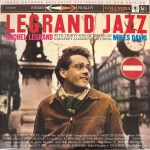
Robert Brook’s Guide to Legrand Jazz on Impex

Robert Brook has a blog which he calls

A GUIDE FOR THE DEDICATED ANALOG AUDIOPHILE

Robert tries to remain positive when choosing the words that would best describe the award winning Impex release of Legrand Jazz. In the end he goes with the spoken word over the written one.

Years ago I wrote about how important the Legrand Jazz album was for me in my growth as a critical listener. It’s yet another example of an album that helped make me a better audiophile by showing me the errors of my tweaking and tuning ways.

Let’s watch the video and see what Robert has learned about Impex’s recent release.

Legrand Jazz (featuring Miles Davis) – the 2019 IMPEX Double 45 rpm

Michael Fremer gives the Impex pressings an 11 for sound. He writes (emphasis added):

“This IMPEX reissue is sourced from an “analog mix-down transfer of the original 1958 work tape by Mark Wilder at Battery Studios” and cut by Chris Bellman and Bob Donnelly at Bernie Grundman Mastering on Grundman’s all-tube mastering system. I have a clean, original 6-Eye pressing that this superbly pressed reissue betters in every way. This will make both your stereo and your heart sing. Some of the greatest jazz musicians of that or any era wailing and clearly having a Legrand time. Limited to 3000 copies. Don’t miss it!”

Who are you going to believe, the Self-Appointed Vinyl Experts of the World and Bestowers of Prestigious Audio Awards (awards which you may have never heard of; I sure hadn’t), or some guy who’s just dedicated to being an Analog Audiophile and knows a good record when he hears one? (Or doesn’t hear one, as the case may be.)

Like Robert, I tried being kinder and gentler, but it didn’t take. I may resolve to try harder in 2024 2026. Then again, I may not. If we’re nicer to the people currently making Heavy Vinyl records, aren’t we running the risk, to cop a line from the late, great P.J. O’Rourke, of encouraging them?

(more…)

The “X-Factor” in Analog Playback

Robert Brook runs a blog called The Broken Record, with a subtitle explaining that his blog is:

A GUIDE FOR THE DEDICATED ANALOG AUDIOPHILE

We know of none better, outside of our own humble attempt to enlighten that portion of the audiophile community who love hearing music reproduced with higher fidelity — and are willing to go the extra mile and pay the extra dollar to make that happen.

The “X-FACTOR” in ANALOG PLAYBACK

Robert closes his story with some ideas that I have been advancing for years, ideas that, implemented with the seriousness and rigor required, are practically guaranteed to help anyone find more joy in the music they love.

Systems that have this X-factor are a rare thing indeed. The time and effort they require is far beyond what most of us are willing to put into this hobby, and even then, we need to be blessed with a good ear to boot.

But such a system is well worth striving for. And while not cheap, money only gets us so far in building it. Rather, we need to have a clear understanding of what we’re aiming for. We need to know what a system with this X-factor actually sounds like. Which means we need to be able to hear it in the first place.

Robert is a case study in what it takes to make the kind of dramatic progress in this hobby that he has achieved.

He also has written at some length about what motivated him to devote so much time and energy to the improvement of the playback quality of his favorite recordings. For some of us this is very familiar ground. It has been my experience that only the unrestrained love of the sound of music can be the driver of real success in audio.

Music does the driving, sure, of course it does, but the vast majority of music lovers never cared much about sound, which is no doubt why Spotify has been so successful. I hope to be able to find the time to write about an experiment I carried out not long ago comparing the sound of a track I heard on SiriusXM versus the same track called up on my phone with Spotify. The differences I heard really knocked me back on my heels.

(more…)

Problem Solving in Audio

Robert Brook runs a blog called The Broken Record, with a subtitle explaining that his blog is:

A GUIDE FOR THE DEDICATED ANALOG AUDIOPHILE

We know of none better, outside of our own humble attempt to enlighten that portion of the audiophile community who love hearing music reproduced with the highest fidelity — and are willing to go the extra mile and pay the extra dollar to make that happen.

PROBLEM SOLVING in AUDIO

We have a section on the blog under the heading Making Progress that digs into the kinds of issues that audiophiles tend to run into, especially when they are first getting started. They’re the ones Robert Brook writes about in his commentary above, and they’re the ones that tripped me up over and over for decades after I first got started in this hobby sometime in the mid-70s.

It wasn’t until around 2005 that I stumbled upon, mostly through luck and audiophile friends, the elements that make up my current system.

Imagine being so clueless that you actually had to spend thirty years in a hobby before you figured out. That was me!

Of course I thought I had it all figured out right from the start. I was the proud owner of monstrously-large, ridiculously-expensive speakers, tube equipment (also expensive, and the latest and greatest cutting edge technology back in those days), Half-Speed mastered records, records made live directly to disc, fancy cables — you name it, I had everything required to play music at nearly-live levels with near-perfect fidelity.

All the most important boxes I was told about had been checked off right from the get-go in the 70s. I was all in, and for the next thirty years I did everything the audiophiles I knew liked to do: find and evaluate better gear, try new tweaks, and, more than anything else, learn to appreciate music that I had never heard before — some of it new, some of it very old.

These are all stories that have been told here on the blog in hundreds and hundreds of posts.

Everything changed when I started doing audio and records in ways that nobody I knew had ever done them before. (That also is a story that has been frequently told here.)

Taking the approach to audio and software that audiophiles tend to take — the bulk of the story Robert Brook tells in his commentary — can only get you so far. That’s the lesson I learned after spending my first thirty years in the hobby.

It’s why this blog is devoted to one concept above all others — the importance of being skeptical.

Requiring empirical evidence to back up whatever I might choose to believe was the shock that my system — my nervous one, as well as my audio one — needed to jolt it out of its comfort zone and force it to come up with a better way.

At the start I believed what I was told — hey, it seemed to be working, and who was I to argue with the “experts” anyway? I went along with the crowd, and I got the average results crowds tend to get.

This blog, as well as Robert’s, is simply trying to help you circumvent the bad ideas that we run into everywhere in audio these days. We’ve tried lots of them, most of them didn’t work, or didn’t work very well, and the good news for you, dear reader, is that we found others that we know do work.

(more…)

Robert Brook Knows a Better Way to Do Analog – Part Two

Robert Brook runs a blog called The Broken Record, with a subtitle explaining that his blog is:

A GUIDE FOR THE DEDICATED ANALOG AUDIOPHILE

We know of none better, outside of our own humble attempt to enlighten that portion of the audiophile community who love hearing music reproduced with the highest fidelity and are willing to go the extra mile to make that happen.

There’s a BETTER WAY to do ANALOG – Part 2


Further Reading