Audio Advice

Mostly unsolicited.

Imagine on Mobile Fidelity from 1984

Hot Stamper Pressings of the Music of John Lennon Available Now

This Jack Hunt-mastered Half Speed has the midrange suckout that Mobile Fidelity was notorious for.

Lennon and his piano on the first track sound like they are coming from another room.

And yet somehow there are still “audiophiles” in this day and age that defend the records put out by this ridiculous label.

Oy vey. What is wrong with these people?

I Have a Theory

Actually, I have a good idea why so many so-called audiophile records have a sucked-out midrange.

A midrange suckout creates depth in a system that has difficulty reproducing depth.

Imagine that instead of having your speakers pulled well out from the back wall as they should be, instead you have placed your speakers right up against the wall.

This arrangement, though preferable aesthetically and much more family- and wife-friendly, has the unfortunate effect of seriously limiting your speakers’ ability to reproduce whatever three-dimensional space exists on your recordings.

I hinted back in 2022 that I was going to discuss this idea down the road, and like most things that I was supposed to write about down the road, we’re still waiting to see it.

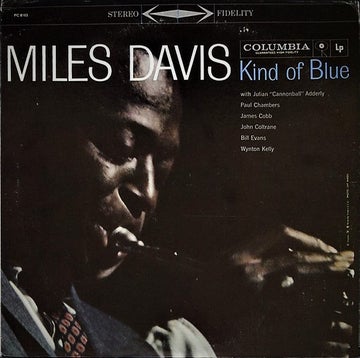
The album I was going to write more about was Kind of Blue.

(more…)

Getting the Electricity Right Made All the Difference in Our New Studio

Hot Stamper Pressings of the Music of Cat Stevens Available Now

In response to a customer’s letter, I wrote the following a few years back:

The vast majority of audiophiles never get to the higher levels of audio because of the compromises they make at every step in their rooms, speakers, wires and practically everything else.

For example:

  • Speakers too small,
  • Shoved up against a wall,
  • In an untreated room that
  • The family uses to watch TV in?

You can’t get very far that way.

Some of the worst off of these folks end up with a collection of crap Heavy Vinyl because their systems simply will not let them hear how much better their vintage pressings sound.

Better Electricity Made All the Difference

When we moved the business into an industrial park a few years ago, I took the opportunity to build the largest playback studio I could fit on the premises. It was 17 by 22 with a 12 foot high ceiling, with a concrete slab floor and six inch thick double drywall for walls, as well as a complicated system of dedicated electrical circuitry.

It took a surprising amount of work carried out over months to get it to sound right. Day after day we ran experiments. Most of the time it was just me. I actually like working alone. It’s not hard for me to stay focussed.

Oddly enough, what made the biggest difference was getting the electricity right: computers and cleaning machines on isolation transformers, stuff unplugged, stuff left plugged in that made the sound better, lights hooked up to batteries rather than plugged in to the main circuits, etc. 

Over the course of about two months, the sound became night and day better.

More on unplugging here.

Also, Robert Brook has done a great deal of work along these same lines, which he explains in detail here.

This kind of work is not hard for me. We’ve been doing it for decades, but we have a very big advantage over everyone else: we have good sounding records to test with.

We have Hot Stampers! The records are correct. If they sound wrong, it’s not their fault. They are almost never the problem.

I used But I Might Die Tonight from Tea for the Tillerman for weeks and weeks. It was very difficult to get all the parts right, but in the end it was more glorious than I had ever heard it. I wrote an extensive commentary on the experience I went through which you can read all about here.

(more…)

One Man’s Experimental Approach to Audio Reveals Some Inconvenient Truths

Here Are Some of Our Favorite Orchestral Test Discs

UPDATE 2025

The following was originally posted by Robert in 2020. We have added a link at the top to test discs that we’ve found to be good for tweaking and tuning your system, room, electricity and such like.

Robert has also reviewed a fair number of difficult to reproduce orchestral recordings, titles that are sure to challenge the playback quality of any system. They should make it easy to hear whether the changes you make are actually getting closer to sound that is more like live, unamplified music, which, from our point of view, should be the goal of any audiophile.

This is the one true test for any system.

Here’s an especially good test disc to get you started.

POWER CORDS: Is THIS the Difference You Want?


Robert Brook has a blog which he calls

A GUIDE FOR THE DEDICATED ANALOG AUDIOPHILE

Below is a link to a comparison Robert Brook carried out with a group of power cords he had on hand. I did the same thing about fifteen twenty years ago and it taught me a lot (although strangely in my case I’ve never taken the time to write about it, mostly because my notes are long gone).

The experience he went through is instructive and easily replicated by anyone for any system. The benefits are likely to be substantial, maybe even life-changing. (Robert has had many life-changing experiences with audio and music since this was written, and we couldn’t be happier that we played some small part in the evolution he underwent.)

(more…)

Speaker Placement — The Room Coupling Method

Robert Brook runs a blog called The Broken Record, with a subtitle explaining that the aim of his blog is

A GUIDE FOR THE DEDICATED ANALOG AUDIOPHILE

We know of none better, outside of our own humble efforts to enlighten that portion of the audiophile community who love the sound of music reproduced with the highest fidelity and, more importantly, are serious enough to be willing to spend a great deal of their money and their time in order to make that happen.

If you aspire to great things in audio, Robert’s blog is for you, as is the one you are now on.

SPEAKER PLACEMENT: The ROOM COUPLING METHOD

An excerpt:

[A] few months ago I came across an article on a Room Coupling Method for speaker placement. Encouraged by finding some common ground with author Richard Mak’s thinking, I started trying it out, and it has helped me make some meaningful progress.

One thing I particularly appreciated in Mak’s article was his assertion that “measurements” and “analysis” are not a substitute for “listening.”

“Charts, graphs, room nodes, reflection coefficients, or even a Ph.D. in room acoustics won’t get you there. Many who are armed with an arsenal of scientific knowledge do not even know how or what to listen for on a reference test track.”

To Mak’s point, as I attempted to apply his approach to my speaker and listening chair positions, I realized in the process that even though the placement of my speakers and listening chair have been suboptimal for some time, that time was far from wasted.

Because in that time I’ve done A LOT of listening, and that listening has led to a special kind of knowledge, which for a long time was without a clear application. Mak’s methodology has since given me an outlet for this knowledge, and all that listening is now paying off.

In his article, Mak walks us through a process that begins with how to determine the distance of the speakers from the back wall. From there he describes how to determine their width, then their toe-in angle, and finally how to dial in the position of the listening chair.

For those of you who would like to tune and tweak the location of their speakers, the article seems to have some good advice for doing that, with plenty of tests to challenge both your setup and your critical listening skills. (We have some great test records you might find useful as well. The more difficult ones to get to sound right can be found here.)

This subject is so complicated that to say much more might send me down a rabbit hole I’d have a hard time climbing out of, but here’s a thought or two.

I’ve had many different big speaker systems set up in a number of good-sized rooms over the years, starting in 1975. When I moved into the house I bought in Thousand Oaks in the early 2000s there was a “great room” with a piano on the far end (where the speakers are now) and a dining table at the opposite end. It measured 15×30 with about a nine foot ceiling.

I was hoping to use my Legacy Whisper speakers in this room so that I could audition records all day (my desk can be seen there on the right). I spent about two years trying to make the speakers sound good where you see them in the picture below.

(more…)

Money Down the Drain

Basic Audio Advice — These Are the Fundamentals of Good Sound

Readers of this blog know that I’m a fan of big speakers, but in a room that’s as bad for sound reproduction as this one is, these monsters would qualify as a form of torture at anything above a whisper.

There is an ideal balance between absorption and reflection that must be found for every room. The balance this fellow has chosen is 98% reflection, which will lead to 100% awful sound.

I don’t even like the picture between the speakers. If you must have something there, in my experience rarely will it sound good unless it is five or more feet off the ground. (See picture below.)

Note that sidewall absorption in our listening room is never more than about five feet high. For some reason that seems to work the best. We tried lots of different heights over the course of years and we always came back to nothing over five feet.

The back wall has 4 inch thick 4×8 sheets of styrofoam across most of it, leaving the corners empty (which always seems to work the best, again, who knows why).

A small piece of absoptive material in the middle up high seemed to help, but more than that was too much and less did nothing.

These may be the most wonderful speakers in the world in the right room, but in this room there is no speaker that could possibly reproduce music properly, which means this guy spent a lot of money and got nothing for it. He’s not alone.

He could get some carpet and pull his speakers well out into the room for starters, but then the whole thing just won’t have the elegance it did, so what on earth would ever make him do such a thing? His favorite music? Hah, that’s a good one.

(more…)

A Few Quick Thoughts on Correctly Sized Instruments

More Unsolicited Audio Advice

Something I rarely take time to write about on this blog is the sizing of instruments.

Some speakers — typically those with smaller drivers — create images of instruments that are too small, smaller than you would picture them in your mind if you were sitting in the audience with your eyes closed.

Other speakers — typically screens of one kind or another — produce larger-than-life images of instruments and vocalists. In the 70s, I heard a lot of screens and full-range electrostats — these come to mind, and there were plenty of others like them, Magneplanars and the like — but the images never seemed right-sized or real enough to be taken seriously.

I opted for a big dynamic system in the mid-70s and over the course of the next fifty years never heard anything that would give me reason to doubt that choice.

(more…)

The Second Best Day of My Life in Audio

Advice on Making Audio Progress

In the late-90s I had tried to power various speakers I owned with Mac 30s. I could never actually get  them to reproduce music faithfully, but they did wonderful things for some recordings.

In 2005, long after I had moved on from the Macs, I found a low-power integrated transistor amp from the 70s that was vastly superior to the custom tube preamp and amp we were using for shootouts at the time. 

It was, simply put, much more musically truthful. It sounded more like live music and less like recorded music.

It is this quality that is hardest to find in all of audio.

It is also the one quality of our system that, more than any other, makes it possible to do the kind of work we do.

Our equipment (along with our room treatments, setup, electricity and such) lets us hear the naked sound of the record being played, uncolored and unadorned.

(more…)

In the Market for New Speakers? See How Well They Handle the Energy of Far More Drums

Hot Stamper Pressings of the Music of Dave Brubeck Available Now

The drum solo Joe Morello lets loose on Far More Drums is one of the best on record. I was playing that song recently and it occurred to me that it is practically impossible for a screen or panel speaker of any design to reproduce the sound of those drums properly, regardless of how many subs you have.

Most of the music is not in the deeper bass anyway. It’s the whack of instruments whose energy is in the lower midrange and mid-bass that a screen speaker will struggle with.

A good large-driver dynamic speaker fed by fast electronics can handle the energy in that range with ease.

This is the album you need to take with you next time you head to your local stereo store to audition speakers.

It will help clarify the issues. Screen speakers do many things well, but drums are not one of them, at least in my experience they aren’t. If drums are important to you, do yourself a favor and buy a dynamic speaker, the bigger the better.

brubeck in the studio733

Time Further Out, like most of the classic Brubeck albums, is a big speaker record. It requires a pair of speakers that can move air with authority below 250 cycles and play at fairly loud levels. If you don’t own speakers that can do that, this record will never really sound the way it should.

(more…)

Midrange Suckout? I Have a Theory

These Titles Are Good for Testing Presence in the Midrange

Many audiophile records suffer from a bad case of midrange suckout.

Vocals and other instruments seem to be so far back in the soundfield that they might as well be coming from another room.

Yet somehow there are still audiophiles who defend the records put out by the ridiculous label that single-handedly created and produced that sound. What is wrong with these people?

(On a side note, yes, I was one of the audiophiles who fell for their phony EQ trickery in the 70s and 80s. In my defense, that was a long time ago.)

I Have a Theory

Actually, I have a good idea why so many so-called audiophile records have a sucked-out midrange.

A midrange suckout creates depth in a system that has difficulty reproducing it.

Imagine that instead of having your speakers pulled well out from the back wall the way you should, you instead have your speakers shoved flat up against that wall.

This arrangement has the effect of seriously limiting your speakers’ ability to reproduce the three-dimensional space of the recordings you play.

Kind of Blue on MoFi

I hinted back in 2022 I was going to discuss their pressing down the road, and like most things that I was supposed to write about down the road, we’re still waiting to see it.

The short version of that future commentary will note that the drums in the right channel of All Blues are about five feet further back in the soundfield than they are on our reference too-noisy-to-sell Six-Eye pressing, or any other pressing of the album we’ve played for that matter.

At the time I could not wrap my head around how Mobile Fidelity could have gotten hold of the multi-tracks in order to remix the album and place the drums further back in the mix.

(more…)

When It Comes to Carts and Horses, Which Comes First, and Who Pulls Whom?

Please Consider Taking Some of Our Audio Advice

Robert Brook recently wrote a piece making the case that the cure for audiophile ailments of all kinds — burnout, boredom, etc. — is a high quality stereo system. It is beautifully written and we think well worth your time to read.

Robert walks us through what it has meant to him to have spent so many hours over the years building a high quality stereo system, mostly by describing the musical enjoyment it has brought to him.

What could be better?

We feel the same way. If you build such a system, and play the right records on it, you will experience the music you love in ways more powerful than you could have ever even imagined. Your favorite albums will sound so good that boredom and burnout would be simply inconceivable.

Those of us with top quality systems are confused by the dysfunctional relationship these poor souls have to their stereos and recordings. With a good stereo and good records, it’s hard to see how these psychological states are even possible.

The Heart of the Problem

The problem audiophiles have is one that sits right at the heart of our hobby.

Good stereos are hard to come by.

So the question always comes down to how one should go about building such a beast. There are two schools of thought.

Is the first priority to have properly-pressed, properly-mastered records of well-recorded music in order to get the ball rolling?

Or is it better to make improvements to the stereo first, so that you can then pursue better sounding records and end up with the best of both worlds, a great stereo playing great records?

My Two Cents

Allow me to weigh in. Please consider the following unusual, even goofy, and possibly logically inconsistent, analogy.

Imagine that the place where you can enjoy music is a town not far from where you live.

Because you love music, you must travel there as that is the only place you can enjoy your favorite music to its fullest.

The Horse and the Cart

The horse that draws the cart that you ride into this town is not the right record, it is the right stereo in the right room.

Without the right stereo, you lack the ability to recognize the right record.

Similarly, you lack the ability to appreciate what makes it more right than any other record.

Without the right stereo, you may in fact be trying to optimize the playback of records that are wrong. I did this for decades with my Mobile Fidelity records in the 70s and 80s. I played Heavy Vinyl pressings in the 90s and early 2000s that sounded right to me at the time but no longer do, mainly because our current system evolved over a very long time to be ruthless at revealing their deficiencies and my ears became better at recognizing them.

(more…)