Progress in Audio

It’s not easy to make audio progress — nothing is in fact harder. However, if your approach to audio is clear-headed and evidence-based — in other words, scientific — progress is not only possible, it is virtually guaranteed.

If you play huge numbers of records, and listen to them critically, some of them will teach you things about audio that you cannot learn any other way.

Practically all of our audio philosophy derives from the simple act of trying to get our system to play the greatest recordings of all time with the highest fidelity possible. Every record is a challenge, and every defeat an opportunity to learn something — to see where we may have gone wrong — in order to know more than we did before.

The Best Approach to Audio

Please Consider Taking Some of Our Hard-Earned Audio Advice

Best-selling author Nassim Taleb (“The Black Swan,” among many others) on why earned knowledge and immersing oneself in the smallest details of any subject lead to success:

“The knowledge we get by tinkering, via trial and error, experience, and the workings of time, in other words, contact with the earth, is vastly superior to that obtained through reasoning…”

This idea ties in to a great many commentaries we’ve written on this blog, more about records than the pursuit of higher quality audio in the home. We are, after all, in the record business, not the audio business.

This commentary describing how big questions rarely have good answers gets to the heart of why predicting which record pressings should be the best is a fool’s errand. An excerpt:

We’re really not that interested in big questions, mostly because there aren’t any big answers for them.

When it comes to records, being able to reveal deep underlying truths about a wide range of vinyl pressings is simply not possible. To be honest, we don’t think it can be done.

It’s not that we don’t have plenty of working knowledge. It’s that we have so much of it that we needed a blog to hold it all so that we could share it with others.

No, our working knowledge is made up of lots of little bits of data that guide us in discovering the best sounding pressings for the individual titles we choose to play.

It would be nice to have general rules to help us in our search for better sound on vinyl, but our experience tells us that general rules are so unreliable that they fail to function as rules at all.

And the same thinking applies to audio equipment, room treatments, turntable setup and everything else having to do with reproducing music in the home. We made the point years ago that tuning and tweaking — in other words, getting your hands dirty — is one of the best ways to improve your listening skills, which can’t help but lead to improvements in your ability to reproduce your favorite recordings. An excerpt:

Since we play all kinds of records all day, practically every day, as part of our regular shootout regimen, tweaking and tuning are much easier for us to do than they would be for most audiophiles. As I have told many in this hobby over the years, if you don’t do the work, the only person who doesn’t get to hear better sound is you. I can come home to my good sounding stereo — I’ve put in the work — but you’re stuck listening to all the problems you haven’t solved, right?

(more…)

The Reward Comes After

Richard Feynman Is Another Guy with Good Advice on Making [Audio] Progress

But first let’s check in with Shane Parrish, who writes:

You have to train before the race, not after. You have to build the skill before you get the job that requires it. You have to be trustworthy for years before anyone trusts you with something important. The bill comes first. The reward comes later.

The universe does not offer financing.

This is hard to accept because modern life trains us to expect the opposite. We are addicted to “Buy Now, Pay Later.” You live in the house before you pay off the mortgage. You get the degree before you pay off the loan. You eat the meal before you ask for the check.

We are conditioned to enjoy the benefit today and pay the cost tomorrow.

(more…)

Problem Solving in Audio

Robert Brook runs a blog called The Broken Record, with a subtitle explaining that his blog is:

A GUIDE FOR THE DEDICATED ANALOG AUDIOPHILE

We know of none better, outside of our own humble attempt to enlighten that portion of the audiophile community who love hearing music reproduced with the highest fidelity — and are willing to go the extra mile and pay the extra dollar to make that happen.

PROBLEM SOLVING in AUDIO

We have a section on the blog under the heading Making Progress that digs into the kinds of issues that audiophiles tend to run into, especially when they are first getting started. They’re the ones Robert Brook writes about in his commentary above, and they’re the ones that tripped me up over and over for decades after I first got started in this hobby sometime in the mid-70s.

It wasn’t until around 2005 that I stumbled upon, mostly through luck and audiophile friends, the elements that make up my current system.

Imagine being so clueless that you actually had to spend thirty years in a hobby before you figured out. That was me!

Of course I thought I had it all figured out right from the start. I was the proud owner of monstrously-large, ridiculously-expensive speakers, tube equipment (also expensive, and the latest and greatest cutting edge technology back in those days), Half-Speed mastered records, records made live directly to disc, fancy cables — you name it, I had everything required to play music at nearly-live levels with near-perfect fidelity.

All the most important boxes I was told about had been checked off right from the get-go in the 70s. I was all in, and for the next thirty years I did everything the audiophiles I knew liked to do: find and evaluate better gear, try new tweaks, and, more than anything else, learn to appreciate music that I had never heard before — some of it new, some of it very old.

These are all stories that have been told here on the blog in hundreds and hundreds of posts.

Everything changed when I started doing audio and records in ways that nobody I knew had ever done them before. (That also is a story that has been frequently told here.)

Taking the approach to audio and software that audiophiles tend to take — the bulk of the story Robert Brook tells in his commentary — can only get you so far. That’s the lesson I learned after spending my first thirty years in the hobby.

It’s why this blog is devoted to one concept above all others — the importance of being skeptical.

Requiring empirical evidence to back up whatever I might choose to believe was the shock that my system — my nervous one, as well as my audio one — needed to jolt it out of its comfort zone and force it to come up with a better way.

At the start I believed what I was told — hey, it seemed to be working, and who was I to argue with the “experts” anyway? I went along with the crowd, and I got the average results crowds tend to get.

This blog, as well as Robert’s, is simply trying to help you circumvent the bad ideas that we run into everywhere in audio these days. We’ve tried lots of them, most of them didn’t work, or didn’t work very well, and the good news for you, dear reader, is that we found others that we know do work.

(more…)

Port’s Rule and The Song of the Volga Boatman

More Records that Helped Me Make Progress in Audio

The track that started us down the road to our first Sauter-Finegan shootout is, to this very day, our Number One Test Track of All Time, a little ditty known as the Song of the Volga Boatman.

We first heard it back in the 90s on Bob and Ray Throw a Stereo Spectacular, which is still the version we test with, but this album of forward-looking big band contains that track  as well as 10 others, all with truly amazing sound.

Why is the Song of the Volga Boatman our ultimate test track?

The simplest way to understand it is that all the instruments are being played live in the studio, and all of them in the huge soundfield are real and acoustic — string bass, drums, horns of every size and type, woodwinds, percussion, tubular bells, etc.

In addition, the arrangements given to this roomful of players is so complex and lively that if anything sounds “funny,” to use the precise audiophile nomenclature, it really calls attention to itself.

Port’s Rule states: If it isn’t easy for your Test Discs to sound wrong, they are not very good Test Discs.

Wrong is the natural order of things.

Getting it right is where the work comes in to play.

And it should seem more like play than work or you are unlikely to get very far with it. (That’s another one of Port’s Rules, sometimes referred to as music does the driving.)

When the stereo is right from top to bottom, this song is right from top to bottom, and every other record we know the sound of will have the sound it’s supposed to have.

It seems simple and in some ways it is.

We’ve been getting the Song of the Volga Boatman to sound bigger and better now for years, through scores and scores of changes. At our current stage of audio evolution, at the very loud levels we play it at, it’s shocking how big, powerful and real it seems. It has more of the “live music” qualities we prize than almost any other studio recording I can think of.

(more…)

Robert Brook Knows a Better Way to Do Analog – Part Two

Robert Brook runs a blog called The Broken Record, with a subtitle explaining that his blog is:
A GUIDE FOR THE DEDICATED ANALOG AUDIOPHILE

We know of none better, outside of our own humble attempt to enlighten that portion of the audiophile community who love hearing music reproduced with the highest fidelity and are willing to go the extra mile to make that happen.

There’s a BETTER WAY to do ANALOG – Part 2


Further Reading

“We want the outcome, but we need the journey.”

Experiments Taught Us Everything We Know about Records

Thought for the Day

We want the outcome, but we need the journey.

Falling in love with outcomes doesn’t move you forward.

Falling in love with the process does.

Shane Parish


It’s amazing how far you can get in this hobby if you’re obsessive enough and driven enough. (See links below for more on these two drivers of success.)

To achieve real success you must be willing to devote huge amounts of time, money and effort to the pursuit of better home audio.

You will really go far if you’re willing to let your ears, not your brain, inform your understanding and appreciation of the sound of the various pressings you play.

If we thought like most audiophiles — that money buys good sound and original pressings are usually the best — we would currently be very unlikely to have a business selling a million dollars or more worth of Hot Stampers every year.

(For those new to the idea, here are the short versions of what they are and how one goes about acquiring them.)

(more…)

What Do Audiophiles Think about Analog?

Robert Brook runs a blog called The Broken Record, with a subtitle explaining that his blog is:

A GUIDE FOR THE DEDICATED ANALOG AUDIOPHILE

We know of none better, outside of our own humble attempt to enlighten that portion of the audiophile community who love hearing music reproduced with the highest fidelity and are willing to go the extra mile to make that happen.

What Do AUDIOPHILES THINK About ANALOG?

Looking at the picture above, I’d say it probably gives a great many of them a headache.

And why shouldn’t it? It sure looks easy, and the fact that everyone who writes about it, reviewers and forum posters alike, seems to think it is easy. They all seem to think that all you have to do to get good sound is to buy the right equipment and play the right records — mastered by the right people, of course — and you are good to go.

But it actually turns out to be hard, so hard that some people — no doubt many of the ones who bought into the idea that it was easy in the first place — want to throw in the towel and move on to something else, preferably something that offers more bang for their hard-earned bucks.

If I had taken the above advice, and bought the remastered records the so-called experts have been recommending to audiophiles like me for decades, who knows, I might have thrown in the towel too.

But I was obsessed with music, and obsessed people don’t give up on anything easily. (The result, for what it’s worth, is hundreds of great sounding records for sale and thousands of blog postings.)

My Two Cents about Robert’s Post

(the slightly edited version taken from the comments)

Robert,
Thanks for taking on some of the more specious arguments — as well as some very good ones, to be sure — advanced by the music lovers you quote.

Job well done, and one that I could never have taken on as it would have made my head explode right at the start.

I wrote a piece recently about what I believe is fundamentally at the heart of the many misunderstandings music lovers of these various persuasions are unable to overcome.

It’s far more esoteric than the many good points you make. I’m assuming that at this stage of the game we can all agree that analog is superior to digital.

What I am trying to do is to get audiophiles to listen critically enough to recognize that no two sides of the same record have the same qualities in the same proportion, that variations in sound quality are almost unavoidable, and that record shootouts are the only way to bring this idea home to the typical analog audiophile enthusiast.

You can find it under the heading of breaking barriers and crossing bridges.

(more…)

Letter of the Week – “My stereo upgrades have widened the sonic chasm between good, old-fashioned records and their nouveau imposters.”

Record Collecting for Audiophiles – These Are the Fundamentals
One of our good customers, Dan, found much to agree with in our recent Better Record’s record collecting commentary and offered up his own two cents worth in the letter below. (Emphasis added.)

Tom,

Just wanted to affirm the new Better Records axiom of “the better your stereo gets, the fewer modern reissues you will own.” My collection has dozens of these Heavy Vinyl reissues, and none of them are holding up after a year and half’s worth of significant improvements to my stereo.

It was only at the beginning of last year that I found myself pleased with roughly 50% of my heavy vinyl purchases. Now, that number has plummeted to less than 10%. Almost everything that’s being put out today is an utter disappointment.

Of course, part of the explanation may be that my listening skills have improved. But it’s hard to imagine that I would have liked dull, dreary, lifeless vinyl a year or two ago. I like to think not.

More probable is that my stereo upgrades have widened the sonic chasm between good, old-fashioned records and their nouveau imposters.

I’d also like to second the avoidance of new vinyl purchases until major stereo improvements are made. I’m trudging through the laborious task of replacing these records with older, better sounding copies. It’s excellent advice to those new to the game or young (or both).

Amazingly, hearing the difference doesn’t even require a Hot Stamper, almost any original or early reissue will beat the Sundazed, Classic, etc. That’s how inferior they are. To borrow from The Who, the sound must change.

Dan,

I agree with this bit at the end of your letter, with one caveat:

Amazingly, hearing the difference doesn’t even require a Hot Stamper, almost any original or early reissue will beat the Sundazed, Classic, etc. That’s how inferior they are.

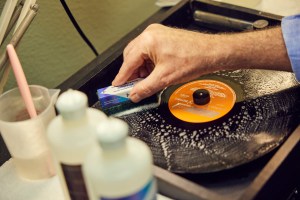
The caveat would be if you know how to clean your records right, right in this case being the way we recommend you clean them, using Prelude fluids and a machine.

Old uncleaned records can sound pretty bad. An audiophile pressing may beat your old original — until you clean it.

It’s one of the revolutionary changes in audio we spend so much time talking about, and it can make all the difference in the world on some records, especially old ones.

Thanks for your letter. You are not alone in swearing off these modern mediocrities. Many of our customers went through the same process you have, and it seems they are as pleased with the results as you.

Best, TP

(more…)

Got Nice Equipment? It’s a Good First Step, but Only a First Step

Revolutions in Audio, Anyone?

Nice equipment is only the first step on the long, long, long road to good sound.

The audio magazines that their reviewers write for are purveyors of what we consider to be one of the most pernicious falsehoods in all of audio — that buying more expensive equipment is the key to better sound. (Note that is is a falsehood, not a lie; they probably actually believe it.)

From the audiophile rags’ point of view, this makes perfect sense. They extoll the virtues of one piece of sexy hardware after another on page after page of their glossy magazines. The ten bucks a year you pony up to subscribe doesn’t even cover the cost of all that pretty paper. They make their real money by selling advertising to equipment manufacturers, who in turn advertise equipment they want you to buy. What are all the glossy pages of these magazines devoted to? The fawning and credulous discussion of the sexy equipment being advertised.

stereooldSee how that works? It ain’t rocket science. These magazines have a vested interest in convincing you that the Newer and More Expensive the equipment you own, the better will be the sound in your home.

Wrongheaded Thinking

It’s easily demonstrated how wrongheaded this way of thinking is. If you’ve been in audio for any length of time, you know that one bad interconnect can ruin the sound of a stereo. We’ve all been there. All it takes is one little wire — the wrong wire in the wrong place — to make all that expensive equipment sound like shit.

Or a bad room. Or the speakers on the wrong wall. Or VTA too high. Or too low. Or a mismatch between the arm and cartridge. Or a mismatch between the speaker and amp. Or about 68 million other things, any one of which can turn the sound of all that sexy equipment into musically unpleasant dreck.

(more…)

Our Advice Has Been Followed and the Results Are In

Proper Record Cleaning Can Help You Find Your Own Hot Stamper Pressings

One of our customers wrote to us about cleaning his collection not long ago, and we advised him how he should go about it. He seems to have taken much our advice to heart and has quieter, better sounding records as a result. He did not spring for the pricey Keith Monks style machine we use, but felt that his efforts produced excellent results regardless. Best to hear it from him:

Hey Tom,

Just did three records, in all different conditions, and this one Eddie Palmieri, the Latin Salsa pioneer. And I had been meaning to get some famous albums in that genre, and I looked through Discogs.com and this guy wanted $40 for an album called Mozambique. Even though it looked great, it had so much noise from years of build up.

It played beautifully after all the steps. There was a huge jump in fidelity, just the tiniest, tiniest surface noise between songs. You wouldn’t notice if you weren’t listening for it.

From the other two records which had different issues, I don’t think it’s very hard to understand what else a Keith Monk type machine might add to other more difficult records, in combination with the Prelude stuff and a VPI. But for this one, and I think a lot of other records I own, the Prelude and VPI are all I needed.

I know there’s going to be a huge learning curve and I don’t expect things to be so simple. But it was just cool and kind of a treat, my first time out, to know that it’s possible.

Anyway, I just wanted to share that for what it’s worth. Thanks,

Andrew

Dear Andrew,

Glad to hear you were able to get your records cleaner and make them better sounding to boot. What could be better?

Well, there actually is an answer to that rhetorical question, and we supplied it right here on the blog in a listing with step by step instructions using the Prelude Record Cleaning System and two record cleaning machines. You asked me to write it all out so that’s what I did.

It does not surprise me in the least that you got great results with your VPI. That is the very machine we had been using since the early-90s to clean all our records. Sometime later in the decade we discovered the Disc Doctor fluids and switched to them. I wrote a long piece in my paper catalog (this was in our pre-internet days) discussing how much quieter and better sounding all of our vintage classical records sounded when cleaned with DD fluids, and that I was therefore going to reclean them all and reevaluate every last one for sound and surfaces. It was that big a difference.

In 2007, when I first heard a record cleaned with the Prelude System, everything changed radically, a story I tell using the record I was testing at the time, Meddle. It was one of the biggest breakthroughs we had experienced up to that time.

This is the kind of difference you have now heard with Prelude and your 16.5. You are operating at a different level now.

But there was more to come for us when an audio friend invited me to bring a record over that he would clean with Prelude on his Keith Monks machine. I brought over a killer copy of Meddle as I recall. Imagine my shock when it sounded even better than it had when first cleaned with Prelude. I immediately ordered up a industrial-strength threaded-pickup machine, the Odyssey, made in Germany, and started offering Hot Stamper pressings that were quieter and had better sound than I had ever heard before. (We are currently on our third unit. We clean a lot of records.)

This is leap you have yet to take. It might not make as much difference as your cleaning has to date, but, once you do it, you will find that there is a clearly audible “before and after” quality to the sound of your records. No doubt you will want to reclean all your personal favorites using Prelude and whatever Keith Monks type machine you end up with.

(more…)