Parlophone/Apple – Letters, Reviews and Commentaries

Letter of the Week – “The sound is incredible. Neil’s voice is right in the room.”

Hot Stamper Pressings of the Music of Neil Young Available Now

One of our good customers had this to say about some Hot Stampers he purchased recently, including After the Goldrush and Beatles For Sale

Hey Tom, 

Just wanted to write and tell you how much I love that Neil Young After The Gold Rush White Hot Stamper I picked up last week. Really awesome. This ranks up with the best I’ve bought from you guys.

The sound is incredible. Neil’s voice is right in the room. The guitar sounds real and that harmonica is super. I love when he performs, just him and nobody else. I’m really stuck on Neil’s albums. The sound is just soooo good. I’m working on my system to get more out of these records.

Oh yeah, I picked up one of your “Beatles for Sale” albums for $65. [This must be an old letter!] Really nice for the money. Those Beatles albums can really be awesome. Have to get a White Hot Stamper Beatles album someday. (more…)

Letter of the Week – “I feel (and tremble) as if I am sitting in the Abbey Road Studios while they are recording.”

Hot Stamper Pressings of the Music of The Beatles Available Now

Our good customer Alex had this to say about a White Hot Stamper pressing of Sgt. Peppers he purchased from us a while ago:

Hey Tom,   

I was very excited to have purchased a Triple/Triple Sgt. Pepper. So much so that I went out and bought a new stereo system. My copy arrived in January. There was no way I was going to take a chance and play it on my 30+ year-old vintage set-up. I have a friend who sells wicked awesome gear and I spent about a month from middle January to Middle February listening to quite a few turntables and speakers.

Once I settled on the system I then made an appointment to listen to Pepper. My wife and I went over to hear this White Hot Stamper.
The results? Tears of profound JOY.

And a big you-know-what eating grin on my face for the last week (and probably for the rest of my life). I was 9 years old in 1967 and I had only heard this LP on a cheap record player for years and I still loved it. It has been my most loved music for my entire life.

This copy is absolute, mind-blowing PERFECTION! The Fabs are at their BEST and I feel (and tremble) as if I am sitting in the Abbey Road Studios while they are recording.

(more…)

Letter of the Week – “… even my 65 year old father, with no musical background at all, was amazed when I play your Beatles stampers.”

Hot Stamper Pressings of the Music of The Beatles Available Now
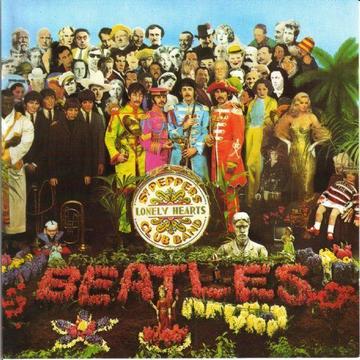
One of our good customers had this to say about some Hot Stampers he purchased recently:

Hey Tom, 

I have enjoyed your records since I got a “Sgt. Peppers” hot stamper in 2011, and you guys have never disappointed me!

Every time I play one of the hot stampers for my musician friends, I don’t tell them “it’s a special pressing” but just play the record – they always comment on the sound quality, almost always saying “that’s so clear, so clean, etc…” – even my 65 year old father, with no musical background at all, was amazed when I play your Beatles stampers. He said, “in my time, records sounded scratchy and noisy.” What a revelation the Hot Stamper is.

(more…)

Listening In Depth to Let It Be

Hot Stamper Pressings of the Music of The Beatles Available Now

This is the first time we’ve discussed individual tracks on Let It Be.

Our recent shootout [now many years ago], in which we discovered a mind-boggling, rule-breaking side one, motivated us to sit down and explain what the best copies should do on each side of the album for the tracks we test with. Better late than never I suppose. 

These also happen to be the ones that we can stand to hear over and over, dozens of times in fact, which becomes an important consideration when doing shootouts, as we must do them for hours on end.

On the better pressings the natural rock n’ roll energy of a song such as Dig A Pony will blow your mind. There’s no studio wizardry, no heavy-handed mastering, no phony EQ — just the sound of the greatest pop/rock band of all time playing and singing their hearts out.

It’s the kind of thrill you really don’t get from the more psychedelic albums like Sgt. Pepper’s or Magical Mystery Tour. You have to go all the way back to Long Tall Sally and Roll Over Beethoven to find the Beatles consistently letting loose the way they do on Let It Be (or at least on the tracks that are more or less live, which make up about half the album).

Side One

Two of Us

Dig a Pony

On the heavy guitar intro for Dig a Pony, the sound should be full-bodied and Tubey Magical, with plenty of bass. If your copy is too lean, just forget it, it will never rock.

What blew our minds about the Shootout Winning side one we played recently was how outrageously big, open and transparent it was. As the song started up the studio space seemed to expand in every direction, creating more height, width and depth than we had ever experienced with this song before.

(more…)

On Please Please Me, Which Is More 3-Dimensional, Mono or Twin Track?

Hot Stamper Pressings of the Music of The Beatles Available Now

With all due respect to George Martin, we’ve played a number of mono pressings of Please Please Me in the past twenty or so years and have never been particularly impressed by any of them.

The monos jam all the voices and instruments together in the middle, stacking them one in front of the other, and lots of musical information gets mashed up and simply disappears in the congestion. 

But is twin track stereo any better?

Yes, when you do it the way Norman Smith did on Please Please Me.

Twin Track stereo (which is actually not very much like two-track stereo, I’m sure Wikipedia must have a listing for it if you’re interested) is like two mono tracks running simultaneously. It allows the completely separate voices to occupy one channel and the completely separate instruments to occupy another, with no leakage between them.

On some stereos it may seem as though the musicians and the singers are not playing together the way they would if one were hearing them in mono. They are in fact recorded on two separate mono tracks, the instruments appearing in the left channel and the singers in the right, separated as much as is physically possible.

Stuck in their individual stereo speakers, so far apart from one another, the members of the band don’t even seem to be playing together in the same room.

That’s on some stereos, and by some stereos I mean stereos that need improvement. Here’s why.

Three-Dimensional Mono?

In the final mixing stage, Norman Smith added separate reverb to each of the two channels, sending the reverb for the sound recorded in each channel to the opposite channel. This has the effect of making the studio, the physical space that The Beatles appear to be in, seem to stretch all the way from the right channel, where the Beatles’ voices are heard, to the back left corner of the studio, where the reverb eventually trails off.

(more…)

FM Radio Sound on Blue Vinyl, Courtesy of a Mr. Gene Thompson

Hot Stamper Pressings of the Music of The Beatles Available Now

Here is how we described a recent Shootout Winning copy of 1967-1970:

This vintage import 2-LP compilation set boasts STUNNING Shootout Winning Triple Plus (A+++) sound or close to it on all FOUR sides. These pressings are rich, smooth and sweet, with plenty of Tubey Magic and little of the grain and grunge of most Brits (and don’t get us started on the domestics).

You get clean, clear, full-bodied, lively and musical ANALOG sound from first note to last. Like most compilations, some songs sound better than others, but “Don’t Let Me Down” and “Come Together” are two that really stand out here. For those of you out there who have never tried one of our Hot Stamper Beatles records, this may be the best sound you’ve ever heard from them. The CDs — even the new ones — sure don’t sound like this!

We are on record as finding the British pressings of 1967-1970 too bright; certainly most of them are anyway. The original domestic pressings, as anyone who has ever played one can attest, mastered at Sterling no less, are absolutely godawful.

Allow us to add one more to that group of pressings to avoid, the blue vinyl domestic pressings mastered by Gene Thompson. Based on how awful this pressings sounds, it would probably be wise to avoid his work in general.

The only artists who have earned the honor (ahem) of having their very own page on this blog are The Beatles. For those of you interested in learning more about their often amazing recordings, feel free to dig in to your heart’s delight.

(more…)

Straight Up – Porky Not So Prime Cut

Hot Stamper Pressings of the Music of Badfinger Available Now

UPDATE 2026

This commentary has been updated multiple times, most recently in 2025.


British band, British pressing… right?

Nope. It’s just another mistaken idea.

We evaluated an original British pressing in our shootout, unbeknownst to me as it was playing of course. And guess where it finished: dead last.

The most thick, congested, crude, distorted, compressed sound of ALL the copies we played.

We love the work of Porky, Pecko, et al. in general, but once again this is a case where a British Band recorded in England sounds best on domestic vinyl. (McCartney’s first album on Apple is the same way.)

Just saw this today (11/29/2021)

On November 18, 2019, a fellow on Discogs who goes by the name of Dodgerman had this to say referencing the original UK pressing of Straight Up, SAPCOR 19:

So Happy, to have a first UK press, of this lost gem. Porky/Pecko

Not sure what those two commas are doing there. Pausing for emphasis? Sure, why not? This is a big deal.

Like many record collectors, he is happy to have a mediocre-at-best, dubby-sounding original pressing, poorly mastered by a famous mastering engineer, George Peckham, a man we know from extensive experience to be responsible for cutting some of the best sounding records we’ve ever played. He is truly one of the greats.

Is Dodgerman an audiophile? He might be, or at least he might choose to describe himself as one.

Many audiophiles employ this kind of mistaken audiophile thinking, believing that a British band’s albums must sound their best on British vinyl for some reason, possibly a cosmic one.

(more…)

Letter of the Week – “Any new audiophile pressing I have sounds flat when comparing it to a pressing you’ve sold”

Hot Stamper Pressings of the Music of The Beatles Available Now

One of our good customers had this to say about a Hot Stamper pressing of Sgt. Peppers he purchased from us a while ago:

Hey Tom,   

Wish I found your blog earlier. I do not have a huge collection but any new audiophile pressing I have sounds flat when comparing it to a pressing you’ve sold – i.e., Sgt Pepper.

Even my wife, who enjoys music but is not into it for the best sound, picked the 80s Pepper pressing I played her over the recent stereo remix and the mono from the box set everyone seems to love. Not close.

Dear Ryan,

It is indeed disheartening when collectors and audiophiles rave about mediocre records such as the two you mention. More proof, as if any were needed, that the audiophile record collecting world has lost its mind.

As for the copy you got from us having been pressed in the 80s, yes, we do sell some of those later pressings as Hot Stampers. The best of them can sometimes earn Super Hot (2+) stamper grades on one or both sides.

We always put a number of them in our shootouts to keep our grading honest by making sure that our best copies are a big step up over anything pressed in that decade. For The Beatles, a good rule of thumb is that the 60s can be rough and the 80s can be rough, but the 70s are where you will find the sweet spot for many of their titles.

For a big shootout we did in 2024, we actually had an early label pressing (stampers: -1/-2) that earned grades of 1.5+/2+ — not bad by any means, but a long ways from the best.

This early pressing would be the one that would set the standard for most audiophiles.

However, without a proper cleaning — good typically for a half-plus improvement or more — practically any of the Hot Stamper pressings we would sell would be better in almost every way, and a whole lot quieter to boot, at a fraction of the price a collector would be likely to pay for a clean first label pressing in stereo.

Glad to hear your wife had no trouble hearing the difference, they usually do.

Thanks for writing,

Best, TP

(more…)

Letter of the Week – “You might pay a lot more for an early Beatles pressing on Discogs but you’d still pay less and get a better pressing from your site.”

Hot Stamper Pressings of the Music of The Beatles Available Now

One of our good customers had this to say about some Hot Stampers he purchased back in 2024:

Hey Tom,

I’m genuinely thrilled to have someone who figured out what’s going on with vinyl and how to make it sound best and what vinyl to buy. I’ve been posting in different places, like on Reddit, Discogs.com and other groups I belong to over the last year, telling them essentially two things: you figured out that the best pressings can only be found through shoot outs or your service. They’re not going to be the first pressing of a record necessarily or anything simple like that. It’s just not that easy.) And to stay away from recent remasters and half-speed remasters.

And I said that while some stuff on your site may not be in everyone’s budget, certain things are so worthwhile, like mid-career Beatles albums, to take one example. You’d be foolish to go anywhere else. To get a Hot Stamper or Super Hot Stamper of, say, Rubber Soul or Revolver from you is a great deal. You might pay a lot more for an early Beatles pressing on Discogs.com but you’d still pay less at better-records.com AND get a better pressing from your site. And I give other examples where it just makes more sense to buy from you and know you’ll get a guaranteed great record; money back guarantee – no questions.

And the other discovery is that you figured out how to clean the records better than anyone, and how important that is. You’ve heard me say it’s the clarity of a CD with the warmth of vinyl. (I can’t have been the first one to think up that analogy.) And that even brand new records need to be cleaned before you can truly judge them. So unless one buys from your company, or learns to clean the records using your system and learn to do shootouts (which will take a long time, but it’s a good skill if you have the interest), you’re going to be listening to mediocre stuff.

And when you hear the real deal for the first time, it will be so obvious that the previous stuff was crap. (My next purchase will be your cleaning system before I buy another record. I’ve just got to have this book off my plate.)

So I wanted you to know I was spreading the gospel and you’ve already given me a lot that I’m really grateful for. And I appreciate you answering all my early questions and my occasional questions in addition to redefining everything I know about vinyl.

Andrew

Andrew,
Thanks for the kind words, as usual!

It’s true that our Beatles pressings are going to beat practically any early pressing of any title you can find for yourself, for lots of reasons, the main one being that the early Beatles pressings of Revolver and Rubber Soul and most of their other titles are not especially good sounding.

(more…)

How Can I Recognize What I Should Be Listening For on an Album?

More Helpful Advice on Doing Your Own Shootouts

Carrying out a carefully controlled shootout with a large number of cleaned pressings is precisely what teaches you what to listen for on an album.

One way to think about it is this: you can’t know what to listen for until you start listening.

If you’re playing enough of copies, and your playback quality is good enough, the records themselves will tell you what they are capable of. All you have to do is listen to what the best of them are doing.

The advice you see below is often reproduced on our site. Here is some we recently included in a listing for Rubber Soul, with specific commentary about the song Norwegian Wood:

If you have five or ten copies of a record and play them over and over against each other, the process itself teaches you what’s right and what’s wrong with the sound of the album at key moments of your choosing.

Once your ears are completely tuned to what the best pressings do well that others do not do as well, using a specific passage of music — the acoustic guitar John strums the hell out of on Norwegian Wood from Rubber Soul just to take one example — it will quickly become obvious how well any given pressing reproduces that passage.

The process is simple enough.

    1. First you go deep into the sound.
    2. There you find something special, something you can’t find on most copies.
    3. Now, with the knowledge of what to listen for, you are in a position to critique any and all pressings that come your way.

Admittedly, to clean and play enough copies to get to that point may take all day, but you will have gained experience and knowledge that you cannot come by any other way. If you do it right, and you do it often enough, it has the power to change everything you will ever understand about audio.

Once you have done that work, when it comes time to play a modern record, on any label, it often becomes clear what they “did to it” in the mastering. Compared head to head to the pressings that were found to have the best sound, it’s obvious how far short of the mark it falls.

The critiques we write nowadays are usually quite specific about the shortcomings of these Heavy Vinyl pressings. Our review for the remastered Rubber Soul is a good example of how thorough we can be when we feel the need to get down to brass tacks. 

Many of those who were skeptical before they heard their first Hot Stamper have written us letters extolling the virtues of our pressings. Here are some testimonial letters you may find of interest.

One Final Note

Before you try your first Hot Stamper, as long as you are limiting yourself to buying vintage records, not remastered pressings, you are probably not wasting much of your money.

That’s because every vintage pressing has the potential to teach you something.

A modern record, on the other hand, should never be considered more than a stopgap, a kind of sonic benchmark to beat when you finally get hold of a better sounding vintage pressing in good playing condition.

(more…)