_Composers – Ravel

MoFi’s Pictures at an Exhibition Is as Wrong as Wrong Can Be

moussmofiHot Stamper Pressings of the Music of Mussorgsky Available Now

If you like orchestral spectaculars, have we got the record for you.

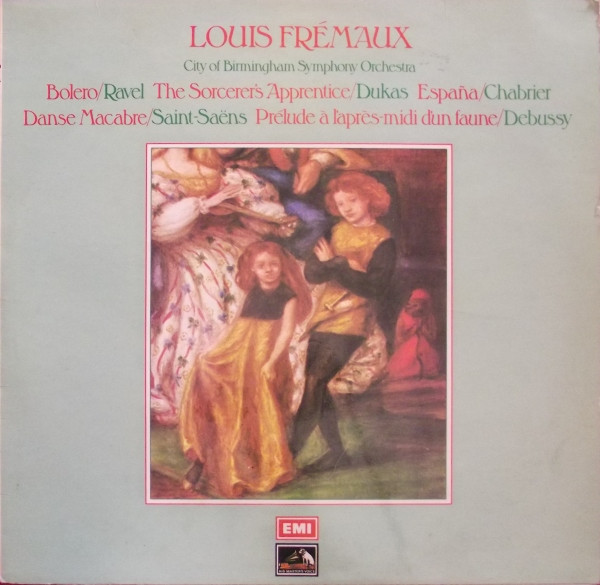
It’s the same recording of the works, but the one you want is on the real EMI label and pressed on UK import vinyl, not this awful Half-Speed recut from Japan.

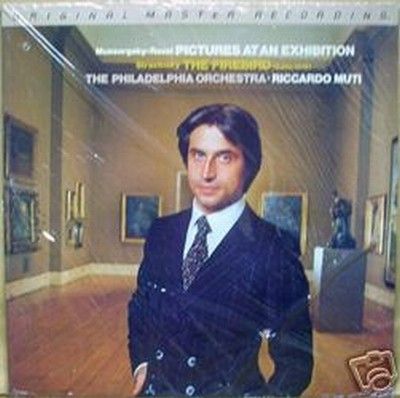
The record you see pictured is awful sounding, a true hall of shame pressing.

And why are the colors of the album jacket so washed out? Compare their cover to the real thing below. As we often find ourselves asking after reviewing one of these MoFi records: What were they thinking?

The MoFi mastering of Pictures at an Exhibition and The Firebird here are a bad joke played on credulous audiophiles. And yes, I bought them both back when they came out. I was as credulous as everybody else buying these so-called superior pressings.

All that phony boosted top end makes the strings sound funny and causes mischief in virtually every other part of the orchestra as well. Not surprisingly, those boosted highs are missing from the real EMIs.

These appear to be the unbearably bright strings that Stan Ricker favors — why, we have no idea.

The proof? Find me a Mobile Fidelity classical record with that little SR/2 in the dead wax that does not have bright string tone. I have yet to hear one.

The last time I played a copy of the MFSL I found the sound so hi-fi-ish I couldn’t stand to be in the room with it for more than a minute. Of course the bass is jello as well.

The EMI with the right stampers is worlds better.

(Warning: The domestic Angel regular version and the 45 are both awful.)

MoFi had a bad habit of making bright classical records. (More reviews here.) I suppose you could say they had a bad habit of making bright records in general. A few are dull, some are just right, but most of them are bright in one way or another.

(more…)

Pictures at an Exhibition – Uncannily Natural Piano Reproduction

More of the music of Modest Mussorgsky (1839-1881)

In a recent listing for a shootout winning pressing, we noted:

This original London pressing of the solo piano version of Pictures at an Exhibition has uncannily natural piano reproduction, which is why we are awarding this side one our highest sonic grade, A Triple Plus.

The fact that the recording takes place in Kingsway Hall in 1967 no doubt plays a large part in the natural sound. The hall is bigger here than on other copies, the piano even more solidly weighted, yet none of this comes at the expense of the clarity of the playing.

The piano has no smear, allowing both the percussive aspects of the instrument and the extended harmonics of the notes to be heard clearly and appreciated fully.

Side two has Mehta’s performance of the orchestrated work squeezed onto side two, which is never a good idea if one is looking for high quality orchestral sound. The performance itself is mediocre as well.

We are not, and never haver been, big fans of Mehta’s work with the Los Angeles Philharmonic on London.

The exceptionally rare copy of Mehta’s Planets can sound good, but 90% of them do not — just don’t make the mistake of telling that to the average audiophile who owns one. Harry told him it was the best, he paid good money for it, and until someone tells him different it had better be “the one Planets to own.” (Our favorite performance of The Planets can be found here.)

We see one of our roles here at Better Records as being the guys who actually will “tell you different,” and, more importantly, can back up our opinions with the records that make our case for us. (more…)

The Power of the Orchestra – Remastered by the Brain Trust at Chesky

Hot Stamper Pressings of Pictures at an Exhibition Available Now

Sonic Grade: F

Lifeless, compressed and thin sounding, here you will find practically none of the weight and whomp that turn the best Living Stereo pressings into the powerful listening experiences we know them to be.

We know that because we’ve played them by the hundreds on big speakers at loud levels.

It’s clean and transparent, I’ll give it that, which is no doubt why so many audiophiles have been fooled into thinking it actually sounds better than the original.

But of course there is no original. There are thousands of them, and they all sound different. (A concept we embraced many years ago and have never found any reason to doubt.)

The commentary reproduced below, from way back when, discusses a pair of records that proves our case in the clearest possible way.

We sold a 2-pack of Hot Stamper pressings, one with a good side one and one with a good side two. Why? Because the other sides were terrible! If you have a bad original, perhaps the Chesky will be better.

Our advice is not to own a bad original, or this poorly-mastered Chesky reissue, but instead we advise that you make the effort to find a good original, or two or three, as many as it takes to get two good sides.

(more…)

Bose Salutes the Sound Of Mercury Records (and Some Audio Lessons Learned Long Ago)

Hot Stamper Pressings of Mercury Recordings Available Now

This Bose / Mercury Demonstration LP is autographed by none other than Amar G. Bose. The autograph reads “To EMI, with regards and best wishes, Amar G. Bose.”

Bose may not have ever made very good speakers, but they sure knew good recordings when they heard them. This LP has excerpts from some of the top Mercury titles, including music by Copland (El Salon Mexico), Kodaly (Hary Janos Suite), Mussorgsky/ Ravel (Pictures At An Exhibition), and Rimsky-Korsakov (Russian Easter Overture).

I played one of these Bose records years ago and was surprised at how good it sounded. The transfers of the Mercury tapes were excellent. I guess that makes sense — if you want to show off your speakers you had better use a well-mastered record for the demonstration.

I was duped into buying my first real audiophile speaker, Infinity Monitors, when the clever salesman played Sheffield’s S9 through them. I bought them on the spot. It was only later when I got home that none of my other records sounded as good, or even good for that matter. That was my first exposure to a Direct to Disc recording.

To this day I can still picture the room the Infinity’s were playing in. It was a watershed moment in my audiophile life.

And of course I couldn’t wait to get rid of them once I’d heard them in my own system with my own records. I quickly traded them in for a pair of RTR 280-DRs. Now that was a great speaker! A 15 panel RTR Electrostatic unit for the highs; lots of woofers and mids and even a piezo tweeter for the rest. More than 5 feet tall and well over 100 pounds each, that speaker ROCKED.

(more…)

Ravel / Daphnis et Chloé – Good, Not Great on Decca Jubilee

Hot Stamper Pressings on Decca and London Available now

The Decca budget reissue you see to the left had passable sonics. It would probably be competitive with the top five percent ot Heavy Vinyl pressings that we’ve played over the last 30 years. Some of those would earn grades of 1.5+, which turned out to be the case here.

We play every pressing we can get our hands on because you never know just how good one of these budget reissues can sound until you clean it up and give it a spin.

Most don’t pan out — maybe one out of five is any good — but that’s just the nature of the best when it comes to collecting top quality records.

Most OJC pressings of jazz albums aren’t very good, but the best ones clearly are because they win our blinded shootouts.

If you want the best sound, you had better have your mind open to the idea that the originals are not the only ones that were mastered correctly. There are currently 175 records we’ve identified as sounding better on a reissue pressing, and that number probably represents less than half of the ones we’ve encountered over the many years we’ve actively been doing shootouts.

The commentary for the amazing sounding Decca originals below describes just how wonderful they are, worlds better than anything you can find on Heavy Vinyl.

(more…)

Debussy & Ravel / Julliard String Quartet

More of the Music of Claude Debussy

More of the Music of Maurice Ravel

  • An original Shaded Dog pressing of the famous Juilliard String Quartet’s performance of these wonderful classical works (one of only a handful of copies to ever hit the site), here with INCREDIBLE Shootout Winning Triple Plus (A+++) grades or close to them from first note to last
  • Having just played some killer copies of Death and the Maiden, we’re tempted to say that this Debussy record has the potential for even better sound – it’s richer and sweeter, but every bit as real and immediate as any chamber recording we know of
  • The Living Stereo sound here is Tubey Magical, lively and clear, with the kind of transparency that puts living, breathing musicians right in your listening room in the way that only the best vintage vinyl pressings can
  • Lewis Layton engineered this recording (along with Ed Begley) and he nailed it, perfectly capturing the rich, textured sheen on the strings, the hallmark of Living Stereo sound in the 50s and 60s
  • He recorded both the Schubert (LSC 2378) mentioned above and this wonderful Debussy/Ravel record (LSC 2413) for RCA in 1960 — it would be quite the understatement to say he had quite a gift for recordings of this kind

(more…)

Rimsky-Korsakoff, Saint-Saens, Prokofieff – Destination Stereo

More Classical and Orchestral Recordings

  • Boasting two STUNNING Shootout Winning Triple Plus (A+++) Living Stereo sides, this original Shaded Dog pressing is the BEST we have ever heard
  • It’s also fairly quiet at Mint Minus Minus, a grade that even our most well-cared-for vintage classical titles have trouble playing at
  • Explosive dynamics, huge space and size, unerringly correct tonality, this is a Demo Disc like no other
  • Shockingly real – proof positive that the cutting systems of the day are capable of much better sound than some audiophiles might think – if more evidence of that fact is what you’re after, see here and here
  • It has all the Living Stereo magic one could ask for, as well as the bass and dynamics that are missing from other Golden Age records
  • If you’re a fan of orchestral showpieces such as these, this Living Stereo from 1959 belongs in your collection.

This record is designed to show off the Living Stereo sound at its best and it succeeds magnificently. The full range of colors of the orchestra are presented here with remarkable clarity, dynamic contrast, spaciousness, sweetness, and timbral accuracy.

If you want to demonstrate to a novice listener why modern recordings are unsatisfactory, all you have to do is play this record for them. No CD ever sounded like this.

Just play “Gnomus” to hear The Power of the Orchestra, Living Stereo style.

The fourth and fifth movements of “Capriccio Espagnol,” the second track on side one, sound superb, clearly better here than on the Shaded Dog pressings we played a few years ago (which were terrible and never made it to the site. Great performance but bad mastering of what obviously was a very good master tape).

You can also hear the Living Stereo sound especially well on the excerpt from “The Fourth of July” performed by Morton Gould. It’s one of the best sounding tracks here.

When “in-the-know” audiophiles discuss three-dimensionalitysoundstaging and depth, they should be talking about a record that sounds like this.

(more…)

Ravel / Daphnis et Chloé / Monteux

More of the Music of Maurice Ravel

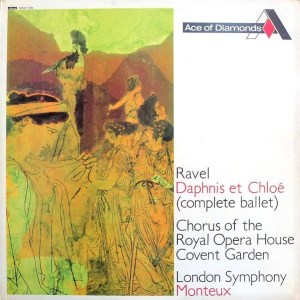
  • Boasting excellent Double Plus (A++) grades or close to them throughout, this vintage Decca Ace of Diamonds pressing was giving us the sound we were looking for on Ravel’s complete Masterpiece
  • The sound is big and rich, lively and open, with tons of depth and huge climaxes that hold together (particularly on side one)
  • The voices in the chorus are clear, natural, separate and full-bodied — this is the hallmark of a vintage Golden Age recording: naturalness
  • We know of no other recording of the work that does as good a job of capturing such a large orchestra and chorus
  • Of course, Monteux is a master of the French idiom – his performance of the complete ballet is definitive in our opinion
  • Even though properly-cleaned, properly-pressed, properly-mastered original Decca pressings are the ones that win our shootouts, we guarantee this 60s reissue will easily beat any copy of the album you can find, at any price
  • There are about 150 orchestral recordings we have found to offer the best performances with the highest quality sound. As card-carrying audiophiles, we naturally insist on both. This record is certainly deserving of a place on that list.

Both sides here are BIG, with the space and depth of the wonderful Kingsway Hall that the LSO perform in. John Culshaw produced the album, which surely accounts for the huge size and space, not to mention quality, of the recording. The sound is dynamic and tonally correct throughout.

(more…)

Ravel / Dukas et al. – Works by Ravel, Honegger and Dukas / Ansermet

More Classical and Orchestral Recordings

  • An incredible London pressingof this superb release with Nearly Triple Plus (A++ to A+++) grades on both sides – just shy of our Shootout Winner
  • It’s also fairly quiet at Mint Minus Minus, a grade that even our most well-cared-for vintage classical titles have trouble playing at
  • This spectacular Demo Disc recording is big, clear, rich, dynamic, transparent and energetic – here you will find some of the best orchestral Hot Stamper sound we offer
  • The sound of the orchestra is dramatically richer and sweeter than you will hear on practically all other pressings – what else would you expect from Decca’s engineers and the Suisse Romande?
  • 1963 was a great year for classical recordings – other Must Own Orchestral releases can be found here.

The sound is clear, with wonderful depth to the stage. As a rule, the classic ’50s and ’60s recordings of Ansermet and the Suisse Romande in Victoria Hall are as big and rich as any you may have ever heard. These recordings may just be the ideal blend of clarity and richness, with depth and spaciousness that will put to shame 98% of the classical recordings ever made.

Side One

Bolero (Ravel)

Tubey and clear, with both the snare and the flute coming from so far back in the hall. OUTSTANDING energy and dynamic power.

Turn it up and it really comes to life like LIVE MUSIC. It’s big, wide and believable. We loved it.

Side Two

The Sorcerer’s Apprentice (Dukas)

ZERO compression. ZERO distortion when loud. Which means it has ZERO compressor distortion, something not five out of a hundred Golden Age recordings can claim. Nice extended top too.

There is depth and richness to beat the band, as well as clarity and tonal correctness that let you forget the recording and just enjoy the music. This piece is not quite as transparent as the Ravel, but still has earned every one of its Three Pluses.

The timbre of the brass is right on the money. As we have noted before, the brass of the Suisse Romande is some of the best to have ever been committed to analog tape.

Again, this side had OUTSTANDING energy and dynamic power the likes of which we think you may never have heard.

La Valse (Ravel)

Again, with that wondrously huge hall adding a sense of space that will allow your speakers to disappear. The performers are not too close, which is very much in keeping with live music.

In his tribute to Ravel after the composer’s death in 1937, Paul Landormy described the work as follows:

“….the most unexpected of the compositions of Ravel, revealing to us heretofore unexpected depths of Romanticism, power, vigor, and rapture in this musician whose expression is usually limited to the manifestations of an essentially classical genius.”

(more…)

Destination Stereo – A Living Stereo Demo Disc

Hot Stamper Pressings of Living Stereo Titles Available Now

Your Destination — Stereo!

“Your passport to great music in new sound by the world’s greatest artists.”

This review was written about ten years ago.

This reasonably quiet RCA Shaded Dog LP has DEMONSTRATION QUALITY SOUND on BOTH sides. It is without a doubt THE best sounding copy we have ever heard*.

Side one is White Hot, with some of the best 1959 Living Stereo we’ve ever heard. Explosive dynamics, HUGE space and size, with unerringly correct tonality, this is a Demo Disc like no other.

When “in-the-know” audiophiles discuss three-dimensionalitysoundstaging and depth, they should be talking about a record that sounds like this.

Shockingly real – proof positive that the cutting systems of the day are capable of much better sound than many might think. 

(We admit that we have made the mistake of wrongthink in this regard.)

This record is designed to show off the Living Stereo sound at its best and it succeeds magnificently. The full range of colors of the orchestra are here presented with remarkable clarity, dynamic contrast, spaciousness, sweetness, and timbral accuracy.

If you want to demonstrate to a novice listener why modern recordings are unsatisfactory, all you have to do is play this record for them. No CD ever sounded like this.

Just play Gnomus to hear The Power of the Orchestra, Living Stereo style.

The fourth and fifth movements of Capriccio Espagnol, the second track on side one, sound superb, CLEARLY better here than on the Shaded Dog pressings of the original album we played about a year ago (which were terrible and never made it to the site. Great performance but bad mastering of what obviously was a very good master tape).

You can also hear the Living Stereo sound especially well on the excerpt from “The Fourth of July” performed by Morton Gould. It’s one of the best sounding tracks here.

I don’t think the RCA engineers can cut this record much better — it has all the Living Stereo magic one could ask for, as well as the bass and dynamics that are missing from so many other vintage Golden Age records.

This is as good as it gets, folks.

(more…)