*Half-Speed Commentaries

Three dozen or so commentaries on the problems with Half-Speed mastering.

Letter of the Week – “I think your blanket dislike of everything MoFi is also not credible.”

Record Collecting for Audiophiles from A to Z

Not long ago we received an email taking us to task for our bashing of Heavy Vinyl in general and Mobile Fidelity in particular.

Hey Tom,

I think your blanket ‘anything new is not as good as the best of original or vintage’ is totally illogical. Why couldn’t more care and excellence be put in to a new pressing now than the best you can find from an original vintage pressing? Take 70’s rock albums. With the oil crisis tons of vinyl was pretty rubbish and/or recycled, and sounds terrible. That having been said, most of the Jimmy Page remasters sound awful too. If you take somewhere like Craft Recordings and their one steps they are outstanding pressings. You also know RVG mastered records to deliberately avoid records jumping on relatively poor quality equipment and not to reflect the ‘true’ sound. So why can’t Kevin Gray master something now that RTI then presses that sounds ‘better’?

I think your blanket dislike of everything MoFi is also not credible. I listened to the original MoFi one step of Sgt. Pepper on a 2 million dollar plus system and it sounded better than any copy I’ve ever heard or anything else we had to compare it with that evening.

I’m not being critical. Just commenting. You clearly have a business in selling great sounding copies of ‘vintage’ pressings (at least I assume they are all vintage). That’s fine and that’s your prerogative. But it doesn’t render every single version of 60’s and 70’s releases produced in the last 10-15 years not worth listening to but it does support your business proposition. Fair enough.

I think you, your team and frequent shoppers may well be suffering from the one thing you kind of imply everyone who buys MoFi or Tone Poets records of – confirmation bias. But that’s fine. If it brings joy to your listening or that of your staff and customers I can’t argue with that. Well done. I just don’t buy the logic.  I too trust my ears! So I will at some point buy a copy that I’ve already got what I think is an amazing copy of and compare it to see for myself.

Nick H.

Nick,

Doing carefully controlled shootouts with large groups of records is the only practical way anyone can learn what to listen for. We wrote about it here in a review for Rubber Soul:

If you have five or ten copies of a record and play them over and over against each other, the process itself teaches you what’s right and what’s wrong with the sound of the album at key moments of your choosing.

Once your ears are completely tuned to what the best pressings do well that others do not do as well, using a specific passage of music — the acoustic guitar John beats the hell out of on Norwegian Wood just to take one example — it will quickly become obvious how well any given pressing reproduces that passage.

The process is simple enough. First you go deep into the sound. There you find something special, something you can’t find on most copies. Now, with the hard-won knowledge of precisely what to listen for, you are perfectly positioned to critique any and all pressings that come your way.

Admittedly, to clean and play enough copies to get to that point may take all day, but through the experience you will have gained knowledge that you cannot come by any other way.

If you do it right and do it enough it has the power to change everything you will ever do in audio.

Once you have done that work, when it comes time to play a modern record, on any label, it often becomes obvious what they “did to it” in the mastering, and how far short if falls when compared head to head to the pressings that were found to have the best sound. This is why we think the three most important words in the world of records are compared to what?

Our critiques are often quite specific about the sound of these records. Here is a good example from 2021Cat Stevens on 2 Heavy Vinyl 45 RPM discs.

I would be happy to sell you a killer Sgt. Pepper to change your mind, same deal, but I feel at this point you are very unlikely to take me up on that offer for the reasons you list.

The rest of your questions are good ones but have already been answered at length and ad infinitum on our blog. There are 5000 6000 postings. We repeat ourselves a lot.

Many of those who were skeptical before they heard their first Hot Stamper have written us letters extolling the virtues of our pressings. Here are some testimonial letters you may find of interest:

Either way, thanks for writing,

TP

PS

Before you try your first Hot Stamper, as long as you are buying vintage pressings in the meantime, not audiophile records, you are probably not wasting much money. Every vintage pressing has the potential to teach you something. Any modern record should always be considered a stop-gap, never an answer, something to beat when you finally find a real pressing in acceptable playing condition.

(more…)

Letter of the Week – “It just came to life in a way that left the MoFi pressing in the dust in every way imaginable.”

Hot Stamper Pressings of the Music of The Cars Available Now

Ray, a new customer, here relates to us the experience of playing his first Hot Stamper pressing:

Pardon the language, Well f**k me!

My brother bought me The Cars, Heartbeat City Super Hot Stamper. And I got it on June 17th.

I opened the well-packed box, and behold! a rather common looking version. I took it out of the well made sleeve and it looked unimpressive.

I then put it on my turntable. And WOW!!! It just came to life in a way that left the MoFi pressing in the dust in every way imaginable. EVERYTHING sounded better, and my speakers SANG!!!

I am beyong impressed with this record and have absolutely no intention of getting rid of it.

I always felt like Tom was being overly harsh with “audiophile” pressings, But DAYUM!!! He is right.

I would gladly pay $100 again to get a record as good as this. I’m hooked!!!

Thank you folks for doing all the work.

Ray, thank you so much for your enthusiastic letter. A few thoughts come to mind.

Indeed, our records are rather common looking. They often look like the standard issue pressing that came out back in the day, because in most case that is exactly what they are.

We are not trying to make fancy good sounding records. Those that try to make good sounding records these days have a failure rate that borders on 100%. Why would we want to follow in their footsteps?

No, all we do is find the copies that were mastered right, pressed right, and therefore sound right.

It sounds like it should be easier to do, and in many ways it is. It is still a lot of work, but we don’t mind, we actually enjoy it.

As for the MoFi, it is not the least bit surprising that our copy smoked their pressing.

No, the surprising thing is how on earth that ridiculous company is still in business. We asked the question here and it is unlikely we will ever get a good answer.

We’re glad to know that a hundred dollars can indeed buy a good record. We have 119 of them in stock at that price as of this writing, and almost as many for $75 and under.

Many of them punch well above their weight sonically because they have condition issues or are titles that are may not be as popular as others we offer. Either way, many of them are great records that deserve a home, preferably a home with a nice turntable. Won’t you help?

(more…)

Elvis Costello Likes Mobile Fidelity Records About as Much as I Do

Hot Stamper Pressings of the Music of Elvis Costello Available Now

And he doesn’t even know how bad they sound!


Excerpted from an interview in Variety.

People do seem to have caught on to “Painted” as a classic, though, even well outside the realm of your hardcore fans. I saw it on web forums where there were so many people thirsting over the two different editions of the album that Mobile Fidelity put out prior to this, calling it one of the great albums of the ’90s and clamoring to get the best available vinyl versions.

Well, I don’t have any opinion about that. I don’t hold with that company putting their name above the artist. I don’t like the way their records look. I’ve never listened to any of ’em because of that. I think there’s a huge arrogance. Because I’ve worked with the greatest, Bob Ludwig, who mastered the original record, remastered this (new Universal edition), mastered everything else. He’s the end of the story about that. So Mobile Fidelity can fuck themselves. If you put your name above the artist and above the title, what gives you the temerity to do that? You didn’t make the record.

But you must be proud of the fact that this body of work is so well-regarded…

Yeah. Apart from those copies. I’m kidding. They can do what they want with it. I mean, people are listening to it on a memory stick or whatever, you know? I guess it’s better that it exists than it doesn’t exist. It’s like when people say, are you worried about your birthday coming up? I go, you know what’s worse than having a birthday? Not having a birthday. (more…)

Letter of the Week – “When the needle hit the record, the room suddenly expanded by two quadrants.”

Our customer Michel wrote to tell us how much he likes the sound 0f his recently purchase Super Hot Stamper pressing of A Night at the Opera.

Hi Tom,
I should title this one “MFSL, Now You Can Kiss My Ass Goodbye” from the song, you know.

A Night at the Opera and Sheer Heart Attack are my two all time favorite Queen LPs. I’ve listened to so many copies of each and decades ago found happiness for sure, like when I got the MFSL.

But later in life, listening more critically, I was never happy… so much going on… always some sort of mish-mash of sound. Turning these LPs up to max volume and jamming out was no longer pleasurable, so I found myself not playing them anymore.

Recently I purchased A Night at the Opera from BR, a SHS.

When the needle hit the record, the room suddenly expanded by two quadrants. So wonderfully wide and big, the room was just filled with sound…..warmth abundant sound sans mish-mash.

The difference is truly dramatic. The depth is also there… you can feel the sound coming out of the shadows towards you in places. Absolutely stunning sound.

You have cracked the code on this one. This is an analog delight for sure. Many thanks.

Michel

Michel,

Thanks for your letter. I’m not sure how big two quadrants are, but I know a mish-mash when I hear one, and that is indeed the sound found on most pressings of the album, even the UK ones. I might describe it as a combination of congestion and vague imaging — a cloud of instruments, all mashed together.

A lot of records have that problem, especially if they haven’t been cleaned properly.

Later in life it seems you were rather less impressed with your MoFi than when you first bought it.

As I have said again and again on this very blog, it’s axiomatic with us here at Better Records that the better your stereo is at playing records, and the more critically you are able to listen, the worse their records will sound. There is no way their junk Half-Speed mastered vinyl can sound right on good equipment.

Now you know just how good a top quality pressing of A Night at the Opera can sound.

Even we didn’t until about seven years ago.

That’s how long it took us to crack the code, but I tell you this with confidence, having played practically every version of the UK pressings ever made: the right stampers are mindboggingly good and there is nothing like them. We wrote about the subject here:

As is sometimes the case, there is one and only one set of stamper numbers that consistently wins our Night at the Opera shootouts. We stumbled upon an out-of-this-world copy of the right pressing many years ago, a copy took the recording to a level we had no idea could even be possible. (We were going to give it Four Pluses, and probably should have, but cooler heads prevailed.)

Since then we have had many copies come in, but none that could compete with the Magic Stamper pressings. And the best part of this story is that, no, the best stampers are not 1, or 2, or even 3.

In other words they are far from the stampers found on the earliest pressings.

That’s one reason it took us so long to discover them, because they are much less commonly found than pressings with the earlier stampers. By the time these later pressings were mastered, pressed and released, the album’s biggest selling days were over.

Why is that, you ask?

Who knows? Who cares? What difference could it possibly make anyway?

(more…)

Midrange Suckout? I Have a Theory

These Titles Are Good for Testing Presence in the Midrange

Many audiophile records suffer from a bad case of midrange suckout.

Vocals and other instruments seem to be so far back in the soundfield that they might as well be coming from another room.

Yet somehow there are still audiophiles who defend the records put out by the ridiculous label that single-handedly created and produced that sound. What is wrong with these people?

(On a side note, yes, I was one of the audiophiles who fell for their phony EQ trickery in the 70s and 80s. In my defense, that was a long time ago.)

I Have a Theory

Actually, I have a good idea why so many so-called audiophile records have a sucked-out midrange.

A midrange suckout creates depth in a system that has difficulty reproducing it.

Imagine that instead of having your speakers pulled well out from the back wall the way you should, you instead have your speakers shoved flat up against that wall.

This arrangement has the effect of seriously limiting your speakers’ ability to reproduce the three-dimensional space of the recordings you play.

Kind of Blue on MoFi

I hinted back in 2022 I was going to discuss their pressing down the road, and like most things that I was supposed to write about down the road, we’re still waiting to see it.

The short version of that future commentary will note that the drums in the right channel of All Blues are about five feet further back in the soundfield than they are on our reference too-noisy-to-sell Six-Eye pressing, or any other pressing of the album we’ve played for that matter.

At the time I could not wrap my head around how Mobile Fidelity could have gotten hold of the multi-tracks in order to remix the album and place the drums further back in the mix.

(more…)

Half-Speed Masters – Stopgaps and Benchmarks

Hot Stamper Pressings of the Music of Joan Baez Available Now

Mobile Fidelity released a version of Diamonds and Rust on Anadisq in 1995, and if you want to hear a pressing that’s not murky, compressed and opaque, you would be wise to avoid their remastered pressing.

To be fair, MoFi has made some reasonably good sounding records too. For those of you whose budget is on the limited side, if you find an affordable copy of any of these MoFis, you are probably not completely wasting your money.

Stopgaps and Benchmarks

Our advice for the longest time has been that, while you are actively improving your stereo, room and setup, the best way to use your remastered audiophile pressings is as stopgaps and benchmarks.

As you make more and more progress, eventually you will find the vintage pressings that can show you what your audiophile pressings don’t do well, or at the very least, not as well as they should.

The unfortunate reality — considering how much money you had invested in them — is that they were falling short in many ways for all the years you had been playing them, but until you improved your playback, those problems were hidden from you.

Charting Your Success

As your stereo improves, you can actually chart your success by how many of these kinds of records you are able to eliminate from your collection. Once you can count the number of modern reissues you still own on one or two hands, there is a good chance you have reached a much higher level of playback.

(more…)

Letter of the Week – “…I am surprised at how muddy the bass sounds on the new one.”

Hot Stamper Pressings of the Music of Sting and The Police Available Now

One of our good customers had this to say about a record he read about on the blog, the Nautilus pressing of Ghost in the Machine.

Hey Tom,   

Did you write something about the Nautilus record… I thought so, but I couldn’t find it.

[This Ghost in the Machine link will take you to it.]

This is one of my favorites from my teenage years and so I decided to do my own little test… Sterling vs. Nautilus vs. Half Speed Abbey Road reissue… it feels pretty clear the Sterling is tops with Nautilus close but I am surprised at how muddy the bass sounds on the new one. And just how tamped down the record sounds. Which is I guess your point.

Geoff

Geoff,

You now know a great deal more about this album than most of the audiophiles expressing their opinions on audiophile forums.

You conducted a shootout, something most of them can’t be bothered to do.

You should not be surprised about muddy bass on Half-Speed mastered records, they all have it.

And tamped down? Tell me about it.

Compressed and lifeless are two qualities the audiophile record can be guaranteed to deliver. How these companies get away with producing one shitty remaster after another is beyond me. They’ve been making this junk for more than forty years and they apparently haven’t learned anything about records in all that time.

Welcome to the upside-down world of the modern audiophile record. The worse they sound, the more audiophiles seem to like them.

Your shootout provided you with a good lesson to learn right from the start. It has set you on a better path.

Try this experiment: Take four or five UK pressings, clean them up and then compare them to any of the ones you played — the sound should be night and day better. And, after doing that shootout, one of the four or five would be a truly Hot Stamper pressing.

(more…)

Mobile Fidelity’s Approach to Mastering – I Have a Theory

Hot Stamper Pressings of the Music of Little Feat Available Now

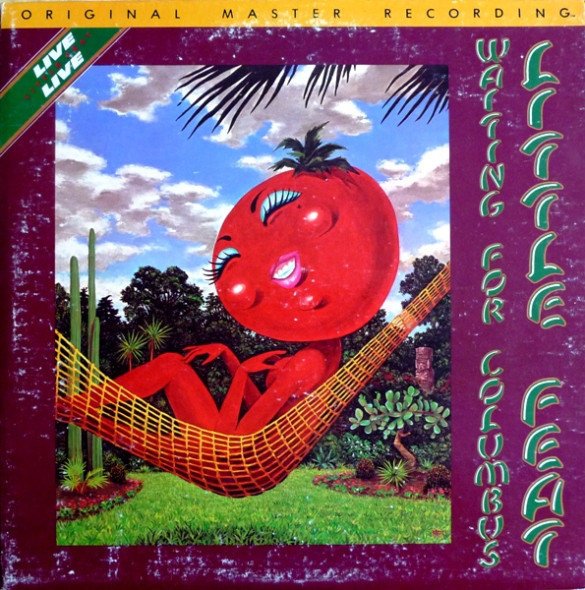
I have a theory about why MoFi’s mastering approach tended to work for the Waiting for Columbus album when it failed so miserably for so many others. It goes a little something like this. 

Back in their early days, MoFi tended to add bass and treble to practically every record they mastered, regardless of whether or not the master tape they were using needed a boost.

A little extra sparkle up top and a little extra kick down low was what the audiophile public seemed to want.  We call this the smile curve and lots of audiophile records have a case of it.

Truth be told, I was a member of that group and I know I did.

Fortunately for them, Waiting for Columbus is an album that can ofteny use a little at both ends. Rarely did The Mastering Lab supply it, making the original domestic pressings somewhat bass-shy and dull on the extreme top. The MoFi clearly corrected the poor EQ choices The Mastering Lab had often made. 


UPDATE 2024: Poor EQ Choices?

Or perhaps it could have been one or more of the following:

  • Perhaps the band liked it better that way.
  • Perhaps The Mastering Lab found it easier to cut that way.
  • Perhaps the cause of the records lacking extension on both ends comes from some other factors that cannot be known.

Or, if you don’t like those three, just make up some other reasons that sound plausible, or ones that fit in with other ideas you may have, even though there is probably not an iota of evidence to support any of it.

This is the way of the audiophile record collector — theories galore, but not much experimental evidence to back them up (or falsify them as the case may be). We are more inclined to the No Theory approach to finding good records, which you can read about here. We believe it has served us well and can do the same for you.

(more…)

Our Take on the MoFi 45 Brothers In Arms

Hot Stamper Pressings of the Music of Dire Straits Available Now

We have never bothered to play their remaster, along with some other Heavy Vinyl reissues we think have very little chance of actually sounding good to us.

I found out recently that the MoFi is now on the TAS Super Disc list. You can find it along with the domestic — yes, you read that right — domestic pressing of the first album.

Now just how hard of hearing do you have to be to think that the domestic pressing of Dire Straits’ first album is a Super Disc? A nice record, sure, but nice records aren’t really Super Discs, are they?

Not when there are UK pressings that trounce it. We should know, we’ve played them by the dozens. How the writers for The Absolute Sound can be this far off the mark is a question we cannot begin to answer.

The most obvious answer — and therefore the most likely one — is reviewer malpractice.

What else could it be?

What We Think We Know

We have written quite a number of reviews and commentaries for the first album and we encourage you to read some of them.

Speaking of Super Discs, the good British pressings are so good we put them on our Top Ten Most Tubey Magical Rock and Pop Recordings List. No domestic pressing we have ever played would qualify as anything other than a minimally-acceptable Hot Stamper.

We would never bother to put such a pressing in a shootout, when even the average run-of-the-mill UK copy is better.


We Get Letters

A few years ago we received this email from a customer.

“How would you compare the Brothers in Arms SHS to the Mobile Fidelity 45 rpm copy?”

Dear Sir,

We have never bothered to play their remaster, and why would we? Every MoFi pressing made by the current regime has had major sound problems when compared head to head with the “real” records we sell, and it’s simply not worth our time to find out exactly what is wrong with the sound of any of these new reissues, theirs included.

[I will be reviewing their unbelievably awful Dire Straits first album on 45 one of these days. Rarely have I heard such a good recording, a brilliant recording, turned into such a piece of crap. Robert Brook didn’t like it either.]

However, we have been known to make an exception to that rule from time to time. Recently we did so in the case of the Tea for the Tillerman George Marino cut at 45 RPM for Analogue Productions.

(more…)

Touch – A Great Test for Tweeters

More of the Music of John Klemmer

Mobile Fidelity, maker of some of the worst sounding records in the history of the medium, is the KING on this title. We know of no better pressing than the right version of the MoFi. (There are three different stampers for the MoFi, and only one of them ever wins shootouts.)

Klemmer says pure emotion is what inspired the album’s creation. Whatever he tapped into to find the source of that inspiration he really hit pay dirt with Touch. It’s the heaviest smooth jazz ever recorded. Musically and sonically, this is the pinnacle of Klemmer’s smooth jazz body of work. I know of none better. (If you want to hear him play more straight-ahead jazz try Straight from the Heart on Nautilus Direct to Disc.)

High Frequency Testing

MoFi was famous for demonstrating on an actual scope that the standard domestic ABC pressing had nothing above about 8 or 10 thousand cycles up top, which is why they all sound insufferably dull and dead. Some MoFi copies have no real top end either, which is the reason to we do these shootouts — to find the copies that are actually mastered and pressed right, not just the ones that should have been.

There’s plenty of information above 15K I would guess on this record — all those delicate percussion instruments ring so sweetly, the highs have to be extending way up there. (This album would probably make a good test to see how well your tweeters work, as well as for turntable setup. The right tracking weight and VTA are crucial to getting all the harmonics of a record like this right.) (more…)