Focus-Jazz

These are just a sampling of the jazz albums we think we know well.

Oscar Peterson’s Best Recording? Sure Sounds Like It to Us

Hot Stamper Pressings of the Music of Oscar Peterson Available Now

I’ve known this was a well recorded album since I first heard the DCC Gold CD back in the 90s.

It sounded great to me at the time, although I had nothing to compare it to. I was not an Oscar Peterson fan in those days. The CD may be very good, but it is unlikely to hold a candle to any of our Hot Stamper vinyl pressings.

I now realize that this album is clearly one of the best jazz piano recordings ever made. In its own way it’s every bit as good as  another landmark recording we talk about, The Three, recorded in 1975.

This album checks off a number of important boxes for us here at Better Records:

The description for the amazing copy we found in our shootout more than a decade ago has been reproduced below.

The Right Sound from the Get Go

Side one starts out with a solid, full-bodied piano and snare drum, a sure sign of great sound to come. This side was richer and fuller than all the other copies we played. That rich tonality is key to getting the music to work. It keeps all the instrumental elements in balance. The natural top on this side is just more evidence that the mastering and pressing are top drawer. Great space and immediacy, powerful driving energy — this side could not be beat.

And side two was every bit as good! The sound was jumpin’ out of the speakers. There was not a trace of smear on the piano, which is unusual in our experience, although no one ever seems to talk about smeary pianos in the audiophile world (except for us of course).

Ray Brown’s bass is huge, probably bigger than it would be in real life, but I can live with that. Once again, with this kind of extended top end, the space of the studio and harmonics of the instruments are reproduced brilliantly.

Testing with Oscar

Lately we have been writing quite a bit about how good pianos are for testing your system, room, tweaks, electricity and all the rest, not to mention turntable setup and adjustment.

  • We like our pianos to sound natural (however one chooses to define the term)
  • We like them to be solidly weighted
  • We like them to be free of smear, a quality that for some reason is rarely mentioned in the audiophile reviews we read [more on smear at the end of this commentary]

Here are some of our favorite jazz records with top quality piano sound

Other records that we have found to be good for testing and improving your playback can be found here.

(more…)

Prelude Is a Phenomenally Good Van Gelder Recording from 1973

Hot Stamper Pressings of Recordings by Rudy Van Gelder

On Deodato’s magnificent Prelude, listen to the trumpet on the second track on side one — it’s so immediate, it’s practically JUMPING out of the soundfield, just bursting with energy. Rudy can really pull off these big productions on occasion, and this session was clearly one of them.

If you have the kind of stereo that’s right for this music (the bigger the better) you could easily find yourself using this record as a demonstration disc. It’s very unlikely that many of your audiophile friends have ever heard anything like it.

The congas are present in the mix and very full-bodied — this allows them to really drive the rhythmic energy of the music. We know this because the copies with congas that were veiled or thin never seemed to want to get up and go. 

The top is most often the problem with these CTI pressings. The best sides seem to give you all the top end that was on the tape.

There is wonderful transparency and openness to the soundstage, as well as less congestion in the loudest parts. Also Sprach (2001) is on side one of the album and it is KILLER on the best pressings.

The best sides are also surprisingly sweet and Tubey Magical, nice qualities for a CTI record to have since so many of them are aggressive and edgy.

Full, lively horns; rich, punchy, smear-free congas; fuzzy fuzzed-out guitars; as well as correct tonality and Tubey Magic in every area of the spectrum, what’s not to love?

The best are so much bigger than most copies too. There is no doubt that you will hear the difference immediately. If you do a shootout with your best copy and ours plan on it being over practically before it starts.

(more…)

What to Listen For on Birds of Fire

Hot Stamper Pressings of Jazz-Rock Fusion Albums Available Now

Birds of Fire as a recording is not about depth or soundstage or ambience.

It’s about immediacy, plain and simple.

All the lead instruments positively jump out of the speakers — if you are lucky enough to be playing the right pressing.

This is precisely what we want our best Hot Stampers to do. In most cases, the better they do it, the higher their grade will be.

The main problem with this record is a lack of midrange presence. If the keyboards, drums and guitars are not front and center, your copy does not have the presence it should. On the best copies the musicians are right in the room with you. We know this for a fact because we heard the copies that could present them that way, and we heard it more than once.

Which of course gets to the reason shootouts are the only real way to learn about records.

The best copies will show you qualities in the sound you had no way of knowing were there. Without the freakishly good pressings you run into by chance in a shootout you have no way to know how high is up. On this record up is very high indeed.

A True Demo Disc

Birds of Fire is one of the top two or three Jazz/Rock Fusion Albums of All Time. In my experience, few recordings within this genre can begin to compete with the Dynamics and Energy of the best pressings of the album — if you have the Big Dynamic system for it.

(more…)

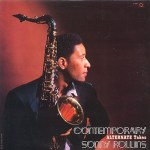
Sonny Rollins Helped Us See the Light Many Years Ago

The following commentary was taken from our mid-90s catalogs, the ones that came out back in the days when it was still possible to find great jazz records like Alternate Takes for cheap, often still sealed.

The Analogue Productions Heavy Vinyl recuts done by Doug Sax had come out a few years earlier, starting in 1992. Those remastered records were in print at the time I wrote this, and I was pretty pissed off at the way they sounded.

Here is our listing with some minor changes from long ago:

Acoustic Sounds had just remastered and ruined a big batch of famous jazz records, and shortly thereafter a certain writer in The Absolute Sound had said nice things about them.

Said writer and I got into a war of words over these records, long, long ago. You’ll notice that no one ever mentions these awful records anymore, and for good reason: they suck. If you own any of them, do yourself a favor and get either the CD or a good LP for comparison purposes. I expect you will hear what I’m talking about.

In my essay on reviewers I attack him for giving a big “Thumbs Up” in TAS to the botched remastering of Sonny’s Way Out West. The OJC reissue, though superior, is still only a pale shadow of the original.

The Real Deal

Now we have the real thing! This LP has three alternate takes from that session, all mastered by George Horn, and surprise, surprise, surprise, they sound just like my original, much better than (but not so different from) the OJC, and worlds away from the muted flab of the Analogue Productions LP!

(more…)

Touch – A Great Test for Tweeters

Hot Stamper Pressings of Well Recorded Jazz Albums In Stock Now

Mobile Fidelity, maker of some of the worst sounding records in the history of the medium, is the KING on this title. We know of no better pressing than the right version of the MoFi. (There are three different stampers for the MoFi, and only one of them ever wins shootouts.)

Klemmer says pure emotion is what inspired the album’s creation. Whatever he tapped into to find the source of that inspiration he really hit pay dirt with Touch. It’s the heaviest smooth jazz ever recorded. Musically and sonically, this is the pinnacle of Klemmer’s smooth jazz body of work. I know of none better. (If you want to hear him play more straight-ahead jazz try Straight from the Heart on Nautilus Direct to Disc.)

High Frequency Testing

MoFi was famous for demonstrating on an actual scope that the standard domestic ABC pressing had nothing above about 8 or 10 thousand cycles up top, which is why they all sound insufferably dull and dead. Some MoFi copies have no real top end either, which is the reason to we do these shootouts — to find the copies that are actually mastered and pressed right, not just the ones that should have been.

(more…)

Hampton Hawes at the Piano Is His Best Album

Hot Stamper Pressings of the Music of Hampton Hawes Available Now
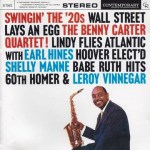
This Contemporary Yellow Label LP has the best sound and the best music we have ever heard on a Hampton Hawes album.

When we frist dropped the needle on this one many years ago we could not believe our ears — it’s got The Big Sound, that’s for sure.

If you’re a fan of jazz piano trios playing live-in-the-studio, this Contemporary from 1958 surely deserves a place in your collection. Of course it’s a personal favorite of yours truly.

This is my favorite Hampton Hawes record of all time. He died less than a year after these sessions. Looking at the cover, you can almost see in his face his acceptance of the end he knew was coming. He plays with deep emotion here.

Ray Brown and Shelly Manne (the same rhythm section who back Joe Sample on my all-time favorite piano trio album, The Three) accompany Hawes beautifully here.

As good as The Three may be, it is not remotely as natural sounding as this Contemporary recording by Roy DuNann. Due to the multi-miking approach Lee Herschberg took for the session, Shelly Manne’s drums on The Three stretch from speaker to speaker, presenting us with a drummer whose arms are impossibly long.

On this Contemporary recording the drummer is placed in the soundfield in one fixed location and his drum kit is the size of a standard jazz kit of the ’50s. I’m good with either approach, but there’s no question which one is more natural.

Drop the needle on “Blue In Green” on side two — the sound of the bowed bass is WONDERFUL. The version of “Killing Me Softly With His Song” that opens the album is especially lovely. (One high point of this album is the interview that Lester Koenig conducts with Hampton Hawes on the back cover. Lester died soon thereafter himself.)

(more…)

Proper VTA Is Essential to Getting the Sound of Benny’s Muted Trumpet Right

Hot Stamper Pressings of Contemporary Jazz Albums Available Now

For us audiophiles both the sound and the music here are enchanting. If you’re looking to demonstrate just how good a 1959 All Tube Analog recording can sound, this killer copy will do the trick.

The sound of the muted trumpet on side two is out of this world.

It has exactly the sonic signature of good tube equipment — the ability to make some elements of a recording sound shockingly real. There are tradeoffs with tube mastering to be sure, a subject we discuss in some depth here.

The trumpet is also a very good test for turntable setup, tracking, as well as arm and cartridge compatability. You’ve got to be set up properly for every aspect for a difficult-to-reproduce instrument like the trumpet to sound right.

Accurate VTA adjustment is critical to the record reproduction. If you do not have an arm that allows you to easily adjust its VTA, then you will just have to do it the hard way (which normally means loosening a set screw and moving the arm up and down until you get lucky with the right height).

Yes, it may be time consuming, it may even be a major pain in the ass, but there is no question in my mind that you will hear a dramatic improvement in the sound of your records once you have learned to precisely adjust the VTA for each and every one of them.

VTA is not a corner anyone should be cutting.

Careful adjustment of VTA is critical to getting good sound.

Of course, so are anti-skate, azimuth and tracking weight.

(more…)

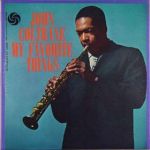
What to Listen For on My Favorite Things

Hot Stamper Pressings of the Music of John Coltrane Available Now

An album like this is all about its Tubey Magical stereoscopic presentation.

If you’re looking to demonstrate just how good 1961 All Tube Analog sound can be — thanks to legendary engineers Phil Iehle and Tom Dowd — an outstanding pressing of this album is just what the doctor ordered.

What to listen for you ask?

A solid, full-bodied, clear and powerful piano. As we focused in on the sound of the instrument, we couldn’t help but notice what a brilliant player McCoy Tyner is.

This may be John Coltrane’s album, but Tyner’s contribution is critically important to the success of My Favorite Things.

(We rarely care much for Tyner as a leader, which is why you see so few of his albums on the site. Most of his Milestone recordings are terrible, so caveat emptor on those especially.)

Lately we have been writing quite a bit about how pianos are good for testing your system, room, tweaks, electricity and all the rest, not to mention turntable setup and adjustment.

  • We like our pianos to sound natural (however one chooses to define the term).
  • We like them to be solidly weighted.
  • We like them to be free of smear, a quality that is rarely mentioned in the audiophile record reviews we read.
  • Some of the other records we’ve discovered with top jazz piano sound can be found here

(more…)

Red Clay Is a RVG/CTI Masterpiece

xxx

Hot Stamper Pressings of the Music of Freddie Hubbard Available Now

Red Clay is one of our favorite CTI albums – Red Clay (the song and the album) is Hubbard’s soul jazz masterpiece, and it’s a record that belongs in every audiophile’s jazz collection.

Lenny White drums up a storm on this album – on this copy he is playing right in the room with you.

If you’re a Hubbard fan, or perhaps a fan of early-70s soulful jazz, this title from 1970 is surely a Must Own.

We’ve recently compiled a list of records we think every audiophile should get to know better, along the lines of “the 1001 records you need to hear before you die,” but with more of an accent on the joy these amazing audiophile-quality recordings can bring to your life. Red Clay is a good example of a record most audiophiles may not know well but would benefit from getting to know better.

Hubbard was a master of funky jazz, and the song “Red Clay” is arguably the funkiest jazz track he ever committed to tape. At 12 minutes in length it is a transcendentally powerful experience — and the bigger your speakers and the louder you turn them up the more moving that experience is going to be!

The intro to “Red Clay” begins with a stylized free-form jam, sounding like a bop-jazz band of old, then takes form and solidifies into a groove of monstrous proportions. Ron Carter’s bass playing is stellar! It’s big and lively with tons of presence and energy.

5 stars: “This may be Freddie Hubbard’s finest moment as a leader, in that it embodies and utilizes all of his strengths as a composer, soloist, and frontman. [It] places the trumpeter in the company of giants such as saxophonist Joe Henderson, pianist Herbie Hancock, bassist Ron Carter, and drummer Lenny White… This is a classic, hands down.”

(more…)

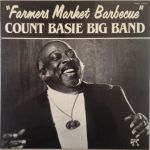
Farmers Market Barbecue – First Among Equals, or The Best Pablo Ever?

Hot Stamper Pressings of the Music of Count Basie Available Now

Musically FMB is a Top Basie Big Band title in every way. This should not be surprising: many of his recordings for Pablo in the ’70s and early ’80s display the talents of The Count and his band of veterans at their best.

Sonically it’s another story. Based on our recent shootout for this title, in comparison to the other Basie titles we’ve done lately, we would have to say that FMB is the best Basie big band title we’ve ever played. Since so many Basie big band recordings are so good, we don’t want to get ahead of ourselves; after all, we haven’t done shootouts for all of his Pablo large group recordings. To be safe we’ll just call this one First Among Equals.

The following are some general guidelines as to What to Listen For while you critically evaluate any of the Basie Big Band Pablo recordings (or any other big band recordings for that matter).

Simply put, we offer here a short list of qualities that we’ve come to appreciate on the best of the Basie Big Band pressings, qualities that we find are often in short supply on lesser LPs (and, as a rule, those that have been remastered onto Heavy Vinyl). (more…)