Rudy Van Gelder, Engineer – Reviews and Commentaries

Sonny Rollins and The Original Jazz Classics Series – Not a Good Match!

More of the Music of Sonny Rollins

Pictured is OJC 029, one of the earliest Sonny Rollins titles they picked to remaster.

Too bad they didn’t do a very good job with it.

The copy we auditioned did not impress us sonically, so don’t expect to see Hot Stampers of this title on OJC coming to the Better Records website any time soon.

The music might be wonderful — we unreservedly follow the maxim de gustibus non est disputandum — but the sound of this pressing is unlikely to ever be of audiophile quality.

There may be great sounding pressings of the album – how could we possibly know there aren’t without playing every version ever pressed? — but we’re pretty sure the OJC will always fall short of the mark.

We created two sections for the OJC label: one for the (potentially, it’s what Hot Stampers are all about) good sounding OJC pressings and one for the (probably, see the paragraph above) bad sounding ones.

If you know of a great sounding pressing of the album, feel free to let us in on what pressing you have and we might just pick one up and give it a listen.

We’ve auditioned countless pressings like this one in the 33 years we’ve been in business — buying, cleaning and playing them by the thousands. This is how we find the best sounding vinyl pressings ever made.

Not the ones that should sound the best. The ones that actually do sound the best.

(more…)

The Happy Blues on Vintage OJC Is Not Good

Hot Stamper Pressings of Recordings by Rudy Van Gelder Available Now

Some vintage OJC pressings sound good and some don’t.

OJC-013 doesn’t.

Typical bad OJC sound – thin and modern, lacking in the Tubey Magic that makes vintage pressings so musically involving. Gary Hobish mastered the record so I suppose he deserves the blame, but who knows how good the tapes were that he had to work with.

This album is fairly common on the OJC pressing from the 80s, but we found the sound of the OJC pressings we played seriously wanting. They have the kind of bad reissue sound that that plays right into the prejudices of most record collectors and audiophiles, for whom nothing but an original will do. The OJC pressings were dramatically smaller, flatter, more recessed and more lifeless than even the worst of the other LPs we played.

The lesson? Not all reissues are created equal. Some OJC pressings are great — including even some of the new ones — some are awful, and the only way to judge them fairly is to judge them individually, which requires actually playing a large sample.

Since virtually no record collectors or audiophiles like doing that, they make faulty judgments – OJC’s are cheap reissues sourced from digital tapes, run for the hills! – based on their biases and reliance on inadequate sample sizes.

You can find those who subscribe to this approach on every audiophile forum there is. The methods they have adopted do not produce good results, but as long as they stick to them they will never have to worry about discovering that inconvenient truth.

(more…)

Blue Gene – Soulful Jazz at Its Best

More Recordings by Rudy Van Gelder

For us audiophiles both the sound and the music here are wonderful. If you’re looking to demonstrate just how good a 1958 All Tube Analog Prestige recording by Rudy Van Gelder can sound, this killer copy will do the trick.

This pressing is super spacious, sweet and positively dripping with ambience. Talk about Tubey Magic, the liquidity of the sound here is positively uncanny. This is vintage analog at its best, so full-bodied and relaxed you’ll wonder how it ever came to be that anyone seriously contemplated trying to improve it.

This IS the sound of Tubey Magic. No recordings will ever be made like this again, and no CD will ever capture what is in the grooves of this record. There is, of course, a CD of this album, but those of us who possess a working turntable and a good collection of vintage vinyl could care less.

What We Listen For on Blue Gene

The best copies are rich and tubey; many pressings were thin and modern sounding, and for that they would lose a lot of points. We want this record to sound like something RVG recorded in 1958, and the best copies give you that sound, without the surface noise and groove damage the originals doubtless suffer from.

Some copies have much more space; some are more present, putting the musicians right in the room with you; some are more transparent, resolving the musical information much better than others, letting you “see” everyone in the studio clearly. Some have more rhythmic drive than others. On some the musicians seem more involved and energetic than they do on the average pressing.

The copies that do all these things better than other copies are the ones that win our shootouts.

This is clearly one of the better copies we have ever played. We think you will enjoy it immensely. And watch for more Gene Ammons records coming to the site soon. With RVG at the board his recordings are often superb.

(more…)

The Not-So-Magnificent Thad Jones – More Dreck on Heavy Vinyl

Hot Stamper Pressings of Blue Note Albums Available Now

After discovering Hot Stampers and the mind-blowing sound they deliver, a new customer generously sent me a few of his favorite Heavy Vinyl pressings to audition, records that he considered the best of the modern reissues that he owns.

He admitted that most of what he has on Heavy Vinyl is not very good, and now that he can clearly hear what he has been missing, having played some of our best Hot Stamper jazz pressings, he is going to be putting them up on Ebay and selling them to anyone foolish enough to throw their money away on this kind of junk vinyl.

We say more power to him.  That money can be used to buy records that actually are good sounding, not just the ones that are supposed to be good sounding, perhaps because they were custom manufactured with the utmost care and marketed at high prices to soi-disant audiophiles.

Audiophile records are a scam. They always have been and always will be.

The three of us who do the critical listening here at Better Records dropped the needle on the first disc in this set and, once the VTA was properly adjusted, gave it a chance to show us just what expert remastering from vintage mono tapes, at 45 RPM, on two slabs of luscious, thick vinyl, could do for the sound of Thad Jones’s trumpet, circa 1956.

The reissue we are playing is the one Music Matters released in 2010. There was a single disc version released by them in 2016, recut by Kevin Gray and Ron Rambach. At the time of this writing, there is one for sale on Discogs for $235.

None of us had ever heard the album on any media, vinyl or otherwise, but we know a good sounding jazz record when we hear one, and we knew pretty early on in the session that this was not a good sounding jazz record.

Two minutes was all it took, but we wasted another ten making sure it was as bad as we thought.

(more…)

The Original Jazz Classics Series Got Off to a Bad Start with Sonny’s Worktime Album

Hot Stamper Pressings of Sonny Rollins’s Albums Available Now

OJC-007, the first Sonny Rollins title they picked to remaster.

Too bad they did such a poor good job with it.

The copy we auditioned did not impress us sonically, so don’t expect to see Hot Stampers of this title on OJC coming to the Better Records website any time soon.

The music might be wonderful — we unreservedly follow the maxim de gustibus non est disputandum — but the sound of this pressing is unlikely to ever be of audiophile quality.

There may be great sounding pressings of the album – how could we possibly know there aren’t without playing every version ever pressed? — but we’re pretty sure the OJC will always fall short of the mark.

We created two sections for the OJC label: one for the (potentially, it’s what Hot Stampers are all about) good sounding OJC pressings and one for the (probably, see the paragraph above) bad sounding ones.

If you know of a great sounding pressing of the album, feel free to let us in on what pressing you have and we might just pick one up and give it a listen.

We’ve auditioned countless pressings like this one in the 33 years we’ve been in business — buying, cleaning and playing them by the thousands. This is how we find the best sounding vinyl pressings ever made.

Not the ones that should sound the best. The ones that actually do sound the best. (more…)

Getz Au Go Go – A Triumph for RVG

Hot Stamper Pressings of Recordings by Rudy Van Gelder Available Now

This is one of Rudy Van Gelder’s greatest recordings. I think it’s as good as it is because he was out of his studio (mostly) and had to revert to Recording 101, where you set up some good mics and get the thing on tape as correctly as you can. There’s hardly a trace of his normal compression and bad EQ on this album. (The sax is problematical in places but most everyone else is right on the money.)

I’ve gotten more enjoyment out of this Getz album than any other, including those that are much more famous. This one is (mostly) live in a nightclub and it immediately puts you in the right mood to hear this kind of jazz.

Listening to side one I’m struck with the idea that this is the coolest jazz record of cool jazz ever recorded. Getz’s take on Summertime is a perfect example of his “feel” during these sessions. His playing is pure emotion; every note seems to come directly from his heart.

What really sets these performances apart is the relaxed quality of the playing. He seems to be almost nonchalant, but it’s not a bored or disinterested sound he’s making. It’s more of a man completely comfortable in this live setting, surrounded by like-minded musicians, all communicating the same vibe. Perhaps they all got hold of some really good grass that day; that’s the feeling one gets from their playing. There’s a certain euphoria that seems to be part of the music. This is definitely one of those albums to get lost in.

(more…)

Our Previous Shootout for My Point of View Was in 2019

Hot Stamper Pressings of the Music of Herbie Hancock Available Now

TWO KILLER SIDES, dramatically better sounding than the other copies we played it against. Both sides here are incredible — rich and warm with a huge bottom end and lots of space around the instruments. 

We’ve been saving up copies of this album for years in hopes we could find a top copy to put on the site; we were pleasantly surprised to find one this good on an early label with decent vinyl.

This is a great album, with a killer lineup that includes Grant Green, Donald Byrd, Tony Williams, Hank Mobley and more. If you’re a fan of Herbie’s debut album Takin’ Off, you’ll find much to like here. The typical pressing leaves much to be desired though — many copies we’ve played sounded a bit hollow and flat. Hot Stamper copies give you richer, fuller sound and more energy, qualities that really help this music shine.

(more…)

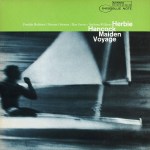
Connecting the Players on Maiden Voyage

More of the Music of Herbie Hancock

More Jazz Recordings Featuring the Piano

Freddie Hubbard on this album is nothing short of astonishing. I remember playing around with the stereo one day, listening for different effects as I made minor changes to the tracking weight, the VTA, adjustments to the Hallographs and the like, and at one point I noticed that the ensemble seemed to be more coherently connected, with each of the players more properly balanced with the others. 

It was a striking effect and it made me realize that musical values can often be overlooked while chasing after audiophile effects of one kind or another.

Hearing the ensemble come together made me appreciate this album even more.

Tony Williams on the drums here deserves a special nod. His cymbal work on the first track is original and spontaneous in the best tradition of jazz improvisation. (more…)

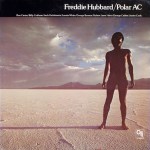
Polar AC – Smeary and Veiled, or Thin and Harsh?

Hot Stamper Pressings of the Music of Freddie Hubbard Available Now

Years ago we described the sound of the album this way:

Most copies fail in one of two ways. Either they’re smeary and veiled, or they’re thin and harsh, but this side has no such problems! There’s plenty of richness and sweetness, but there’s also real bite to the brass. 

Like side one, the balance between transparency and richness is just right here.

We’re big fans of Hubbard’s CTI material around here and this album has a lot of the qualities we love about this stuff. All the usual faces are here — Ron Carter, Billy Cobham, George Benson, Airto — and Rudy Van Gelder does a great job capturing their performances.

We used to criticize RVG pretty harshly, but in recent years we’ve found more and more pressings of his stuff that really work.

We Love CTI

We’ve been really digging this CTI jazz stuff lately. On the better albums such as this one, the players tend to sound carefree and loose — you can tell they are having a heck of a time with the material. Don’t get me wrong — we still love the Blue Note and Contemporary label stuff for our more “serious” jazz needs, but it’s a kick to hear top jazz musicians laying down the grooves and not taking themselves so seriously… especially when it sounds this good!

All Music Guide Bio

One of the great jazz trumpeters of all time, Freddie Hubbard formed his sound out of the Clifford Brown/Lee Morgan tradition, and by the early ’70s was immediately distinctive and the pacesetter in jazz.

Born and raised in Indianapolis, Hubbard played early on with Wes and Monk Montgomery. He moved to New York in 1958, roomed with Eric Dolphy (with whom he recorded in 1960), and was in the groups of Philly Joe Jones (1958-1959), Sonny Rollins, Slide Hampton, and J.J. Johnson, before touring Europe with Quincy Jones (1960-1961). He recorded with John Coltrane, participated in Ornette Coleman’s Free Jazz (1960), was on Oliver Nelson’s classic Blues and the Abstract Truth album (highlighted by “Stolen Moments”), and started recording as a leader for Blue Note that same year.

Hubbard gained fame playing with Art Blakey’s Jazz Messengers (1961-1964) next to Wayne Shorter and Curtis Fuller. He recorded Ascension with Coltrane (1965), Out to Lunch (1964) with Eric Dolphy, and Maiden Voyage with Herbie Hancock, and, after a period with Max Roach (1965-1966), he led his own quintet, which at the time usually featured altoist James Spaulding. A blazing trumpeter with a beautiful tone on flügelhorn, Hubbard fared well in freer settings but was always essentially a hard bop stylist.

In 1970, Freddie Hubbard recorded two of his finest albums (Red Clay and Straight Life) for CTI. The follow-up, First Light (1971), was actually his most popular date, featuring Don Sebesky arrangements. But after the glory of the CTI years (during which producer Creed Taylor did an expert job of balancing the artistic with the accessible), Hubbard made the mistake of signing with Columbia and recording one dud after another; Windjammer (1976) and Splash (a slightly later effort for Fantasy) are low points.

However, in 1977, he toured with Herbie Hancock’s acoustic V.S.O.P. Quintet and, in the 1980s, on recordings for Pablo, Blue Note, and Atlantic, he showed that he could reach his former heights (even if much of the jazz world had given up on him).

Side One

Polar AC 
People Make the World Go Round 
Betcha by Golly, Wow

Side Two

Naturally 
Son of Sky Dive

Our Previous Shootout for Midnight Blue Took Place Back in 2019

Hot Stamper Pressings of Jazz Guitar Recordings Available Now

Midnight Blue is back on the site for the first time in years, six of them to be exact, and here you will find Nearly Triple Plus (A++ to A+++) grades on both sides of this vintage 60s pressing.

One of our All Time Favorite Blue Note albums for music and sound – is there a better bluesy jazz guitar album?

5 stars on AMG – if there were a Top 100 Jazz List on our site, Midnight Blue would be right up at the top of it.

It’s taken us at least five years to get this shootout going, and none of the top copies we managed to get hold of did not have condition issues of some kind — good luck finding one of these on your own, you are going to need it.

Jazz Improv Magazine puts the album among its Top Five recommended recordings for Burrell, indicating that “[i]f you need to know ‘the Blue Note sound,’ here it is.”

Midnight Blue is our favorite Kenny Burrell album of all time, at least in part because it’s one of the All Time Best Sounding Blue Notes. 

If you already own a copy of Midnight Blue and you don’t consider it one of the best sounding jazz guitar records in your collection, then you surely don’t have a copy that sounds the way this one does! In other words, you don’t know what you’re missing. (And if you own the Classic Records release, or any other Heavy Vinyl pressing from the modern era, then you really don’t know what you are missing.) (more…)