Rudy Van Gelder, Engineer – Reviews and Commentaries

Our Search for Shootout Winning Sound on Modern Vinyl Finally Pays Off

Our (Incomplete) List of Potentially Very Good Sounding OJC Pressings

It has finally come to pass. A modern pressing has won a shootout.

Having auditioned more than a dozen modern (post-2000) OJC pressings and having had them fall far short of the mark again and again — when they weren’t just plain awful — we have now discovered one that can win a shootout.

As you imagine, this came as quite a shock.

We weren’t sure precisely which of the many OJC pressings our shootout winner was until we looked up the stamper numbers on Discogs. To our surprise, it had clearly been made sometime in the the 21st century.

That Never Happens

This has never happened before. No record made since 2000 has ever won a shootout against a vintage pressing of the same title.

Modern records range from awful to very good, but one quality they have never had is the ability to be the best of the best.

Now one has.

(more…)

Robert Brook Shoots Out One Flight Up

Hot Stamper Pressings of Blue Note Albums Available Now

We have never heard the Tone Poets pressing that Robert played against the Van Gelder cutting he discusses in the commentary below.

We have one in stock and are just waiting to do the shootout for the album so that we can compare it to the better pressings we know we will find.


UPDATE 2025

We have now played the Tone Poets pressing for ourselves, and if anything, Robert is being too kind!


You may have read that we were knocked out by a killer copy way back in 2007. We expect to be no less knocked out in 2023.

Robert concludes with his take on the strengths and weaknesses of the two pressings. Here is a excerpt:

Overall, the Tone Poet is closed, distant and frankly boring to listen to. Where is the energy of the music? Where is the presence of these musicians? Where is the studio space?

He goes on in much more detail, but this is exactly the kind of sound we hear on one Heavy Vinyl pressing after another. For some reason, none of these shortcomings appears to bother the fans of the label. I get why this guy is missing the boat: he actually thinks a system with five inch woofers can play jazz. What possible excuses could these other people have? [1]

The complete review can be found below. If you are considering following the crowd and buying some of this label’s albums, you might want to take it slow. (Those of you with five inch woofers can charge right ahead. The sonic problems with the Tone Poets releases Robert Brook describes would barely be audible on such a system, so get while the gettin’s good. Just make sure you are never tempted to upgrade to big speakers. You could find yourself in the unfortunate position of needing a new record collection to go along with them. Unlike Tone Poets releases, good records ain’t cheap.)

Dexter Gordon’s ONE FLIGHT UP: One of the Better TONE POETS?

[1] This is rhetorical question. These other folks have no excuses. They have exactly the sound quality they have earned by underutilizing the two most important audio resources they have at their disposal: time and money.

If they have failed to put in enough of either one or both, they have only themselves to blame for letting themselves be fooled by the chalatans currently marketing one meretricious [2] Heavy Vinyl pressing after another.

If they decide to remedy this sad state of affairs, we are more than happy to guide them in the new and exciting direction we’ve pioneered over the course of the last twenty years or so. The advice we give in this commentary would be a good place to start: first get good sound – then you can recognize and acquire good records
For another 60+ pieces of record collecting advice, more than enough to keep anyone busy for months, perhaps years, please click here.

[2] To save you the trouble of looking it up, Merrian-Webster defines meretricious as apparently attractive but having in reality no value or integrity. Used to suggest pretense, insincerity, and cheap or tawdry ornamentation.

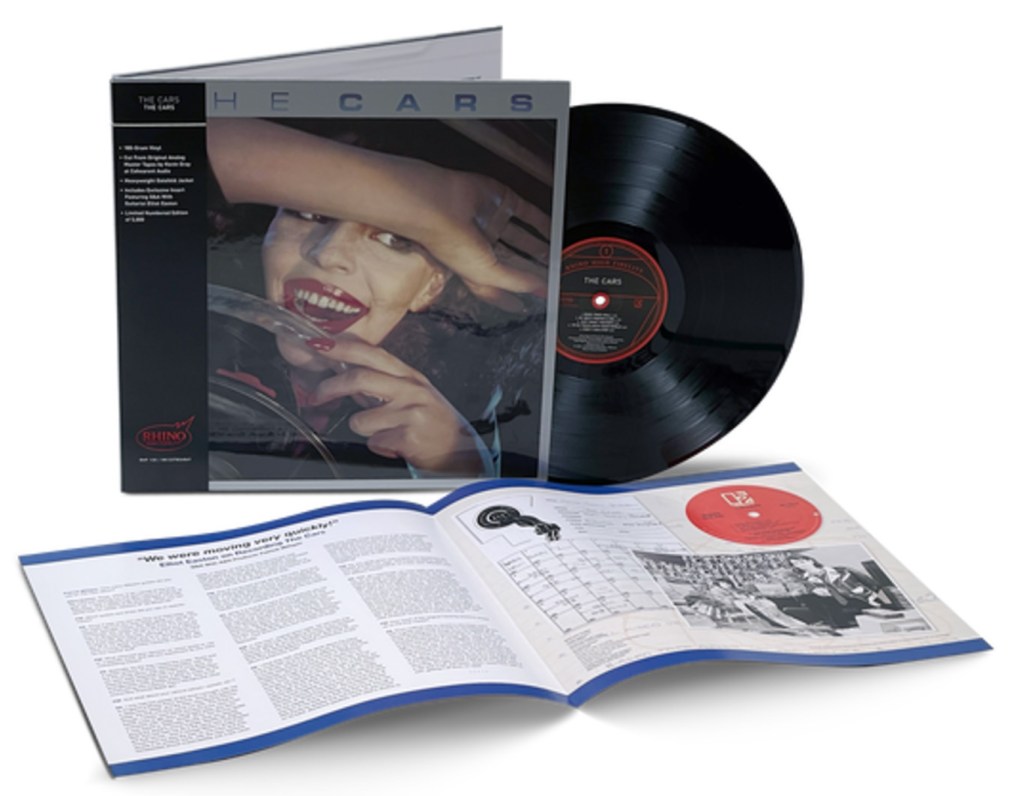
For a deeply meretricious release of recent vintage (OBI strip!, custom booklet!, premium heavy vinyl!, fold-open cover!), see The Cars on Rhino. The only thing left out of the package was a good sounding LP.


Further Reading

(more…)

Are Reviews Objective?

Robert Brook has a blog which he calls

A GUIDE FOR THE DEDICATED ANALOG AUDIOPHILE

Robert recently addressed an issue that came up when someone left a comment about the sound of Tone Poets reissues vis-a-vis the the pressings that Rudy Van Gelder mastered, to wit:

“To say anything other than the difference (between the T.P. and the RVG) is subjective is misleading the audience.”

Robert explains in the post linked below that he has worked very hard to make his system as neutral as he possibly can, and why he thinks that is a good idea. He also notes that he isn’t done, that there is plenty of work left to do, and that a more revealing, more truthful system is his one and only goal.

Any piece of equipment, or tweak, or setup adjustment that brings him closer to the sound his critical listening skills tell him are an improvement is to be adopted. They have passed passed the “more truthful” test.

Are My REVIEWS Objective?

There are scores, maybe even hundreds of posts on this very blog to explain what we do and how we do it.

We tell you about our playback system and why it’s good at its job.

In addition, practically every listing on our site has standardized text detailing the three areas that are key to understanding our vintage vinyl offerings. They include:

  1. What sonic attributes our Hot Stampers have.
  2. How we go about finding records with these attributes, and
  3. What we’re listening for in order to distinguish superior pressings from common ones.

(more…)

Somethin’ Else Sets the Record for Straight Ahead Jazz

Hot Stamper Pressings of Blue Note Albums Available Now

In 2010 or thereabouts we had this to say about a copy of Somethin’ Else we had just played:

The music here is amazing — as I’m sure most of you know, this is as much a showcase for Miles Davis as it is for Cannonball himself — but the good news for audiophiles is that it’s also one of the BEST SOUNDING BLUE NOTE ALBUMS we know of!

When you hear it on a copy like this, it’s about As Good As It Gets.

Setting the Record for Straight Ahead Jazz

After doing this shootout in 2015, I would like to amend the above remarks for being much too conservative. The current consensus here at Better Records is that this album deserves to hold three — count ’em, three — somewhat related titles:

  • One, The Best Sounding Blue Note record we have ever played.
  • Two, The Best Sounding Jazz Record we have ever played.
  • Three, Rudy Van Gelder’s Best Engineering (based on the copies we played).

Our shootout winners had more energy, presence, dynamics and three-dimensional studio space than any jazz recording we have ever heard. The sound was as BIG and BOLD as anything in our audio experience.

Add to that a perfectly balanced mix, with tonality that’s correct from top to bottom for every instrument in the soundfield and you may begin to see why we feel that the best copies of this album set a standard that no other jazz record we’re aware of can meet.

Have we played every Blue Note, every RVG recording, every jazz record? We would never say such a thing (nor should anyone else).

However, in our defense, who could possibly claim to have critically evaluated the sound of more jazz records than we have?

(more…)

The Best Jazz Record Ever Made, or the Best Jazz Record We’ve Ever Played?

Masterpieces of Jazz – The List So Far

I ran across this listing for Cannonball Adderley’s Somethin’ Else today, a record we raved about after doing a shootout for it years ago. Notice the careful hedging in the phrases with newly added italics:

The music here is amazing — as I’m sure most of you know, this is as much a showcase for Miles Davis as it is for Cannonball himself — but the good news for audiophiles is that it’s also one of the BEST SOUNDING BLUE NOTE ALBUMS we know of. When you hear it on a copy like this, it’s just about As Good As It Gets.

After doing this shootout in 2015 I would like to amend the above remarks for being much too conservative. The current consensus here at Better Records is that this album deserves to hold three — count ’em, three — somewhat related titles:

One, The Best Sounding Blue Note record we have ever played.

Two, The Best Sounding Jazz Record we have ever played.

Three, Rudy Van Gelder’s Best Engineering (based on the copies we played).

Our shootout winners had more energy, presence, dynamics and three-dimensional studio space than any jazz recording we have ever heard. The sound was as BIG and BOLD as anything in our audio experience.

Add to that a perfectly balanced mix, with tonality that’s correct from top to bottom for every instrument in the soundfield and you may begin to see why we feel that the best copies of this album set a standard that no other jazz record we’re aware of can meet.

Have we played every Blue Note, every RVG recording, every jazz record?

Of course not. We would never make such a claim. It’s preposterous on its face.

All Well and Good, But Bear This in Mind

In our defense, who could possibly claim to have critically evaluated the sound of more jazz records than we have?

There are multitudes of music experts in the world of jazz. For jazz sound quality the numbers must surely be orders of magnitude smaller, and here is where we’re [pretty sure we have more than a few critically valuable advantages, to wit:

  • better playback equipment,
  • better record cleaning technologies,
  • stacks of pressings of the same title,
  • a scientifically oriented approach and, most importantly of all,
  • a single-minded purpose. 

All our efforts are in service to only one end, to find the pressing with the ultimate in analog sound.

(Naturally we leave the sound of CDs and other digital formats to others. Although CDs often outperform their modern Heavy Vinyl pressing equivalent — here is a case in point — we know our lane and and are happy to stay within it.) (more…)

Tone Poets and One-Legged Tarzans

Basic Audio Advice — These Are the Fundamentals of Good Sound

A fundamental tenet of conservatism is that we must accommodate ourselves to the world that exists, not the world we might want to pretend exists, or the world we would like to exist.

The laws of physics are laws — not theories, not recommendations — and they operate independently of how convenient we may find them.

It follows from this — if you will allow me to make the case — that not everybody with a stereo can play Rudy Van Gelder’s recordings properly, and some people cannot play Tarzan at all. (More on that below.)

There is a fellow, rl1856, who made some comments on Robert Brook’s blog, addressing the Tone Poets pressings of RVG’s recordings vis-a-vis vintage pressings that RVG mastered. (Emphasis added.)

rl1856 writes:

An original RVG 1st or 2nd pressing has a visceral, “edge of the seat” feeling that is missing in the TP [Tone Poets] and BN [Blue Note] Classic reissues. The RVG has a tighter stereo spread, and is voiced so that the listener feels they are very close to the musicians. The TP and Classic remasters have a more distant perspective. The soundstage is wider, but the added apparent distance between musician and listener significantly reduces the impact of the music. OTOH, the reissues have greater extension at frequency extremes, and reproduce more micro detail than original pressings. We know that RVG used a surprising amount of EQ when mastering his LPs back in the day. So we need to ask ourselves, what do we want ? A better version of what we are familiar with, including EQ compromises, or a more accurate representation of what was actually captured on the master tape in RVG’s studio ? The answers may be mutually exclusive.

My system: Linn LP12 ITTOK LVII, SoundSmith Denon 103D, Audio Research SP10MKIII, Luxman MA 88 monoblocks, or Triode TRV 845PSE, or Mac 240, KEF LS50. Resolving enough to easily hear differences in LP quality.

When an audiophile reveals that his equipment is simply not capable of reproducing the sound of live music, I think that we can safely ignore whatever opinions he may have offered about the sound of the records he is discussing.

It’s obvious that the records were played with unacceptably low fidelity, which means he has all the credibility of a blind man judging paintings.

If this person wants to make the case that he is in fact able to reproduce music with acceptable fidelity, we would need to know more about his system and room in order to take his claim more seriously.

(more…)

Oliver Nelson’s Masterpiece – So Much Better Sounding on the (Right) Reissue

Hot Stamper Pressings that Sound Their Best on the Right Reissue

For those of you who still cling to the idea that the originals are better, this Hot Stamper pressing of the album should be just the ticket to set you straight.

Yes, we can all agree that Rudy Van Gelder recorded it, brilliantly as a matter of fact. Shouldn’t he be the most natural choice to transfer the tape to disc, knowing, as we must assume he does, exactly what to fix and what to leave alone in the mix?

Maybe he should be; it’s a point worth arguing.

But ideas such as this are only of value once they have been tested empirically and found to be true.

(more…)

Midnight Blue Is a Masterpiece

Hot Stamper Pressings of the Music of Kenny Burrell

Midnight Blue is our favorite Kenny Burrell album of all time, at least in part because it’s one of the All Time Best Sounding Blue Notes. 

If you already own a copy of Midnight Blue and you don’t consider it one of the best sounding jazz guitar records in your collection, then you surely don’t have a copy that sounds the way our Hot Stamper pressings do. In other words, there is a very good chance you simply don’t know what you’re missing.

Don’t think this is just another 60s jazz guitar album. With Stanley Turrentine on sax and Ray Baretto on congas, this music will move you like practically no other. When Turrentine (a shockingly underrated player) rips into his first big solo, you’ll swear he’s right there in the room with you.

And if you do have one of our better Hot Stampers and it still isn’t the best sounding jazz guitar album in your collection, then you have one helluva jazz collection. Drop us a line and tell us what record you like the sound of better than Midnight Blue. We’re at a loss to think of what it might be.

Midnight Blue checks off a number of important boxes for us here at Better Records.

(more…)

We Review the DCC and an Original Pressing of Lush Life

Hot Stamper Pressings of the Music of John Coltrane Available Now

Sonic Grade: B or so (DCC) 

The DCC heavy vinyl pressing is a nice record. I remember liking it when it came out. Nowadays I would probably call it passable, similar in quality to those on this list.

If for some reason we could not find copies of the album that substantially beat the sound of remastered LPs such as the DCC LP, we simply would not have anything to offer.

It was only a few months ago, early in 2016 in fact, that we chanced upon the right kind of pressing — the right era, the right label, the right stampers, the right sound. Not just the right sound though. Better sound than we ever thought this album could have.

Previously we had written:

“There are great sounding originals, but they are few and far between…”

We no longer believe that to be true. In fact we believe the opposite of that statement to be true. The original we had on hand — noisy but with reasonably good sound, or so we thought — was an absolute joke next to our best Hot Stamper pressings. Half the size, half the clarity and presence, half the life and energy, half the immediacy, half the studio space. It was simply not remotely competitive with the copies we now know (or at least believe, all knowledge being provisional) to have the best sound.

Are there better originals than the ones we’ve played? No doubt. If you want to spend your day searching for them, more power to you. And if you do find one that impresses you, we are happy to send you one of our Hot Copies to play against it. We are confident that the outcome would be clearly favorable to our pressing. Ten seconds of side one should be enough to convince you that our record is in an entirely different league, a league we had no idea even existed until just this year.

By the way, the mono original we played was by far the worst sound I have ever heard for the album. By far. (more…)

Rudy Van Gelder is One of Our Favorite Engineers

Hot Stamper Pressings of Recordings Engineered by Rudy Van Gelder

RVG is one of our favorite recording and mastering engineers. The really good RVG pressings (often on the later labels) sound shockingly close to live music — uncompressed, present, full of energy, with the instruments clearly located on a wide and often deep soundstage, surrounded by the natural space and cool air of his New Jersey studio. As our stereo has improved, and we’ve found better pressings and learned how to clean them better, his “you-are-there” live jazz sound has come to impress us more and more.

We used to put this commentary at the bottom of some of our listings:

Rudy Van Gelder does it again! I hear virtually none of his bad EQ, compressor overload and general unpleasantness. Instead, this recording has smooth, sweet mids; open, unexaggerated highs; and rich, tonally correct bass. In other words, you would never know it was an RVG recording.

With your kind permission we humbly ask that you allow us to take it all back.

We wrote the following about another of our favorite RVG jazz recordings, All the King’s Horses:

(more…)