vin-RCA-w

We judged these vintage RCA records to have unacceptable sound based solely on the specific pressings we played.

We can’t say that other pressings won’t sound better. We just don’t plan on playing any more copies to find out.

We Was Wrong about Billy the Kid in 2011

Living Stereo Titles Available Now

The rave review you see below was written in 2011. Recently we played a stack of copies of the album and realized that we was wrong about it.

As you may have noticed, this is a regular feature of The Skeptical Audiophile.

Live and Learn is our motto, and progress in audio is a feature, not a bug, of record collecting at the most advanced levels.

(“Advanced” is a code word for having little to no interest in practically any remastered pressing marketed to the audiophile community. If you want to avoid the worst of them, we will gladly help you do that.)


Our Review from 2011

Super Hot Stamper sound on BOTH sides, with side one so energetic and exciting it would easily qualify as a Demo Disc. This title is almost impossible to find in anything but beat up condition. Records like these got played over and over and few survived the ten grams of stylus pressure and mis-aligned cartridges of the day.  

The Big Sound

Side one is a bit recessed sounding at the beginning but it soon comes to life.

The drums and snares are HUGE in this recording, way at the back of the hall where they belong.

The sound just jumps out of the speakers — believe me, not many Living Stereo pressings from 1958 can do that.

If you like your exciting music to have exciting sound, this pressing will do the trick.

A++ is our grade. The loudest massed string passages can be a bit much, but they are tolerable. Many pressings of this album that we’ve played in the past have pretty much been unlistenable.

Rodeo

So dynamic! — you better have your stereo working at the top of its game or this side is going to be hard to sit through. The close-miked xylophone will give your arm and cart a real workout. If you have precise control over your setup, this may be a good record to fine tune it with. VTA is of course ultra-critical on vintage classical albums such as this.

The quieter passages fare best, showing off the Living Stereo Tubey Magic to full advantage.

Hoe-Down sounds like it may be slightly worn; either that or its got some compressor distortion problems.

With Big Bold sound such as this, the engineers had to walk a very fine line in order to balance the dynamic power of the music without letting the quietest passages disappear. (Nowadays loud orchestral music is either dynamic and shrill or compressed to death.)
(more…)

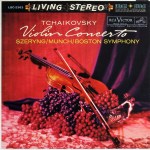
Another Dubious Recording of Tchaikovsky’s Violin Concerto

Hot Stamper Pressings of the Music of Tchaikovsky Available Now

1S/1S Shaded Dog original pressing.

Ooh, let the drooling begin. 

Here is our admittedly very old review for exactly the one copy we had on hand to play, although, to be fair, we have played more than one copy of the album over the years, and it never sounded especially good to us on any of the copies we auditioned.

The violin is very immediate sounding on this recording, maybe too much so.

Either way, the sound of the orchestra is where this record falls short.

It’s congested, thin and shrill in places. The right copy of Heifetz’s performance on LSC 1992 is a much better record overall. Some may prefer Szeryng’s way with this famous piece, which, as a matter of taste, is fine by us.

If you’re listening for just the performance and the sound of the violin, you may find this record to be more acceptable than we did.

(more…)

Dvorak / Cello Concerto – Hard to Recommend on Living Stereo

Hot Stamper Pressings of Living Stereo Titles Available Now

I have never heard a copy of this record sound better than decent. This title is very unlikely to have the wonderful sound of the best Living Stereo pressings that you can find on our site, each of which has been carefully evaluated to the highest standards.

If you can get one for cheap, go for it. Otherwise I recommend you pass if what you are looking for is audiophile quality sound.

Perhaps the poor recording quality (I’m guessing; obviously I’ve never heard the master tape) explains the poor sound of the Classic Records remastered version from 1994.

Not that that stopped anybody from buying those awful 180 gram pressings! They may have been mastered by one of the greats, Bernie Grundman, but he was well past his prime when he was working for that awful label, as we explain here.

Have You Noticed?

If you are a fan of Living Stereo pressings, have you noticed that many of them – this one for example – don’t sound all that good?

If you’re an audiophile with good equipment, you should have. But did you? Or did you buy into the hype surrounding these rare LSC pressings and just ignore the problems with the sound?

There is an abundance of hype surrounding the hundreds of Heavy Vinyl pressings currently in print. I read a lot about how wonderful their sound is, but when I actually play them, I rarely find them to be any better than mediocre, and most of them are downright awful.

Music Matters made this garbage remaster. Did anyone notice how awful it sounded? I could list a hundred more that range from bad to worse — and I have! Take your pick: there are more than 150 entries in our Heavy Vinyl Disasters section, each one worse sounding than the next.

It seems as if the audiophile public has completely fallen for these modern Heavy Vinyl pressings.

Audiophiles have made the mistake of approaching these records without the slightest trace of skepticism. How could so many be fooled so badly? Surely some of these people have good enough equipment to allow them to hear how bad these records sound.

Maybe not this guy, or this guy, but there has to be at least some group of audiophiles, however small their number might be, with decent equipment and two working ears out there, right? (Excluding our customers of course, they have to know what is going on to spend the kind of money they spend on our records. And then write us all those letters.)

I would say RCA’s track record during the ’50s and ’60s is a pretty good one, offering (potentially) excellent sound for roughly one out of every three titles or so.

But that means that odds are there would be a lot of dogs in their catalog. This is definitely one of them.

(more…)

Love the Cover, But the Music Is Awful

Hot Stamper Pressings of Living Stereo Recordings Available Now

This Bob Thompson record never even made it to the hall of shame. Like hundreds of other albums we’ve played and found wanting, we could not be bothered to make a listing for it.

I don’t recall its specific shortcomings, but I vaguely remember that it basically just sounded too much like an old record. Some stereo systems of a more forgiving nature can mask the faults of records like these and even make them somewhat enjoyable.

Such is decidedly not the case with our system. Just the opposite in fact. Our stereo is designed to ruthlessly expose the shortcomings of every record we play, precisely the job we need it to do.

We are in the fault-finding business. A stereo such as ours allows us to recognize and describe the manifold problems of hundreds of records that others with — we assume — less revealing equipment do not seem bothered by.

We learned about the strengths and weaknesses of records the old fashioned way. We auditioned them by the thousands over the course of the 37 years we’ve been in business.

Unlike other record dealers catering to audiophile clientele, physically playing old records all day is how we make our money. In the case of this Bob Thompson Living Stereo from 1960, engineered by none other than the often-brilliant Al Schmitt, we were hoping to find top quality sound and music with acceptably broad appeal.

If we found those two things, we could then get hold of a bunch of copies — probably for cheap, let’s be honest — clean them up, shoot them out and sell the best sounding, quietest copies to our customers for prices that would more than cover the time and money it typically takes for our crack staff to carry out each of those operations.

It didn’t work out that way for On the Rocks. Most of the time it doesn’t with albums sporting cool covers from artists that we know practically nothing about. But we do it anyway. It’s how we discover records that few people know have the potential for audiophile sound quality. We know of no other way to do it, and we especially like knowing things that other people don’t know.

(more…)