*Pressing Advice

The advice here should help you in your search for better sounding pressings.

At the very least it may help you avoid some of the worst ones.

Our History with Led Zeppelin’s Rock Classic from 1990 – 2010

Hot Stamper Pressings of the Music of Led Zeppelin Available Now

UPDATE 2026

In 2010 we wrote the overview below about what we thought we knew about Zep II. We have since amended the text in a few places and added some links. Please to enjoy.


This is undoubtedly one of the best, maybe THE best hard rock recording of all time, but you need a good pressing if you’re going to unleash anything approaching its full potential. We just conducted a shootout and heard MUCH more bad sound than good. You name it — imports, reissues, originals — we’ve played ’em, and most of them were TERRIBLE.

Especially the non-RL originals. That’s some of the worst sound we’ve ever heard.

If you see a “J” stamper, run for your life.

The best copies of Zep II have the kind of rock and roll firepower that’s guaranteed to bring any system to its knees. I can tell you with no sense of shame whatsoever that I do not have a system powerful enough to play this record at the levels I was listening to it at in one of our shootouts a while back. When the big bass comes in, hell yeah it distorts. It would have distorted worse at any concert the band ever played. Did people walk out, or ask the band to turn down the volume? No way. The volume IS the sound.

(more…)

Siren on Import Vinyl? Not So Fast

Hot Stamper Pressings of the Music of Roxy Music Available Now

Siren is one of our favorite Roxy albums, right up there with the first album and well ahead of the commercially appealing Avalon.

After reading a rave review in Rolling Stone of the album back in 1975, I took the plunge, bought a copy at my local Tower Records and instantly fell in love with it.

As is my wont, I then proceeded to work my way through their earlier catalog, which was quite an adventure. It takes scores of plays to understand where the band is coming from on the early albums and what it is they’re trying to do. Now I listen to each of the first five releases on a regular basis.

Somehow they never seem to get old, even after more than forty years.

Of all the Roxy albums (with the exception of Avalon) this is probably the best way “in” to the band’s music. The earlier albums are more raucous, the later ones more rhythmically driven — Siren catches them at their peak, with, as other reviewers have noted, all good songs and no bad ones.

Imports? Not So Fast

The British and German copies of Siren are clearly made from dub tapes and sound smeary, small and lifeless.

(more…)

A Truly Awesome Feat of Engineering by Rhett Davies

Hot Stamper Pressings of the Music of Phil Manzanera Available Now

You may recall reading this bit about Rhett Davies‘ superb engineering on Dire Straits’ debut:

“…until something better comes along, this is his Masterpiece.

It has to be one of the best sounding rock records ever made, with Tubey Magical mids, prodigious bass, transparency and freedom from hi-fi-ishness and distortion like few rock recordings you have ever heard.”

Well, something better has now come along, and it’s called Diamond Head.

It has some of the biggest, boldest sound we have ever heard. Diamond Head isn’t known as an audiophile album but it should be — the sound is glorious — wall to wall, floor to ceiling, and as rich and dynamic as it gets.

It’s clearly a big speaker Demo Disc. Play this one as loud as you can. The louder you play it, the better it sounds.

The best copies have room shaking deep bass with the kind of whomp that can drive this music to practically unexplored heights.

(more…)

How Do the Original UK Decca Between The Buttons LPs Sound?

Hot Stamper Pressings of the Music of The Rolling Stones Available Now

The only version of this album that we offer has the British track listing, so don’t pick this one up if you’re looking for great sounding versions of Let’s Spend The Night Together or Ruby Tuesday.

A bummer, but the domestic copies sound awful, so what can you do?

Also, the early UK Decca label pressings have never impressed us.

Congested and compressed, with no real top, who in his right mind could possibly tolerate that kind of sound nowadays?

The early Deccas might be passable on the old school audio systems of the 60s and 70s, but they are much too unpleasant to be played on the high quality modern equipment we use.


Want to find your own top quality copy?

Consider taking our moderately helpful advice concerning the pressings that tend to win our shootouts.

(more…)

Lincoln Mayorga, Pianist – Reverse Your Polarity!

Hot Stamper Pressings of Direct-to-Disc Recordings Available Now

This Sheffield Direct-to-Disc LP is one of the top Sheffields.

Lincoln Mayorga is an accomplished classical pianist: this is arguably his best work. (I had a chance to see him perform at a recital of Chopin’s works early in 2010 and he played superbly — for close to two hours without the aid of sheet music I might add.) 

You might want to try reversing the phase when playing this LP; it definitely helps the sound, a subject we discuss below.

With the polarity reversed, this is a top quality solo piano recording in every way.

This is one of the pressings we’ve discovered with reversed polarity.

(more…)

We Was Wrong about Mr. Fantasy

Hot Stamper Pressings of the Music of Traffic Available Now

UPDATE 2026

For our newest take on the sound of the various labels and stampers for Mr. Fantasy, please click here. Years ago we wrote:


We used to think that The Best of Traffic had better sound, but in a head to head comparison with this very copy, we were proved wrong.

Big, full-bodied and lively, with huge amounts of space and off the charts Tubey Magic, the sound here is Hard to Fault.

This is one of the best sounding Traffic records ever made. Musically it’s hit or miss, but so is every other Traffic record, including my favorite, John Barleycorn. The best songs here are Heaven Is In Your Mind, Dear Mr. Fantasy, and Coloured Rain. The first of these is worth the price of the album alone, in my opinion. It’s a wonderful example of late ’60s British psychedelic rock. (more…)

Biggles Let Us Down on this Pressing of Who Are You

Hot Stamper Pressings of the Music of The Who Available Now

We described a recent shootout winning pressing this way:

This copy has the Glyn Johns big, bold sound we demand from this famous producer/engineer.

Forget the domestic pressings, forget the DD Labs Half-Speed, forget whatever lame reissues have come or will come down the pike – if you want to hear this album right, a Hot Stamper British pressing is the only way to go.

The title song sounds amazing on this killer Triple Plus side two – the dynamic power of the recording comes through loud and clear.

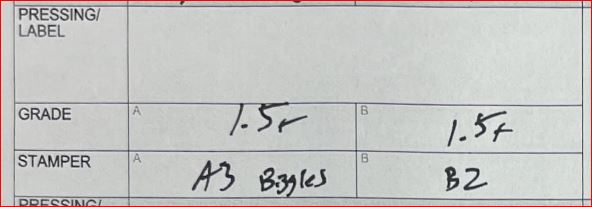
Of course, not all stampers are hot enough to win a shootout. This British A3/B2 cut by none other than Biggles was judged to have middling sound quality.

1.5+ is four grades down from the top copy. That’s a steep dropoff as far as we’re concerned. 1.5+ only hints at how good sounding a recording Who Are You can be on the best pressings.

(more…)

Suites for Solo Cello on the Later Label – Ouch!

Hot Stamper Pressings of Mercury Recordings Available Now
UPDATE 2021

The discussion here is for a Oval label copy of Suites for Solo Cello (SR 90370) we reviewed in 2010. These days the Oval label pressings from the early 60s almost never sound very good to us. We no longer buy them and we certainly don’t bother to put them in shootouts.

This record on the Oval Label would be very unlikely to qualify as a Hot Stamper pressing anymore, although we liked it just fine in 2010, as you can see from our old review.

In 2024 we actually put an Oval Label pressing of SR 90370 in a shootout and it did about as poorly as we would have expected. What a waste of time and money. Never again.

(more…)

Piano and Snare Testing with Love Over Gold

Hot Stamper Pressings of the Music of Dire Straits Available Now

UPDATE 2026

In 2017 we reviewed a copy of Love Over Gold that really knocked us out. This was sound we had never heard on the album before, so as you can imagine, we had to tell the world -s or at least that small part of the world that accepts the reality of Hot Stamper Pressings — all about it.

Since then we have noted the value of testing albums with pianos and snare drums as those seem to be key part of some recordings that are hard to get right, which of course is makes them good tests.


Telegraph Road does something on this copy that you won’t hear on one out of twenty pressings: It ROCKS. It’s got ENERGY and DRIVE.

Listen to how hard Allan Clark bangs on the piano on side one — he’s pounding that piano with all his might. No other copy managed to get the piano to pop the way it does here, so clear and solid.

Wow, who knew? Maybe this is the reason HP put the record on the TAS Super Disc List. (I rather doubt he’s ever heard a copy this good, but who’s to say?)

Best test for side two?

The snare drum on Industrial Disease. Play five copies of the album and listen on each of them for how much snap there is to the snare. It will be obvious which ones get the transient attack right and which ones don’t. (If none of them do, try five more copies!)

(more…)

How Good Are the Domestic Pressings of Days of Future Passed?

Hot Stamper Pressings of the Music of The Moody Blues Available Now

If you’ve ever done a shootout between domestic pressings of the Moody Blues and the good early imports, you know that the imports just murder the American LPs.

Domestic pressings are cut from sub-generation tapes, so they tend to sound dubby and smeary, yet strangely they’re also thinner and more transistory than the UK imports, and overall have a fraction of the Tubey Magic that make the good imports such an engaging listening experience.

Moody Blues albums on import are typically murky, congested and dull. Listening to the typical copy you’d be forgiven for blaming the band or the recording engineer for these problems. But the properly mastered copies are none of these things.

The cutting engineers who cut the pressings for the U.S. market thought they knew exactly how to fix the problem. When the album came out in America in 1968, leaner and cleaner were in and rich and tubey were out.

Of course the album is never going to have the kind of super-clean, high-rez sound some audiophiles prize, but that’s clearly not what the Moody Blues were aiming for.

It isn’t about picking out individual parts or deciphering the machinery of the recording with this band.

It’s all about lush, massive soundscapes. In our experience only the best UK pressings can give you the sound.

(more…)