Testing High Frequency Extension

The records linked here are good for testing high frequency extension.

American Beauty – Barncard Knocked It Out of the Park with This One

More of the Music of The Grateful Dead

The crowning glory of the Grateful Dead, this is their MASTERPIECE. Albums like this come along once in a band’s life — if they’re lucky. This is the zenith of the Grateful Dead. Workingman’s Dead is a good album. American Beauty is a great one.

If you don’t have a killer copy yet, it’s time to get on the bus. Stephen Barncard is the recording engineer responsible for this album, Deja Vu, Brewer and Shipley’s Tarkio, and a host of other amazingly rich, sweet and natural, mostly acoustic recordings that stand head and shoulders above the bulk of their contemporaries. American Beauty is one of them.

All the Elements Come Together for Once

All of the elements necessary to take this music to an entirely new level are here, my friends: smooth, sweet vocals; rich, meaty bass; an open and airy top end; top-notch presence and so forth. The sound is so spacious and transparent that you can easily pick out each of the instruments and follow them over the course of the songs.

The acoustic guitars sound magical on this one, and I can’t believe how wonderful these guys’ voices sound. The Tubey Magic and immediacy on this copy are going to STUN you.

You could choose any track you wanted to and find lovely sound here, but I’d recommend Ripple and Attics Of My Life for starters.

(more…)

On Tarkio, Do All the Robert Ludwig Mastered Copies Have Hot Stampers?

Hot Stamper Pressings of Hippie Folk Rock Albums Available Now

UPDATE 2023

This commentary describes some observations we were able to make after doing a shootout a few years back.


Even though all the original Pink Label pressings are mastered by the great Robert Ludwig, they have a marked tendency to be dull, thick and opaque. Other records we’ve played with these same shortcomings can be found by clicking on the links below.

On too many original pressings, the sound is too smooth.

Starting at some point in the mid-’90s, many Heavy Vinyl pressings started to have the same shortcoming, one that we find insufferable to this day: they are just too damn smooth.

(more…)

This Buck Dance Had Highs Like No Other

Hot Stamper Pressings of Living Stereo Recordings Available Now

[This review was probably written in 2010 or thereabouts.]

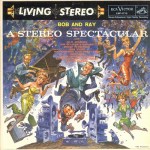
It’s been nearly two years but the waiting is over — we’ve found another copy of the famous Bob and Ray on Living Stereo with DEMONSTRATION QUALITY SOUND! Without a doubt this is the best sound I have ever heard for side one of this album. The sound here is so amazing I’m willing to go out on a limb and make the following recklessly bold statement. Buck Dance on this pressing has the most extended, natural and harmonically correct high frequencies I have ever heard from my speakers (or anyone else’s for that matter). 

And the crazy thing about it is, when played against an actual original pressing of Music for Bang, Baa-room and Harp, this copy, which one would assume is made from a dub, SOUNDS FAR BETTER.

Now of course we don’t have ten copies (or even two copies) of LSP 1866 which would allow us to find one with an even better Buck Dance than the one heard here on Bob and Ray, which means we cannot be definitive in any way about the disparity in sound between the two albums.

We can only judge the records we have in hand, not the ones we might have heard years ago or — even worse — speculate about the sound of records we have not actually played, recently or otherwise.

So we will stick to the facts, and the facts of this side one are that it is ABSOLUTELY AMAZING sounding.

But not perfect. We had three Bob and Rays and one of them was a bit more transparent. One of the them had more deep bass. (That first crack of thunder on side one is an obvious test for bottom end; it can really rattle the room on the right copy.)

So let’s be fair and say that overall this copy earns a grade of A++, having two shortcomings, but that Buck Dance earns a grade of A+++, having NO shortcomings!

(more…)

Nick Of Time – What to Listen For

One of the biggest problems we ran into over and over again with this album is a lack of top end. The sound gets a bit too smooth and some of the ambience and spaciousness of the studio disappears. (This, to a much stronger degree, is the problem from which the DCC suffers.)

On the best copies note how silky the cymbal crashes are; not too many copies get them to sound that way. 

The sound has the potential to be POWERFULLY BIG AND BOLD, with meaty, deep bass (such a big part of the rockers here, Thing Called Love being a prime example) and some of the sweetest, richest, most ANALOG sound we’ve heard from any record Don Was has been involved with.

When you hear it like this — something probably pretty close to what he heard during the control room playback for the final mix — it actually makes sense. It works. It’s not exactly “natural”, but natural is not what they were going for, now is it?

What to Listen For 

Listen especially for how all the elements of the recording are clearly laid out and audible, never forced or hyped in any way. The sound can be so 3-D!

Key note for side two — listen for the sibilance on Bonnie’s voice on Too Soon to Tell. Some copies have really gritty, spitty sibilance, others keep it well under control, with a much more silky quality to her vocals.

We play albums like this VERY LOUD. I’ve seen Bonnie Raitt live a number of times and although I can’t begin to get her to play as loud in my living room as she did on stage, I can try. To do less is to do her a great disservice.

Top End Extension Is Key on Whipped Cream and Other Delights

Hot Stamper Pressings of Sixties Pop Recordings Available Now

The better pressings have the kind of Tubey Magical, big-bottomed, punchy, spacious sound that we’ve come to expect from Larry Levine‘s engineering for A&M. If you have any Hot Stamper pressings of Sergio Mendes & Brasil ’66’s albums, then you know exactly the kind of sound we’re talking about.

Top end extension is critical to the sound of the best copies. Lots of old records (and new ones) have no real top end; consequently, the studio or stage will be missing much of its natural air and space, and instruments will lack the full complement of harmonic information.

In addition, when the top end is lacking, the upper midrange and high frequencies get jammed together — the highs can’t extend up and away from the upper mids.

This causes a number of much-too-common problems that we hear in the upper midrange of many of the records we play: congestion, hardness, harshness, and squawk.

Painstaking Vertical Tracking Angle adjustment is absolutely critical if you want your records to play with the least amount of these problems, a subject we discuss in the Commentary section of the site at length.

Full-bodied sound is especially critical to the horns.

Any blare, leanness or squawk ruins at least some of the fun, certainly at the louder levels the record should be playing at.

The frequency extremes (on the best copies) are not boosted in any way. When you play this record quietly, the bottom and top will disappear (due to the way the ear handles quieter sounds as described by the Fletcher-Munson curve).

Most records (like most audiophile stereos) are designed to sound correct at moderate levels. Not this album. It wants you to turn it up. Then, and only then, will everything sound completely right musically and tonally from top to bottom.

Boys And Girls – Two Tracks Are Key

More of the Music of Bryan Ferry

More Albums with Key Tracks for Critical Listening

The song Valentine, the second track on side two, is a key test for that side. Note how processed Ferry’s vocals are. On even the best copies they will sound somewhat bright. The test is the background singers: they should sound tonally correct and silky sweet.

If Ferry sounds correct, they will sound dull, and so will the rest of the side. That processed sound on his vocal is on the tape. Trying to “fix” it will ruin everything.

You can be pretty sure that whatever Heavy Vinyl pressing has been made for this album that they tried to fix the hell out of it. Doubtless the result is not a pretty one. It rarely is.

On the top copies the lead on the very next track, Stone Woman, is tonally right on the money.

These two tracks, two of the best on the album, together make it easy to know if your copy is correct in the midrange.

Track two: background vocals.

Track three: lead vocal.

What could be easier?

Key Listening Test for Both Sides

The quality of the percussion is critical to much of the music here. There’s tons of it on Boys and Girls, even more than on its predecessor Avalon, and unless you have plenty of top end, presence and transparency, all that percussion can’t work its magic to drive this rhythmic music.

How About the British Pressings?

Bryan Ferry is British, as is bandmate David Gilmour and the recording and producing team headed by the amazing Rhett Davies. And yes, the recording was done at many studios, most of them overseas.

But the album is mixed by Bob Clearmountain at The Power Station and mastered by Robert Ludwig at Masterdisk, and that means the master tape was right here in America when it came time to get the sound of the tape onto vinyl.

The British pressings are made from dubs and sound like it.

(more…)
Listening in Depth to Sounds of Silence

More of the Music of Simon and Garfunkel

Presenting another entry in our extensive Listening in Depth series with advice on what to listen for as you critically evaluate your copy of Sounds of Silence. Here are some albums currently on our site with similar Track by Track breakdowns.

Sounds of Silence is made from a second generation tape, as we explain below. Since we listen to all the records we sell, we like to point out such things so our customers know what they are getting.

This album is the proverbial tough nut to crack, a mix of folkie tracks and ambitious big production numbers, all recorded on a four track machine and bounced down maybe just a few too many times along the way. Some got handed a troublesome case of Top 40 EQ — hey, this is 1965, it’s the way they thought pop records should sound.

But many of the best tracks survived just fine. They can sound wonderful, it’s just that they rarely do. This is precisely where we come into the picture.

The key to good sounding pressings of this record is to look for the ones with a top end. Now of course you can’t see the top end when you buy the record. But most of the copies of this album you pick up are going to sound like cassettes. There won’t be much over 8K, and that means hard, harsh, transistor radio sound. You need extended highs to balance out the upper midrange.

(more…)

Symphonic Dances and the Need for Full Brass and Clean Cymbals

Hot Stamper Pressings of Orchestral Spectaculars Available Now

This reissue had the sound we were looking for!

One of the biggest advantages this copy had over most of what we played is fuller brass. The shrill sounding horns on most Columbia albums is what gets them tossed in the trade pile.

Fortunately for us audiophiles who care about these sorts of things, the sound here is rich and clean, with solid, deep bass. The stage is huge, with the multi-miking kept to a minimum so that you can really hear the space this big group of musicians occupies.

This pressing is a reissue, not a Six Eye original. The reason this particular LP beat every other pressing we played comes down to one specific quality — the top is dramatically cleaner and more extended.

There is a HUGE amount of top end on this recording. Wildly splashing cymbals and other percussion instruments are everywhere, and they are a joy to hear. No original was as clean up top as this reissue, and without a clear, (mostly) distortion-free top end, the work will simply not sound the way Bernstein wanted it to.

All that percussion is in the score. The high-frequency energy – perhaps the most I have ever heard from any recording of his music — is there for a reason. He conducted his own score, and one can only assume he liked the way it came out. We sure did.

The Reiner Sound Is A Demo Disc for Energy, Dynamics and Top End

Hot Stamper Pressings of Living Stereo Recordings Available Now

This review was written in 2010.

I don’t think we have found a Reiner Sound as nice as this one since then. 


UPDATE 2024

It may have taken us more than a decade and cost us a lot of money to get another shootout going, but this killer copy made it all worth it.


Wow, the first nice Reiner Sound on Shaded Dog to make it to our site. Why? Because the few copies we’ve run across that looked decent enough to clean and play were just too noisy to enjoy. Not many copies have survived the bad turntables of their day with all their top end and inner grooves intact, but we’re proud to say that this one has! 

This former TAS List record really surprised us on two counts. First, you will not believe how DYNAMIC the recording is. Of all the classical recordings we’ve played lately I would have to say this is THE MOST DYNAMIC of them all. 

I really don’t have the wattage to handle the explosively loud sections of these wonderful works, with their huge orchestral effects, dynamic contrasts that are clearly part of the composer’s intentions but ones that rarely make it from the concert hall to vinyl disc the way they do here. 

Second, there is simply an amazing amount of TOP END on this record. Rarely do I hear Golden Age recordings with this kind of ENERGY and extension up top. Again, it has to be some of the best I have heard recently.

This is of course one of the reasons the Classic reissue is such a disaster. With all that top end energy, Bernie’s gritty cutting system and penchant for boosted upper midrange frequencies positively guarantees that the Classic Reiner Sound will be all but unplayable on a proper set up system.

Boosting the bass and highs and adding transistory harshness is the last thing in the world that The Reiner Sound needs.

(more…)

The Grand Wazoo – Smear, Sibilance and Tubey Magical Keyboards to Die For

More of the Music of Frank Zappa

The Tubey Magic found on the title cut is really something to hear.

The Grand Wazoo now gets my vote as the best sounding record Zappa ever made (along with Absolutely Free).

Biggest Problems

Smear on the horn transients are always a problem on this album (and Zappa’s previous big band album, Waka/Jawaka) .

After that we would say a lack of top end is the other most common shortcoming we hear. To find a copy that’s not dull and smeary is no mean feat.

The vocals on For Calvin (And His Next Two Hitch-Hikers) are usually slightly spitty. The best copies keep the spit under control. (more…)