Classic Records – All

Capriccio Italien on Classic Records and How Badly I Missed the Boat

More of the Music of Peter Ilyich Tchaikovsky

More of the Music of Nikolai Rimsky-Korsakov

Years ago, around 2005 if memory serves, I played a copy of the Classic Records pressing of LSC 2323 and thought it was pretty good.

I thought it was better than the Shaded Dog copies I had compared it to, which, based on hundreds of other Classic Records titles I had auditioned, was unexpected to say the least.

Little did I know that the Shaded Dog pressings on this title are not remotely competitive with the early reissues.

The best of the Shaded Dog pressings we could find, which just happened to have a 1s side one, came in tied for last with the one 70s Red Seal pressing we thought sounded good enough to make the shootout.

(Some inside baseball: most of the Shaded Dogs and Red Seals were needle-dropped, and all but two were eliminated before the shootout. It takes time and wastes money to clean and play pressings that sound hopeless, so a quick elimination round often precedes the cleaning process.)

Back then it was tough to wrap my head around the idea that a Classic Record classical title could actually be better sounding than a Shaded Dog — it had never happened, so I knew there had to be more to the story.

Finding the time to do the serious investigation of LSC 2323 that would be necessary to get to the bottom of it was not in the cards, so I shelved the project for close to the next twenty years.

The title would have to wait until 2024 to go through a proper shooout, and when it did, naturally the Classic was part of the mix, which is the way we do things here at Better Records. Every record gets the chance to show us what it can do, to be evaluated fairly without the listener having any way to know which pressing is playing.

It turns out that side one of the Classic was passable, but side two — the side I had probably never played — was every bit as bad as most of their other classical offerings.

Side One, Second Movement (Tchaikovsky)

  • Big, but bright and compressed
  • Gets loud but opaque and hot
  • Good weight

Side One, First Movement

  • Bright and blurry bells
  • Sort of tubey but a mess
  • Grade: 1+ (passable, but no Hot Stamper)

Side Two (Rimsky-Korsakov)

  • Big but boomy and smeary
  • Brass is edgy and opaque
  • No top end or space
  • Peaks are hot and congested
  • Grade: NFG

To recap: In 2005 I was impressed with Classic’s pressing of LSC 2323. That was only twenty years ago, yet I could not have been more wrong. I thought my stereo was great — I’d owned top quality equipment since 1975 by then — thirty sodding years — so my audiophile credentials would surely dwarf those of the vast majority of forum posters who write about audiophile pressings today. How reliable should we expect their reviews to be?
(more…)

Letter of the Week – “I think It’s a bargain at $800. It absolutely trashes my Mofi version…”

Hot Stamper Pressings of the Music of Crosby, Stills, Nash and (Sometimes) Young

One of our good customers had this to say about a Hot Stamper pressing he purchased recently:

Hey Tom,   

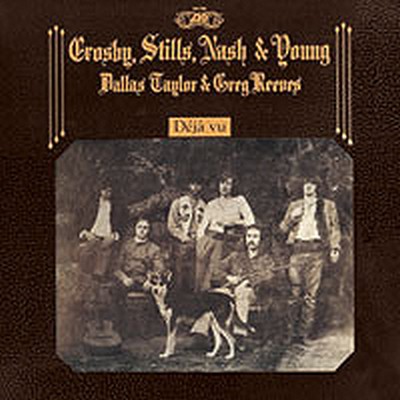
I couldn’t believe what I was hearing on the Crosby Still, Nash & Young Deja Vu White Hot stamper A+++ on both sides and absolutely dead quiet. I think It’s a bargain at $800.00. It absolutely trashes my Mofi version into bits and pieces. I don’t even want to mention the Classic records version because it’s painful to listen to. I’m writing up this record today and the Frank Sinatra and Count Basie Live at the Sands tomorrow.

Thanks,

Naz

Naz,

The Heavy Vinyl and Half-Speed Mastered pressings of Deja Vu are, as you say, practically unlistenable once you know what that record should really sound like, and now that you have a Hot Stamper pressing, you definitely know just how good the record can sound.

Demo Disc barely begins to do it justice.

Hey, I was fooled back in the mid-’80s – I used to demonstrate my system with the MoFi Deja Vu! How screwed up is that?

Let’s just say we have made a lot of progress in audio since then. We’ve learned a great deal about record collecting too, practically all of it derived from the thousands of shootouts we’ve conducted over the last twenty years, using tens of thousands of different pressings.

Houses of the Holy on Classic Records Heavy Vinyl

We can describe the sound of this miserable Bernie Grundman remaster in two words: ridiculously bright.

Honestly, what more do you need to know? It’s almost as bad as the Zep II he cut, and that record is an abomination.

Is it the worst version of the album ever made? Hard to imagine it would have much competition.

(Oh but it does – this misbegotten series out of Japan will do nicely to illustrate how brighter is not necessarily better, it’s just brighter.)

Over the years we have done many Led Zeppelin shootouts, often including the Classic Heavy Vinyl pressings for comparison purposes. After all, these Classic LPs are what many — perhaps most — audiophiles consider superior to other pressings.

We sure don’t, but everybody else seems to. You will find very few critics of the Classic Zeps LPs outside of those who write for this blog, and even we used to recommend three of the Zep titles on Classic: Led Zeppelin I, IV and Presence.

Wrong on all counts.

We don’t actually like any of them now, although the first album is still by far the best of the bunch.

(more…)

Classic Records – More of the Same Old Same Old

Hot Stamper Pressings of Vintage Columbia Albums Available Now

Weaver of Dreams is yet another Classic Records LP that’s hard to get excited about.

The notes I found attached to a copy in the backroom and played should be all you need to know to avoid the Classic pressing.

Shifted up (tonally) and hard.

Who wants a classic Columbia that sounds like that, especially one that was recorded in Columbia’s legendary Columbia 30th street studio recordings.

Years ago we wrote that Bernie Grundman’s work for Classic Records could be summed up in these four wordsIt seems that this Burrell record has some of those rather obvious shortcomings.

There are certainly some incredible sounding pressings of this album out there, but who has the resources it would take to find them?

Most of the early stereo 6-Eye pressings we come across these days turn out to have constant surface noise. Many have severely damaged inner grooves. Even the mintiest looking copies often turn out to be too noisy for most audiophiles.

This is of course why the hacks at Classic Records did so well for themselves — until they went under — hawking remastered versions of classic albums pressed on new, quieter vinyl.

The problem is that most of their stuff just doesn’t sound all that good, this album included. We’ve played it; it’s decent, but any Hot Stamper will show you just how much music you are missing.

If you want to hear this album with amazing fidelity but don’t want to spend the time, money and energy collecting, cleaning, and playing mostly mediocre copies until you luck into a good one, a Hot Stamper pressing is the only way to go.

That is, if you can find one on our site. We rarely have any stock of this album, for the reasons listed above.

We do have other Kenny Burrell albums, but even the records he made in the 70s are getting hard to find these days.

And if you are going to try to dig up your own top quality pressings, advanced record cleaning technologies are a must. Records pressed in the 60s are always in need of serious scrubbing, using the right fluids on the right machinery. Without the help of both of those, you have very little chance of success.

(more…)

Tchaikovsky’s None-Too-Impressive 6th Symphony on Classic Records

Hot Stamper Pressings of the Music of Tchaikovsky Available Now

It’s been quite a while since I played the Classic pressing, twenty years or more, but I remember it as none-too-impressive, playing into my natural prejudice against the earliest Living Stereo recordings and Classic Records themselves.


UPDATE 2025

Having heard some amazingly good sounding ones since this review was written many years ago, we are no longer prejudiced against the “earliest Living Stereo releases.” Many of them have superb sound.


The original is not good either in our experience. The only version of this wonderful performance from 1955, the best we know of, is this very late reissue that we discovered more than twenty years ago, a sleeper of a record if ever there was one.

When you hear how good it sounds, you may have a hard time believing that it’s a budget reissue from 1976, but that’s precisely what it is.

Even more extraordinary, the right copies are the ones that win shootouts.

(more…)

Classic Records and Begged Questions

Hot Stamper Living Stereo Orchestral Titles Available Now

A typical review of a Classic Records classical release here on the blog might read more or less as follows:

Classic Records ruined this album, as anyone who has played a sampling of their classical reissues would have expected.

Their version is dramatically more harsh and aggressive than the Shaded Dogs we’ve played, with transistory shrill string tone and almost none of the sweetness, richness and ambience that the best RCA pressings have in such abundance.

In fact, their pressing is just plain awful, like most of the classical recordings they remastered, and should be avoided at any price. 

With every improvement we’ve made to our system over the years, Classic’s remastered classical offerings have managed to sound progressively worse. How could that be, you ask?

Because higher quality playback stops hiding the shortcomings of bad sounding records.

At the same time, and much more importantly, better audio reveals more and more of the strengths of good sounding records.

Begging the Question

But what actually is a good record? Don’t I have to offer some evidence for what causes a record to be good rather than simply asserting that the original is good and the Heavy Vinyl reissue is bad (or at least worse)?

Luckily for you, dear reader, you are actually on a blog that has much to say about these issues.

The main reason we feel qualified to make these judgments is that we make sure to play the records we review under rigorously controlled conditions in what amounts to “blinded” experiments. (Certainly as blinded as is practical.)

And our approach to finding the best sounding pressings for any given album has gone through a host of changes over the course of decades in order to allow us to carry out this difficult work. Work we actually enjoy doing.

It’s also the kind of work that practically nobody else does.

And certainly no one does it at anything approaching the scale of our efforts, with a full time staff and a monthly record purchasing budget in the tens of thousands of dollars.

An amazingly good stereo set up in a heavily-treated room with clean electricity doesn’t hurt either.

(more…)

On the Concerto in F, String Tone Is Key

Hot Stamper Pressings of the Music of George Gershwin Available Now

I must admit Classic Records did a passable job with LSC 2586, RCA’s recording of Gershwin’s Concerto in F, with Fiedler conducting the Boston Pops.

The two things that separate the good originals from the Classic reissue are in some ways related.

Classic’s standard operating procedure is to boost the upper midrange, and that, coupled with their transistory mastering equipment, results in strings that are brighter, grittier, and yet somehow lacking in texture and sheen compared to the originals,

This to us is a clear sign of a low-resolution cutting chain.

Once you recognize that shortcoming in a pressing, it’s hard to ignore, and I hear it on every Classic Record I play. (This commentary has more on the subject.)

RCA is more famous for its string tone than anything else.

If the strings on the Classic Records LPs don’t bother you, you can save yourself a lot of money by not buying authentic RCA pressings — and get quieter vinyl to boot.

Here are some other records that are good for testing string tone and texture.

(more…)

Bernie Grundman’s Modern Standard Operating Procedure Strikes Again

Hot Stamper Pressings of the Music of Bruce Springsteen Available Now

If you own the Classic Records reissue of this album from the early 2000s, hearing a Hot Stamper pressing is almost sure to be a revelation.

The Classic pressing was dead as a doornail.

It was more thick, it was more opaque, and it was more compressed than most of the originals we played, originals which we noted often had problems in all three areas to start with.

Bernie did the album no favors, that I can tell you.

Head to head in a shootout, our Hot Stampers will be dramatically more lively, solid, punchy, transparent, open, clear and just plain REAL sounding, because these are all the areas in which Heavy Vinyl pressings tend to fall short.

(more…)

Tommy on Classic Records

Hot Stamper Pressings of the Music of The Who Available Now

Sonic Grade: C

The Classic Tommy is bass shy. It could have had amazing bass, like Classic’s Who’s Next, but it doesn’t. Why, I have no idea.

The overall sound is thin, so thin that we immediately knew there was no point in carrying it (back in the old days when we carried Heavy Vinyl, pre-2008).

The only Classic Who record we ever carried was Who’s Next; the rest of them vary from mediocre to dreadful.


Remastering Out The Good Stuff

What is lost in the newly remastered recordings so popular with the record buying public these days?

Lots of things, but the most obvious and irritating is the loss of transparency.

Modern records tend to be small, veiled and recessed, and they rarely image well. But the most important quality they lack is transparency. Almost without exception they are opaque.

They resist our efforts to hear into the music and get lost in it.

(more…)

Peter Gabriel on Classic Records

Hot Stamper Pressings of the Music of Peter Gabriel Available Now

Sonic Grade: D (or worse!)

An audiophile hall of shame pressing and another Classic Records rock album badly mastered for the benefit of audiophiles looking for easy answers and quick fixes.

We have a special section for bad sounding records that are marketed to audiophiles, and you can find that section here.

It currently has 281 entries, but if someone wanted to audition more of them — that person is definitely not me, although I cannot imagine anyone more qualified — the number could easily hit 500.

If one were to do just the Music Matters and Analogue Productions albums released to date, a thousand would be no problem.

And if one were simply to include vintage Japanese pressings, the kind many audiophiles regularly bought in the 80s and 90s for their quieter vinyl and supposedly higher quality mastering, our bad audiophile record section would contain multitudes. Multitudes I tell you!

(more…)