Other Albums We’re Obsessed With

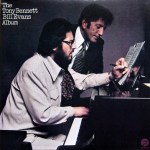
The Tony Bennett / Bill Evans Album – One of the All Time Great Male Vocal Recordings

More of the Music of Bill Evans

More of the Music of Tony Bennett

I would have to say that this album, when heard on the best Hot Stamper pressings, would rank up at the top of the All Time Great Male Vocal Recordings. If you like sophisticated vocal jazz I don’t think you can do much better than this record, especially when it sounds like this. Tony Bennett’s voice sounds wonderfully rich, BREATHY, and above all REAL.

The soundstage is open and spacious, the piano full-bodied and clear, and the vocals have the clarity and fullness missing from most pressings. It’s incredible to hear these two top-notch musicians interacting and responding to each other in this kind of huge, open and natural space.

The Acoustic

This is a studio recording in a fairly dead acoustic, worlds away from the echo-drenched sound of his Columbia releases, so for practically the first time on record you can really hear the man’s voice, not the echo chamber they used to process it.

Bill Evans may play the largest piano ever built — it stretches from wall to wall when played over here, not particularly realistic but nothing to get upset over. On the best copies it really has the clarity and heft of the real thing; you can hear the pedal being actuated in the quieter passages if you listen closely. The tonality is also dead on. (A good test for your stereo.)

The overall sound is open, spacious, and tonally correct from top to bottom. It’s a recording with no trace of bad mastering or phony EQ. (I can just imagine what Mobile Fidelity did to make it sound “better” when they remastered it.)

Waltz for Debby is the best thing here. You want to hear the Bennett-Evans Magic? Go right to that track.

(more…)

Love Is The Thing – The Breakthrough We Were Waiting For

Hot Stamper Pressings of Our Favorite Vocal Albums Available Now

Reviews and Commentaries for the Music of Nat “King” Cole

Love Is The Thing has long been one of the best sounding Nat “King” Cole recordings we had auditioned over the years. With a large variety of copies to play, including some interesting “finds” among them, we now know it actually is The Best. We have never heard the man sound better than he does on the hottest copies of this very album.

Of course we’re always on the lookout for Nat King Cole albums with good sound. In our experience that is not nearly as easy as one might expect. Far too many of his recordings are drenched in bad reverb and can’t be taken seriously. At least one we know of has his voice out of phase with the orchestra on most of the copies we played, putting a quick end to that shootout. 

If anything the sound on his albums gets even worse in the ’60s. Many of Nat’s albums from that decade are over-produced, bright, thin and shrill.

We assume most audiophiles got turned on to his music from the records that Steve Hoffman remixed and remastered for DCC back in the mid-’90s, For those of you who were customers of ours back then, you know that I count myself among that group. I even went so far as to nominate the DCC of Nat’s Greatest Hits as the best album DCC ever made. (I know now, as I expect you do, that that’s really not saying much, but at the time I thought it was a pretty bold statement.)

Devoting the Resources

Naturally, having long ago given up on Heavy Vinyl LPs by DCC and others of their persuasion, these days we are in a much better position to devote our resources to playing every Nat King Cole album on every pressing we can get our hands on, trying to figure out what are the copies — from what era, on what label, with what stampers, cut by whom, stereo or mono, import or domestic — that potentially have the Hot Stamper sound, the very Raison d’être of our business.

What we discovered with the more than dozen copies we’d pulled together for our shootout was that different pressings from different eras on different labels can all have the right sound. In fact, while listening to one copy after another, all without the benefit of knowing anything about the specific record on the table, it was simply impossible to predict from the sound alone which label the record was printed on.

Some of the earliest pressings were rich and tubey, but so were some of the later ones. Same with copies that were lean, hard or transistory — they could be on a label from any era with that sound.

(more…)