experiments

Here you will find lessons we’ve learned from the record experiments we’ve run over the years.

We Happily Admit the Originals of Time Out Are (Potentially) the Best Sounding

More of the Music of Dave Brubeck

This time around [2014] no other copy of Time Out could touch our good Six Eye Stereo pressings. They were simply in a league of their own.

If you’ve been with us for a long time you may remember that this was not always the case. We used to really like some 360s as I recall, as well as the original mono pressing. This time around, not so much. 

This time around most everything is different. Allow us to explain.

1. Our stereo is different; we’ve made quite a number of changes to it since our last big shootout for Time Out a few years back. We are strong proponents of making audio progress.

2. We’re different; we have better (I would hope) listening skills. In fact I’m sure we listen for different qualities in a recording than we might have years ago.

3. Even more importantly, we don’t have the same pile of pressings we had years ago. They’re gone, replaced by a new batch. This new batch had some killer original pressings, some good 360s, and not much to speak of on the later labels. 

With a different batch we might have found a great sounding 360 pressing; we have to believe they exist, and we certainly can’t say that our best copy here could not have been bettered in some way. That would be foolish; anything can be bettered.

The next time we run this experiment, the results could be different.

[Update from 2021: we have run the experiment a number of times in the five years since this commentary was written, and the best Six Eye in the shootout has not been beaten yet. Yet.]

For us, in 2014 (and probably through 2015), this is it.

This is the right sound.

(more…)

Made In Japan – UK Vinyl But Mastered in the States?

More of the Music of Deep Purple

To our dismay, we discovered that some of the stampers for some of the sides on some of the British import pressings are actually sourced from a well known American cutting house. When those sides did poorly in the shootout, naturally we wanted to know more about them in order to avoid buying any more pressings with those markings.

We had no idea the British would “import” the metalwork from here, but they did, and the results were not good, at least not for us audiophiles.

I hope it goes without saying that we will not be selling any versions of the album that are not cut in England.

This is what you learn when you have lots of copies of the same album and play them against each other.

We constantly experiment with different record pressings this way and we recommend you do the same.

Carry out as many experiments as you can find time for. The quality of your collection — at least the sonic quality of your collection — will improve immensely.

(more…)

Chicago II – Why Does Side Four Tend to Be the Best Sounding Side?

More of the Music of Chicago

Important Lessons We Learned from Record Experiments 

There is one, and really only one, major problem with the sound of this album — too many overdubs, meaning too many generations of tape on too many instruments. There are easily three and four generations of tape on some of the tracks, probably more, all causing compression and a loss of transient information.

When the drums sound like cardboard boxes being hit with wet noodles it’s because they recorded them early on and then bounced their tracks down to another track and then bounced that track down to another track until what’s left sounds like a cassette tape you made of a song playing on the radio.

Yes, it’s that bad.

Best Evidence?

Side four. Side four is on most copies almost always the best sounding side. It’s also the side with the simplest arrangements, which means it probably has the fewest overdubs. The second track on side four is an obvious example. It’s mostly just bass, drums, flute, vocal and guitar, sonic elements which would more or less fit on the eight tracks of their eight track machine.

Listen to how real and immediate the sound is. You don’t hear that sound on the rest of the album because the rest of the album has multiple horn overdubs, multiple vocal overdubs and all kinds of percussion overdubs everywhere you look. Foreigner used 48 tracks to record Dirty White Boy. Chicago had eight to record their much more complex arrangements.

The result? They found themselves running out of tracks over and over again, resulting in reductions and further reductions, piling losses upon losses. This album is the poster boy for bad planning in the studio.

Not So Fast

Or is it? To our surprise we actually did manage to find at least one amazing side for each of the four sides of the album. Of course almost none of the hot sides mated with any of the others, meaning that the only way to get a complete album was to have at least two copies from which to play the best sides.

Meaning that bad pressing quality and bad mastering quality had to have been the principle cause of the mediocre sound of many of the copies we played. This is easily demonstrated by the fact that the stampers found on the best copies are sometimes the stampers found on the worst.

What Stampers Mean

Stampers mean something, but sometimes, as is the case here, they don’t mean much. (If you don’t know that by now you probably haven’t done that many big shootouts on your own. Can’t blame you — without lots of helpers in the cleaning and needle-dropping departments they’d be an even bigger pain than they already are. Even with three people involved it can still take almost all day, and that’s if you just happen to have ten or fifteen copies handy. It took us about two years to find that many, shopping at multiple stores weekly.)

(more…)

Chicago II – The Poster Boy for Bad Planning in the Studio

More of the Music of Chicago

Reviews and Commentaries for the Music of Chicago

There is one major problem with the sound of this album — too many overdubs, meaning too many generations of tape on too many instruments. There are easily three and four generations of tape on some of the tracks, probably more, all causing compression and a loss of transient information. When the drums sound like cardboard boxes being hit with wet noodles it’s because they recorded them early on and then bounced their tracks down to another track and then bounced that track down to another track until what’s left sounds like an cassette tape you made of a song playing on the radio. Yes, it’s that bad.

Side four tells the story. Side four on most copies is almost always the best sounding side. It’s also the side with the simplest arrangements, which means it probably has the fewest overdubs. The second track on side four is an obvious example. It’s mostly just bass, drums, flute, vocal and guitar, sonic elements which would more or less fit on the eight tracks of their eight track tape recorder.

Listen to how real and immediate the sound is. You don’t hear that sound on the rest of the album because the rest of the album has multiple horn overdubs, multiple vocal overdubs and all kinds of percussion overdubs everywhere you look. Foreigner used 48 tracks to record Dirty White Boy. Chicago had eight to record their much more complex arrangements.

The result? They found themselves running out of tracks over and over again, resulting in reductions and further reductions, piling losses upon losses. This album is the poster boy for bad planning in the studio. (more…)

Rediscovering Sonny Rollins’ Masterpiece with 4 Decades of Pressings

Hot Stampers of Sonny Rollins’ Albums in Stock

One of our good customers has started a blog which he calls

A GUIDE FOR THE DEDICATED ANALOG AUDIOPHILE

Below is a link to a comparison he carried out with a few pressings of Sonny Rollins’ classic Saxophone Colossus, including the DCC, the OJC, and one of our Hot Stampers.

We will have some comments to add to his down the road. For now, please to enjoy.

SAXOPHONE COLOSSUS: 4 Decades of Pressings

Robert has approached the various problems he’s encountered methodically and carefully along these three fronts:

(more…)

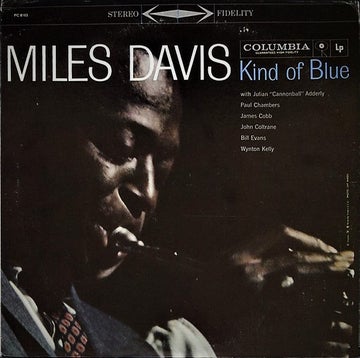
Kind of Blue – Sizing Up Two Very Different Sounding Pressings from the ’70s

Reviews and Commentaries for Kind of Blue

Robert Brook has a blog which he calls

A GUIDE FOR THE DEDICATED ANALOG AUDIOPHILE

Below is a link to a comparison Robert Brook carried out with a few pressings of Miles Davis’ masterpiece, Kind of Blue.

KIND OF BLUE: Discovering the RIGHT SOUND for Miles Davis’ MASTERPIECE

(more…)