basiebest

Count Basie – More Hits Of The ’50’s and ’60’s

More of the Music of Count Basie 

  • An outstanding vintage Verve stereo pressing with Double Plus (A++) sound or BETTER from start to finish
  • It’s bigger, richer, more Tubey Magical, and has more extension on both ends of the spectrum than most of the other copies we played
  • Guaranteed to be dramatically livelier and more dynamic than any Basie title you’ve heard (outside of our Hot Stamper pressings of course) – if you like your brass big, rich and powerful, you came to the right place
  • With 18 pieces in the studio this is a real powerhouse – the sound HUGE

(more…)

Count Basie / Kansas City 3 – For The Second Time

More Count Basie

More Jazz Recordings Featuring the Piano

  • A KILLER piano trio recording with superb sound on both sides of this original Pablo LP
  • It’s bigger, richer, more Tubey Magical, and has more extension on both ends of the spectrum than most other copies we played
  • A different, more compact sound for Basie, joined here as he is by two of the most sympathetic sidemen in jazz: Ray Brown on bass and Louis Bellson on drums
  • “[T]he main joy of this set is hearing Basie stretch out on such numbers as ‘If I Could Be with You,’ ‘On the Sunny Side of the Street’ and ‘The One I Love,’ tunes he did not play much with his orchestra in this later period.”
  • Steer clear of the OJC of this title – it’s thin and opaque, the opposite of the sound you want

It’s a joy to hear Basie perform as a frontman, stretching out on tunes that were no doubt dear to him. Veterans of hundreds of sessions, Ray Brown and Louis Bellson are just as interesting as Basie, high praise.

Recorded by the legendary engineer Ed Greene (Stan Getz/Charlie Byrd – Jazz Samba) — that accounts for the exceptional sound.

Naturally we pick up all the Pablo Basie titles we can get our hands on these days, having had very good luck with a great many of them. When we dropped the needle on a copy of this one a few years back we were amazed at the sound. My post-it, still on the record, reads “SUPERB DEMO DISC.” It certainly is.

This album was part of a series of smaller ensemble recordings under the heading of Kansas City that Pablo undertook with Basie later in his career. Basie had recorded a piano trio record with the same gents the year before For the First Time and must have enjoyed himself enough to give it another go.

The best copies are big and rich, and present you with a solid, weight, clear piano like few piano trio recordings you have ever heard.

(more…)

Frank Sinatra / Count Basie – It Might As Well Be Swing

More Frank Sinatra

More Count Basie

  • A KILLER sounding copy with Triple Plus (A+++) sound from the first note to the last
  • These side are doing it all right — big, rich and Tubey Magical yet still clean, clear and present with lovely breathy vocals
  • “It Might as Well Be Swing, was a more structured, swing-oriented set than Sinatra-Basie, and in many ways the superior album… , what makes [it] more successful is the consistently high level of the performances. On their previous collaboration, both Sinatra and Basie sounded a bit worn out, but throughout this record they play with energy and vigor.” 

(more…)

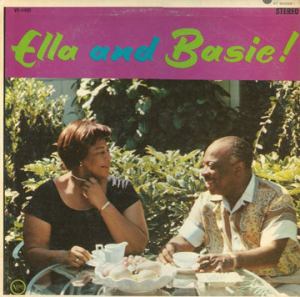
Ella Fitzgerald – Ella and Basie!

More Count Basie

  • With a shootout winning Triple Plus (A+++) side two and a Double Plus (A++) side one, this early stereo pressing is a knockout – exceptionally quiet vinyl too
  • Ella is rich, Tubey Magical and breathy – this is the way she should sound, and that makes this copy a true Demo Disc
  • To get the vocals AND the brass to sound right on the same copy is the trick, and these two sides pulled it off
  • 4 1/2 Stars: “…this 1963 LP was the first time (other than a couple songs) that Ella Fitzgerald and Count Basie recorded together. The match-up was so logical that it would be repeated many times over the next 20 years.”

Take it from an Ella fan, you can’t go wrong with this one. The sound is rich and full-bodied, in the proud tradition of a classic vintage jazz vocal album with big band backup. You could easily demonstrate your stereo with a record this good, but what you would really be demonstrating is music that the listener probably isn’t familiar with, and that’s the best reason to put on an old record.

The space is HUGE and the sound so rich. Prodigious amounts of Tubey Magic as well, which is key to the best sounding copies. The sound needs weight, warmth and tubes or you might as well be playing a CD. (more…)

Sarah Vaughan and Count Basie – Count Basie and Sarah Vaughan

More Sarah Vaughan

More Count Basie

  • A KILLER copy of this superb collaboration with Shootout Winning Triple Plus (A+++) sound on side two mated with outstanding Double Plus (A++) sound on side one
  • On a copy this good, Vaughan will appear as a living, breathing person right in your very own listening room – we call that “the breath of life,” and this record has it in spades
  • Here is what’s best about vintage analog – sound that is exceptionally spacious and three-dimensional, relaxed, full-bodied and natural
  • 4 stars: ” Basie’s Orchestra and pianist Kirk Stuart are purely in a supporting role behind the magnificent voice of Sarah Vaughan… her wide range and impeccable musicianship carry the day.”

(more…)

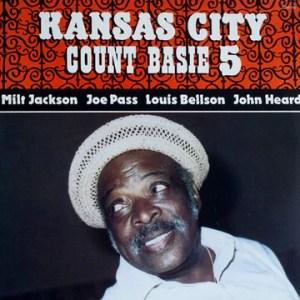
Count Basie – Kansas City 5

  • Presenting yet another amazingly well recorded Count Basie album, with STUNNING Triple Plus (A+++) sound throughout
  • It’s bigger, richer, more Tubey Magical, with more extension on both ends of the spectrum than every other other copy we played
  • A different sound for Basie, a small group setting with two of his favorite players at his side: Milt Jackson on vibes and Joe Pass on guitar
  • “The predictably excellent group performs spirited versions of some of Basie’s “hits” (including “Jive at Five” and “One O’Clock Jump”), some blues and a few standards. It is always interesting to hear Basie in a hornless setting like this one where he gets opportunities to stretch out on the piano.”

Only recently did I become familiar with this record, released in 1981 from sessions recorded in 1977. We pick up all the Pablo Basie titles we can get our hands on these days. When we dropped the needle on a copy of the album we were amazed at the sound. Don’t know much about the engineer — Geoff Sykes — but he did a great job working at Kendun for this session.

This was the first of a series of smaller ensemble recordings under the heading of Kansas City. We have more coming, including the superb Kansas City piano trio album entitled “For the Second Time” with Louis Bellson and Ray Brown, a record that can have superb sound on the Pablo pressing (but steer clear of the OJC which is thin and opaque, the opposite of the sound you want).

With such a small group and no horn players there is much more room for interplay between Basie and either Pass or Jackson. As the liner notes make clear, both vets quickly adapted their playing styles to the laidback Count Basie approach to the blues. If you are in the market for some smooth Basie grooves with exceptionally good sound, this one should be right up your alley. (more…)

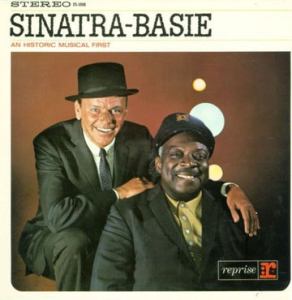
Frank Sinatra and Count Basie – Sinatra-Basie

More of the Music of Frank Sinatra

  • Boasting two INCREDIBLE Shootout Winning Triple Plus (A+++) sides, we guarantee you’ve never heard beloved this Sinatra / Basie collaboration sound this good
  • Tubey, warm and smooth, with an extended top and bottom, the louder you play this record the better it sounds
  • Marks in the vinyl are sometimes the nature of the beast with these early pressings – there simply is no way around them if the superior sound of vintage analog is important to you
  • 4 stars: “The long-awaited first collaboration between two icons did something unique for the reputations of both. For Basie, the Sinatra connection inaugurated a period in the 1960s where his band was more popular and better-known than it ever was, even in the big band era. For Sinatra, Basie meant liberation, producing perhaps the loosest, rhythmically free singing of his career.”

A historic musical first!

As the liner notes mention — “sizzling tenor-sax solos by Frank Foster and Eric Dixon,” and they aren’t kiddin’!

This 60s LP has the kind of Tubey Magical Midrange that modern pressings cannot BEGIN to reproduce. Folks, that sound is gone and it sure isn’t showing any sign of coming back.

Having done this for so long, we understand and appreciate that rich, full, solid, Tubey Magical sound is key to the presentation of this primarily vocal music. We rate these qualities higher than others we might be listening for (e.g., bass definition, soundstage, depth, etc.). The music is not so much about the details in the recording, but rather in trying to recreate a solid, palpable, real Sinatra singing live in your listening room. The best copies have an uncanny way of doing just that.

If you exclusively play modern repressings of older recordings (this one is now almost 65 years old), I can say without fear of contradiction that you have never heard this kind of sound on vinyl. Old records have it — not often, and certainly not always — but less than one out of 100 new records do, if our experience with the hundreds we’ve played can serve as a guide.

What The Best Sides Of Sinatra-Basie Have To Offer Is Not Hard To Hear

  • The biggest, most immediate staging in the largest acoustic space
  • The most Tubey Magic, without which you have almost nothing. CDs give you clean and clear. Only the best vintage vinyl pressings offer the kind of Tubey Magic that was on the tapes in 1962
  • Tight, note-like, rich, full-bodied bass, with the correct amount of weight down low
  • Natural tonality in the midrange — with all the instruments having the correct timbre
  • Transparency and resolution, critical to hearing into the three-dimensional studio space

No doubt there’s more but we hope that should do for now. Playing the record is the only way to hear all of the qualities we discuss above, and playing the best pressings against a pile of other copies under rigorously controlled conditions is the only way to find a pressing that sounds as good as this one does.

Copies with rich lower mids and nice extension up top did the best in our shootout, assuming they weren’t veiled or smeary of course. So many things can go wrong on a record. We know, we’ve heard them all.

And we know a fair bit about the man’s recordings at this point. As of today, we’ve done commentaries for more than 28 different Sinatra shootouts, and that’s not counting at least another ten titles that either bombed or were sold off years ago.

A Big Group of Musicians Needs This Kind of Space

One of the qualities that we don’t talk about on the site nearly enough is the SIZE of the record’s presentation. Some copies of the album just sound small — they don’t extend all the way to the outside edges of the speakers, and they don’t seem to take up all the space from the floor to the ceiling. In addition, the sound can often be recessed, with a lack of presence and immediacy in the center.

Other copies — my notes for these copies often read “BIG and BOLD” — create a huge soundfield, with the music positively jumping out of the speakers. They’re not brighter, they’re not more aggressive, they’re not hyped-up in any way, they’re just bigger and clearer.

And most of the time those very special pressings are just plain more involving. When you hear a copy that does all that — a copy like this one — it’s an entirely different listening experience.

What We’re Listening For On Sinatra-Basie

  • Energy for starters. What could be more important than the life of the music?
  • The Big Sound comes next — wall to wall, lots of depth, huge space, three-dimensionality, all that sort of thing.
  • Then transient information — fast, clear, sharp attacks, not the smear and thickness so common to these LPs.
  • Tight note-like bass — which ties in with good transient information, also the issue of frequency extension further down.
  • Next: transparency — the quality that allows you to hear deep into the soundfield, showing you the space and air around all the instruments.
  • Extend the top and bottom and voila, you have The Real Thing — an honest to goodness Hot Stamper.

Side One

Pennies From Heaven
Please Be Kind
(Love Is) The Tender Trap
Looking at the World Through Rose Colored Glasses
My Kind of Girl

Side Two

I Only Have Eyes for You
Nice Work If You Can Get It
Learnin’ the Blues
I’m Gonna Sit Right Down (And Write Myself a Letter)
I Won’t Dance

AMG 4 Star Review

The long-awaited first collaboration between two icons, Count Basie and Frank Sinatra, did something unique for the reputations of both. For Basie, the Sinatra connection inaugurated a period in the 1960s where his band was more popular and better-known than it ever was, even in the big band era. For Sinatra, Basie meant liberation, producing perhaps the loosest, rhythmically free singing of his career.

Propelled by the irresistible drums of Sonny Payne, Sinatra careens up to and around the tunes, reacting jauntily to the beat and encouraging Payne to swing even harder, which was exactly the way to interact with the Basie rhythm machine — using his exquisite timing flawlessly.

Also the members of the Basie band play a more prominent role than usual on a Sinatra record, with soloists like Frank Wess — in some of the finest flute work of his life — and tenors Frank Foster and Eric Dixon getting prominent solo opportunities on several of the tracks.

The record was criticized by some as a letdown when it came out, probably because Neal Hefti’s charts rarely permit the band to roar, concentrating on use of subtlety and space. Yet the record’s restraint has worn very well over the long haul — it doesn’t beat you into submission — and it concludes with its best shot, a wonderfully playful treatment of “I Won’t Dance.”

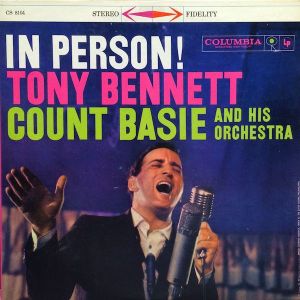
Tony Bennett & Count Basie – In Person!

More of the Music of Tony Bennett

More Vintage Columbia Hot Stamper Pressings

  • This original Six-Eye stereo pressing has insanely good sound throughout with both sides earning shootout winning Triple Plus (A+++) grades
  • The sound here is incredibly big, rich and Tubey Magical yet still open, spacious and detailed with a lovely bottom end
  • “The drive of the Bennett vocals is excellently paced by the swingin’ Basie crew. Tunes are nicely paced and varied. It’s an exciting set that builds track after track” – Billboard

(more…)

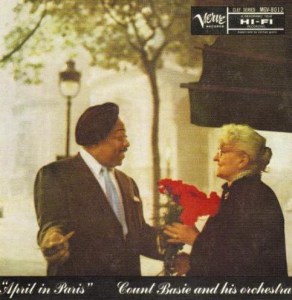
Count Basie – April In Paris

  • April in Paris makes its Hot Stamper debut with outstanding Double Plus (A++) sound fon this vintage mono pressing
  • This pressing showed us the sound we were looking for – big, bold, full-bodied mono, the kind they knew how to record in 1957
  • Here is the MIDRANGE MAGIC that’s surely missing from whatever modern reissue has been made from the 60+ year old tapes (or, to be clear, a modern digital master copied from those tapes)
  • 5 stars: “April in Paris is one of those rare albums that makes its mark as an almost instant classic in the jazz pantheon… The title track has come to define elegance in orchestral jazz… Recorded in 1955 and 1956, April in Paris proved Count Basie’s ability to grow through modern jazz changes while keeping the traditional jazz orchestra vital and alive.”

(more…)

Count Basie – Me and You

  • An excellent sounding copy of Basie’s 1983 release, with outstanding Double Plus (A++) sound or BETTER from start to finish – exceptionally quiet vinyl too
  • Forget whatever dead-as-a-doornail Heavy Vinyl record they’re making these days – if you want to hear the Tubey Magic, size and energy of this wonderful session from 1983, this is the only way to go 
  • This is the Basie Big Band album that came out right after 88 Basie Street, a hard act to follow – top engineering by Dennis Sands
  • “… recorded only a little more than a year before his death. However, the spirit of this music (helped out by some Ernie Wilkins) arrangements) make Count Basie seem ageless.”

(more…)