More Jazz Recordings Featuring the Guitar
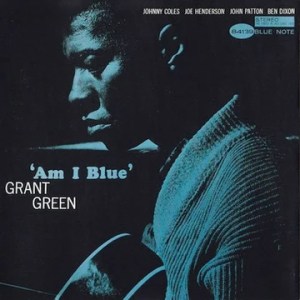
- Green’s 1964 release, here with very good Hot Stamper grades on both sides of this vintage Blue Note pressing
- It’s richer, fuller and with more presence than the average copy, and that’s especially true for whatever godawful Heavy Vinyl pressing is currently being foisted on an unsuspecting record buying public
- This is true of even our lowest-priced, lowest-graded copies – they are guaranteed to sound much better than any pressing you can find on the market today, as well as any pressing you may already own
- Feel free to explore whatever reissues might suit your fancy, but one pressing you should probably steer clear of is anything on the Music Matters label — they really made a mess of Grant’s Green Street album, so unless you have return privileges, you are asking for trouble buying any of their records
- Rudy Van Gelder was masterful at this kind of spacious, low-distortion, dynamic, energetic sound
This vintage Blue Note pressing has the kind of Tubey Magical Midrange that modern records can barely BEGIN to reproduce. Folks, that sound is gone and it sure isn’t showing signs of coming back. If you love hearing INTO a recording, actually being able to “see” the performers, and feeling as if you are sitting in the studio with the band, this is the record for you. It’s what vintage all analog recordings are known for — this sound.
If you exclusively play modern repressings of vintage recordings, I can say without fear of contradiction that you have never heard this kind of sound on vinyl. Old records have it — not often, and certainly not always — but maybe one out of a hundred new records do, and those are some pretty long odds.
What The Best Sides Of Am I Blue Have To Offer Is Not Hard To Hear
- The biggest, most immediate staging in the largest acoustic space
- The most Tubey Magic, without which you have almost nothing. CDs give you clean and clear. Only the best vintage vinyl pressings offer the kind of Tubey Magic that was on the tapes in 1964
- Tight, note-like, rich, full-bodied bass, with the correct amount of weight down low
- Natural tonality in the midrange — with all the instruments having the correct timbre
- Transparency and resolution, critical to hearing into the three-dimensional studio space
No doubt there’s more but we hope that should do for now. Playing the record is the only way to hear all of the qualities we discuss above, and playing the best pressings against a pile of other copies under rigorously controlled conditions is the only way to find a pressing that sounds as good as this one does.
Copies with rich lower mids and nice extension up top did the best in our shootout, assuming they weren’t veiled or smeary of course. So many things can go wrong on a record. We know, we’ve heard them all.
Top end extension is critical to the sound of the best copies. Lots of old records (and new ones) have no real top end; consequently, the studio or stage will be missing much of its natural air and space, and instruments will lack their full complement of harmonic information.
Tube smear is common to most vintage pressings. The copies that tend to do the best in a shootout will have the least (or none), yet are full-bodied, tubey and rich.
What We’re Listening For On Am I Blue
- Energy for starters. What could be more important than the life of the music?
- The Big Sound comes next — wall to wall, lots of depth, huge space, three-dimensionality, all that sort of thing.
- Then transient information — fast, clear, sharp attacks, not the smear and thickness so common to these LPs.
- Tight, full-bodied bass — which ties in with good transient information, also the issue of frequency extension further down.
- Next: transparency — the quality that allows you to hear deep into the soundfield, showing you the space and air around all the instruments.
- Extend the top and bottom and voila, you have The Real Thing — an honest to goodness Hot Stamper.
Side One
Am I Blue
Take These Chains From My Heart
I Wanna Be Loved
Side Two
Sweet Slumber
For All We Know
AMG Bio
A severely underrated player during his lifetime, Grant Green is one of the great unsung heroes of jazz guitar. He combined an extensive foundation in R&B with a mastery of bebop and simplicity that put expressiveness ahead of technical expertise. Green was a superb blues interpreter, and while his later material was predominantly blues and R&B, he was also a wondrous ballad and standards soloist. He was a particular admirer of Charlie Parker, and his phrasing often reflected it.
Grant Green was born in St. Louis in 1935 (although many records during his lifetime incorrectly listed 1931). He learned his instrument in grade school from his guitar-playing father, and was playing professionally by the age of thirteen with a gospel group. He worked gigs in his home town and in East St. Louis, Illinois — playing in the 50s with Jimmy Forrest, Harry Edison, and Lou Donaldson — until he moved to New York in 1960 at the suggestion of Donaldson. Green told Dan Morgenstern in a Down Beat interview: “The first thing I learned to play was boogie-woogie. Then I had to do a lot of rock & roll. It’s all blues, anyhow.”
During the early 60s, both his fluid, tasteful playing in organ/guitar/drum combos and his other dates for Blue Note established Green as a star, though he seldom got the critical respect given other players. He collaborated with many organists, among them Brother Jack McDuff, Sam Lazar, Baby Face Willette, Gloria Coleman, Big John Patton, and Larry Young. He was off the scene for a bit in the mid-60s, but came back strong in the late 60s and 70s. Green played with Stanley Turrentine, Dave Bailey, Yusef Lateef, Joe Henderson, Hank Mobley, Herbie Hancock, McCoy Tyner, and Elvin Jones.
Sadly, drug problems interrupted his career in the 60s, and undoubtedly contributed to the illness he suffered in the late 70s. Green was hospitalized in 1978 and died a year later. Despite some rather uneven LPs near the end of his career, the great body of his work represents marvelous soul-jazz, bebop, and blues.
Although he mentions Charlie Christian and Jimmy Raney as influences, Green always claimed he listened to horn players (Charlie Parker and Miles Davis) and not other guitar players, and it shows. No other player has this kind of single-note linearity (he avoids chordal playing). There is very little of the intellectual element in Green’s playing, and his technique is always at the service of his music. And it is music, plain and simple, that makes Green unique.
Green’s playing is immediately recognizable — perhaps more than any other guitarist. Green has been almost systematically ignored by jazz buffs with a bent to the cool side, and he has only recently begun to be appreciated for his incredible musicality. Perhaps no guitarist has ever handled standards and ballads with the brilliance of Grant Green.
Am I Blue is a Blue Note soul jazz album released in 1964, featuring the nearly thirty-year-old guitarist Grant Green alongside Johnny Coles on trumpet, Joe Henderson on tenor saxophone, “Big” John Patton on organ, and Green’s usual drummer, Ben Dixon.
The album is mostly defined by its slower pieces, “Am I Blue,” “I Wanna Be Loved,” and “Sweet Slumber,” which clearly lack inspiration and risk-taking. On “Take These Chains from My Heart,” Green already offers a bit more, while Dixon brings some extra energy to the track. As for “For All We Know,” I almost get the feeling that the group is trying to save the session with this nearly fourteen-minute piece, which is worth hearing without being particularly outstanding.
Overall, it is one of Green’s least recommendable Blue Note albums of the 1960s, without being disastrous either.