More Ringo Starr
More by the Beatles
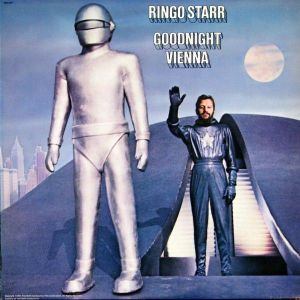
- Goodnight Vienna finally arrives on the site with outstanding Double Plus (A++) sound from first note to last
- Another amazing Richard Perry production with sound by Bill Schnee – on a pressing this good, you’ll be blown away
- Starr partnered with a host of phenomenal writers and musicians here, including John Lennon, Elton John, Bernie Taupin, and Harry Nilsson
- 4 stars: “Goodnight Vienna was very much a follow-up to Ringo… Richard Perry again produced, bringing his strong pop sensibility to the diverse material… a masterpiece.”
This original domestic pressing has the kind of Tubey Magical Midrange that modern records cannot even BEGIN to reproduce. Folks, that sound is gone and it sure isn’t showing signs of coming back. If you love hearing INTO a recording, actually being able to “see” the performers, and feeling as if you are sitting in the studio with the band, this is the record for you. It’s what vintage all analog recordings are known for — this sound.
If you exclusively play modern repressings of vintage recordings, I can say without fear of contradiction that you have never heard this kind of sound on vinyl. Old records have it — not often, and certainly not always — but maybe one out of a hundred new records do, and those are some pretty long odds.
If you’ve tried killer Hot Stamper pressings of any of our favorite Richard Perry productions — No Secrets, Nilsson Schmilsson, Son of Schmilsson and Breakaway come to mind — you know the sound of this album.
Bill Schnee did the engineering. You probably know his name from the famous Sheffield Direct to Disc recordings he made there. If you like your records will lots of bottom end, richness, Tubey Magic and powerful dynamics, he’s the guy that can get that sound on tape, and Doug Sax, the mastering engineer for the album, is the guy that can get that sound onto disc. They made a great team.
(I had a chance to tour Bill Schnee’s studio when he sold it to a friend of mine. The main room was huge with a vaulted high ceiling and lots of acoustically variable panels on the walls. It’s sure to be all digital by now; more’s the pity.)
What do the best Hot Stamper pressings of Ringo give you?
- Energy for starters. What could be more important than the life of the music?
- The Big Sound comes next — wall to wall, lots of depth, huge space, three-dimensionality, all that sort of thing.
- Then transient information — fast, clear, sharp attacks, not the smear and thickness so common to these LPs.
- Tight punchy bass — which ties in with good transient information, also the issue of frequency extension further down.
- Next: transparency — the quality that allows you to hear deep into the soundfield, showing you the space and air around all the instruments.
- Then: presence and immediacy. The vocals aren’t back there somewhere, lost in the mix. They’re front and center where any recording engineer worth his salt (Bill Schnee in this case) would have put them.
- Extend the top and bottom and voila, you have The Real Thing — an honest to goodness Hot Stamper.
What We Listen For
For a Big Production Rock Album like this there are some obvious problem areas that are often heard on at least one or two sides of practically any copy of the album.
With so many heavily-produced instruments crammed into the soundfield, if the overall sound is at all veiled, recessed or smeared — problems common to 90-plus per cent of the records we play in our shootouts — the mix quickly becomes opaque, forcing the listener to work too hard to separate out the elements of interest. Exhaustion, especially on this album, soon follows.
Transparency, clarity and presence are key. Note that none of the British copies we played was thin and anemic. (The domestic copies are made from dubs and can’t begin to compete.) Almost all had plenty of Tubey Magic and bottom end, so thankfully that was almost never a problem.
They did however tend to lack top end extension and transparency, and many were overly compressed. The sides that had sound that jumped out of the speakers, with driving rhythmic energy, worked the best for us. They really brought this complex music to life and allowed us to make sense of it. This is yet another definition of a Hot Stamper — it’s the copy that lets the music work as music.
TRACK LISTING
Side One
Goodnight Vienna
Occapella
Oo-Wee
Husbands And Wives
Snookeroo
Side Two
All By Myself
Call Me
No No Song
Only You (And You Alone)
Easy For Me
Goodnight Vienna (Reprise)
AMG 4 Star Review
Goodnight Vienna was very much a follow-up to Ringo, on which Ringo Starr called upon his bevy of musical buddies. Most prominent among them was John Lennon, who again wrote the leadoff track… Dr. John, Billy Preston, Robbie Robertson, and Harry Nilsson. Richard Perry again produced, bringing his strong pop sensibility to the diverse material. Goodnight Vienna was another enjoyable Ringo record, but it lacked the star power and consistency of its predecessor. Still, compared to the rest of his ’70s albums, it was a masterpiece.