*Tom’s Audiophile Notebook

Compromised Recordings and the Rapture of the Purely Musical Experience

Hot Stamper Classical and Orchestral Pressings Available Now

The best classical recordings of the ’50s and ’60s, like the wonderful Mercury you see pictured, were compromised in every imaginable way.

Yet somehow they manage to stand head and shoulders above virtually anything that has come after them. How is that possible?

Well, having taken advantage of scores of revolutionary changes in audio that have come to pass since those days, finally we can hear them in all their glory on the kind of high quality playback equipment that exists today.

The music lives and breathes on those old LPs. Playing them you find yourself in the Living Presence of the musicians. You become lost in the performances captured in the grooves of these old records.

Whatever the limitations of the medium, they seem to fade quickly from consciousness. What remains is the rapture of the musical experience.

That’s what happens when a good record meets a good turntable.

We live for records like these. It’s the reason we all get up in the morning and come to work, to find and play good records. It’s what this site is all about — offering the audiophile music lover recordings that provide real musical satisfaction. It’s hard work — so hard that nobody else seems to want to do it — but the payoff makes it all worthwhile. To us anyway. Hope you feel the same.

The One Out of Ten Rule

If you have too many classical records taking up too much space and need to winnow them down to a more manageable size, pick a composer and play half a dozen of his works.

Most classical records display an irredeemable mediocrity right from the start; it doesn’t take a pair of golden ears to hear it.

(more…)

Answers to Some of Your Hot Stamper Questions

The Beatles in Mono, Our Grading System, Our Cleaning System and More

We discuss a number of issues with our letter writer, the kinds of questions we often get, so here are some of the answers we often give out.

  • While Prices for Many Records Have Trended Down, Others Have Gone Up
  • The Beatles in Mono
  • Our White Hot Triple Plus Grade
  • Why Our Stereo Is Good at Its Job, and
  • Record Cleaning

  Hey Tom, 

First off, I got to say, congratulations on a great concept. Also, congrats on having the balls to charge what these albums are worth.

Thanks. Like any business, we charge what the market will bear, and it seems people are willing to pay a lot for these records, although less for some than they used to — some of our records now sell for half or even less than what we were getting two or three or five years ago.

That said, the top copies have held their prices pretty well over the years and often gone up substantially. It’s the second tier and third tier titles and the Super Hots that have really fallen in price. That’s where the real “bargains” are these days.

Ok – I spent a fortune on my system. Including acoustic design, the best of everything – speakers, turntable, preamp, amps – you get it. The whole set up probably cost me over $600k.

Wow. I don’t have $600k in my system, but I do have about $600k worth of labor in it (!) You can read all about Our Stereo here.

I am a crazy fanatic – audio perfection is something that really moves me.

Me too. I wrote about it here, when I fell in love with a record that gave me a good reason to get seriously into audio.

So, you can imagine I am intrigued with what you are doing. I will try you guys out (already bought my first album – CSNY) very hopeful that I will notice a difference between your albums and others.

Hard to imagine that you won’t hear a huge difference. Most versions of Deja Vu, including audiophile ones, are terrible.

I’d love to set up a call to discuss some questions I have regarding some of your best vs. say, they latest Neil Young releases with his archive release bundles. I have first pressings of the newly analog remasters and they are amazing.

I hope we’re not talking about this pressing: After the Gold Rush

I also purchased the Beatles mono set and have a separate mono cartridge and tone arm just for this set. They are real nice – not as great sonically as the Neil releases, but better than the Beatles Stereo box set.

We had a mono set in and spent about a half hour trying to figure out what was wrong with it. I realized in the end that the sound was dead as a doornail. If you want to hear The Beatles sound better than you ever imagined, we can make that happen.

But not in mono. Here are our in-stock Hot Stampers pressings of The Beatles, guaranteed to blow your mind.

I am also curious as to the system you use to evaluate your albums – and what you see as the holy grail of the A+++ standard.

Triple Plus means this: (more…)

A Kinder, Gentler Approach to Record Reviewing

Record Collecting for Audiophiles from A to Z

Allow me to respond to a comment left by a fellow named Ian Malone.

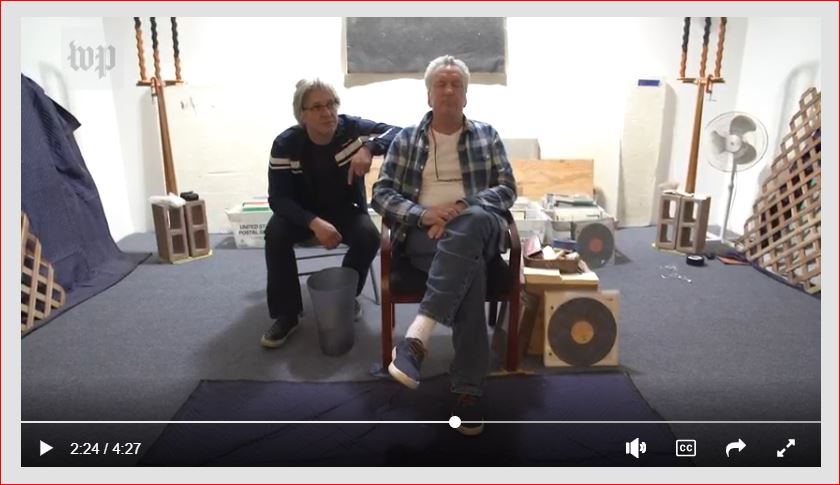
It was left in the comments section for the interview Steve Westman did with me.

He wrote:

Quite happy for you to promote your business Tom, but surely you are a better person than doing it in this way. I know that other people in the industry have said unkind things about you but you can rise above these insults.

My response:

I never say that the people making these modern records, as well as those reviewing them, are malicious or evil. I say they make or review bad sounding records and are simply misguided and, more than anything else, incompetent.

Am I being unkind? If Michael Bay makes one bad movie after another, are we unkind to point that out? I don’t know whether or not he is a bad person, but I do know that he is a bad filmmaker, and gets called out regularly for putting out a bad product.

Everyone understands that this is a matter of taste. If you always wished The Beatles albums had more bass, more compression and a smoother tonal balance overall, you can buy the new Heavy Vinyl pressings and get the sound you prefer on every title The Beatles ever released.

However, I hope you know that the sound I have just described does not exist on the master tapes.

I have no way of actually knowing that for a fact, but since no mastering engineer before 2014 had ever put that sound on an actual record, I think we can safely say that the evidence supports the idea that a completely “new sound” was specifically created for The Beatles when their catalog was remastered early in this century. [1]

A New Sound

Call it The New Beatles Sound. I am on record as not liking engineers who create a new sound for records that had perfectly good sound already. Those of us who do not like our Beatles album to have those qualities should not be buying these newly remastered versions.

We offer the consumer an alternative sound, and, since our Beatles Hot Stampers are far and away our best sellers, it seems our customers agree with us that they actually do sound better. Some come back, sure, but not many, and I don’t think anyone has ever said they liked the new pressings better, although I cannot rule out that possibility in the future, audiophiles being who they are.

In some ways we operate like Consumer Reports. Blender X is terrible at making margaritas and blender Y is good at making those delicious drinks. The company that makes bad blenders should be called to account. If there is a name attached to that company, then I guess we can say that the person who runs that company should learn how to make better blenders or find something else to do with his time.

(more…)

Facing Some Hard Truths in Phoenix

Advice on Making Audio Progress

Or kicking them while they’re down. Pick whichever one you like best, they both work for me.

For those of you who have not been following this story, here is the best place to start.

Although it’s behind a paywall, you can get a free test drive easily enough. (In September there will be a long-form video of me going about a Hot Stamper shootout and discussing the world of audiophile records, which you do not want to miss!)

Now that you are up to date on the overall contours of this mess, here is another one of the many thoughts I have had concerning the revelation that Mobile Fidelity has been secretly sourcing at least some of their masters digitally since 2015.

Before we start talking about where the blame lies in this mess — with Esposito, Fremer, Jim Davis, or the so-called “engineers” who work for Mobile Fidelity — I would like bring up a couple of ideas that you have no doubt seen before, mostly because they are discussed endlessly on this blog.

We Make Mistakes

The first is that anyone who has been on an audio journey for very long has made a lot of mistakes along the way.

Uniquely among reviewers and record dealers, we go out of way to admit when we were wrong. You might say we are even proud of the fact that we used to get so many things wrong about records and audio.

Our experimental, evidence-based approach, requiring that we not only make mistakes but that we embrace them, is surely key to the progress we have made in understanding recordings and home audio. One of our favorite quotes on the subject is attributed to Alexander Pope.

“A man should never be ashamed to own he has been in the wrong, which is but saying… that he is wiser today than he was yesterday.”

To say that few audiophiles have followed our approach is not to admit defeat. Rather it is simply to say that the approach we use to find better sounding pressings involves a great deal of tedious, sometimes expensive, always time-consuming work, work that few audiophiles seem interested in doing.

Instead, the approach that most audiophiles these days take is to buy ready-made audiophile pressings. They convince themselves — how, I cannot begin to imagine — that these pressings are superior to all others because of the exceptional skills and superior methods of those tasked with mastering and pressing them. Also I think I remember reading that their hearts were in the right place or something to that effect.

(more…)

To Better Understand the Mysteries of Records, Consider These Three Ideas

More Entries from Tom’s Audiophile Notebook

We think that sitting down to play a Hot Stamper pressing — one you find yourself through the shootout process, or one we find for you — is the only way to appreciate its superior sound quality.

A great sounding LP, played on a top quality system, is an immersive experience hard to recreate with anything other than vintage vinyl.

For those who want to dig deeper into the mysteries of vinyl, consider the three commentaries we’ve linked below:

Compromised Recordings Versus Purist Recordings – If It’s About the Music, the Choice Is Clear

More Entries from Tom’s Audiophile Notebook

That guy you see pictured to the left has spent much of the last forty years wandering around used record stores looking for better records (ahem). Before that he wandered around stores selling new records because he didn’t know how good old used records could be.

Here are some of the things he’s learned since he started collecting at the age of ten sixty years ago. (First purchase: She Loves You on 45. It’s still in the collection, although it cracked long ago and is no longer playable.)

This commentary was written circa 2006. The Hot Stamper world was very different then. A few dozen had been done since 2004, and probably not nearly as well as we thought at the time, truth be told.


A while back one of our good customers wrote to tell us how much he liked his Century Direct to Disc recording of the Glenn Miller big band, one of the few really amazing sounding direct discs that contains music actually worth listening to. Which brought me to the subject of Hot Stampers. 

Hot Stamper pressings are almost always going to be studio multi-track recordings, not direct to discs of live performances.

They will invariably suffer many compromises compared to the purist approach of an audiophile label trying to eliminate sources of distortion in the pursuit of the highest fidelity.

But when they do that, they almost always fail. How many Direct Discs sound like that Glenn Miller? A dozen at most. The vast majority are just plain awful. I know, I’ve played practically every one ever made. For more than a decade I made a living selling them.

Thankfully that is no longer the case, although we do have a handful of direct discs that we still do shootouts for, such as The Three, Glenn Miller, Straight from the Heart and the odd Sheffield.

Compromised Recordings

What we do play is those very special, albeit compromised, mass-produced pressings. The right Londons and Shaded Dogs. Columbia and Contemporary jazz. Brewer and Shipley. Sergio Mendes. The Beatles. The Doobie Brothers for Pete’s sake!

Why? Because those pressings actually communicate the music. They allow you to forget about the recording and just listen. You can’t do that very often with the CD of the album. You can’t even do it with most of the vinyl pressings you run into. You certainly can’t do it with the vast majority of 180 gram LPs being made today, not in our experience anyway.

You have to have the right pressing. That’s what a Hot Stamper is: more than anything else, it’s the right pressing.

It’s the one that really lets the music come through, regardless of whatever compromises were made along the way.

(more…)

Getting Older and Losing Patience

More Entries from Tom’s Audiophile Notebook

That guy you see pictured to the left has spent much of the last forty years wandering around used record stores looking for better records (ahem). Before that he wandered around stores that sold  new records because he didn’t know how good old used records could be.

Here are some of the things he’s learned since he started collecting at the age of ten, sixty years ago. (First purchase: She Loves You on 45. It’s still in the collection, although it cracked long ago and is no longer playable.)


I’ve noticed an interesting development in the world of record collecting, one that seems to be true for me as well as many of my customers.

As I’ve gotten older I find I have more money, which allows me to buy higher quality goods of all kinds, including — and especially — records.

I also seem to have much less tolerance for practically anything of mediocre quality.

And I have much less patience with the hassle of having to work to find a record exceptional sound, one that actually will reward me for the time and effort it will take to throw it on the turntable, sit down and listen to it all the way through.

As a consequence, if I’m going to play a record, I’m going to make sure it’s a good one, and I don’t want to have to play five or ten copies to find the one with the magic that will keep me involved from start to finish.

Because it’s our business, we actually do play five or ten copies of every record we judge, but I sure don’t have the patience to go through all that rigamarole for my own personal listening the way I did before I retired.

(more…)