

More Rock Classics
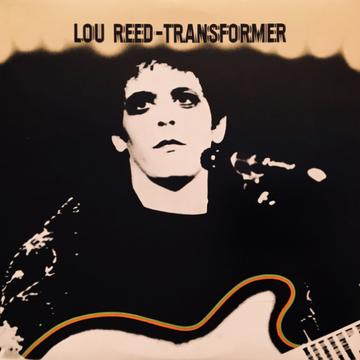
- This copy of Lou’s Rock Masterpiece boasts solid Double Plus (A++) grades or BETTER from top to bottom – exceptionally quiet vinyl too
- A superb pressing that is guaranteed to blow your mind – there is practically no chance that you have ever heard this album sound this good, especially if you have an original import or domestic pressing
- A side one this good means “Walk on the Wild Side” is a Demo Quality track that will have your audiophile friends turning green with envy
- Our vintage British import Hot Stamper pressing here showed us just how Tubey Magical the midrange of the album could be – thanks, Ken Scott!
- 4 1/2 stars: “… Bowie and Ronson gave their hero a new lease on life – and a solid album in the bargain.”
- Transformer is his Masterpiece, a Core Collection title, and possibly a case of One and Done since it’s the only Lou Reed album we sell. (You, of course, may feel differently.)
Transformer is an absolute tour de force of 70s Glam Rock / Classic Rock / Alternative Rock. You’ve got Lou Reed teamed up with David Bowie (in the producer’s chair), Mick Ronson, Herbie Flowers and Klaus Voorman, and on top of that the album was recorded at Trident and mixed by the great Ken Scott.
Throw in the fact that this is the best set of post-Velvets material Lou would ever write and it is a recipe for success. There are so many good songs on here I won’t bother to list them one by one. Satellite Of Love is especially good though, if you ask me. If you agree, and you’ve never heard the VU demo version, make sure to seek it out. It’s completely different and good fun.
This vintage UK pressing has the kind of Tubey Magical Midrange that modern records can barely BEGIN to reproduce. Folks, that sound is gone and it sure isn’t showing signs of coming back. If you love hearing INTO a recording, actually being able to “see” the performers, and feeling as if you are sitting in the studio with the band, this is the record for you. It’s what vintage all analog recordings are known for — this sound.
If you exclusively play modern repressings of vintage recordings, I can say without fear of contradiction that you have never heard this kind of sound on vinyl. Old records have it — not often, and certainly not always — but maybe one out of a hundred new records do, and those are some pretty long odds.
What The Best Sides Of Transformer Have To Offer Is Not Hard To Hear
- The biggest, most immediate staging in the largest acoustic space
- The most Tubey Magic, without which you have almost nothing. CDs give you clean and clear. Only the best vintage vinyl pressings offer the kind of Tubey Magic that was on the tapes in 1972
- Tight, note-like, rich, full-bodied bass, with the correct amount of weight down low
- Natural tonality in the midrange — with all the instruments having the correct timbre
- Transparency and resolution, critical to hearing into the three-dimensional studio space
No doubt there’s more but we hope that should do for now. Playing the record is the only way to hear all of the qualities we discuss above, and playing the best pressings against a pile of other copies under rigorously controlled conditions is the only way to find a pressing that sounds as good as this one does.
What We’re Listening For On Transformer
- Energy for starters. What could be more important than the life of the music?
- Then: presence and immediacy. The vocals aren’t “back there” somewhere, lost in the mix. They’re front and center where any recording engineer worth his salt would put them.
- The Big Sound comes next — wall to wall, lots of depth, huge space, three-dimensionality, all that sort of thing.
- Then transient information — fast, clear, sharp attacks, not the smear and thickness so common to these LPs.
- Tight punchy bass — which ties in with good transient information, also the issue of frequency extension further down.
- Next: transparency — the quality that allows you to hear deep into the soundfield, showing you the space and air around all the instruments.
- Extend the top and bottom and voila, you have The Real Thing — an honest to goodness Hot Stamper.
The Players and Personnel
Adapted from the Transformer liner notes.
- Lou Reed – lead vocals; rhythm guitar
- Mick Ronson – lead guitar; piano; recorder; string arrangements
- Herbie Flowers – bass guitar; double bass; tuba on “Goodnight Ladies” and “Make Up”
- John Halsey – drums
Additional personnel
- David Bowie – keyboards; backing vocals; acoustic guitar on “Wagon Wheel” and “Walk on the Wild Side”
- Trevor Bolder – trumpet
- Ronnie Ross – soprano saxophone on “Goodnight Ladies” and baritone saxophone “Walk on the Wild Side”
- The Thunder Thighs – backing vocals
- Barry DeSouza – drums
- Ritchie Dharma – drums
- Klaus Voormann – bass guitar on “Perfect Day,” “Goodnight Ladies,” “Satellite of Love,” and “Make Up”
Production
- David Bowie – producer
- Mick Ronson – producer
- Ken Scott – engineer
A Must Own Rock Record
We consider this album Lou Reed’s Masterpiece.
It’s a recording that belongs in any serious Rock Music Collection.
AMG 4 1/2 Star Rave Review
The sound and style of Transformer would in many ways define Reed’s career in the 1970s, and while it led him into a style that proved to be a dead end, you can’t deny that Bowie and Ronson gave their hero a new lease on life — and a solid album in the bargain.
Background
As with its predecessor Lou Reed, Transformer contains songs Reed composed while in the Velvet Underground (here, four out of ten). “Andy’s Chest” was first recorded by the band in 1969 and “Satellite of Love” demoed in 1970; these versions were released on VU and Peel Slowly and See, respectively. For Transformer, the original up-tempo pace of these songs was slowed down.
“New York Telephone Conversation” and “Goodnight Ladies” are known to have been played live during the band’s summer 1970 residency at Max’s Kansas City; the latter takes its title refrain from the last line of the second section (“A Game of Chess”) of T. S. Eliot’s modernist poem, The Waste Land: “Good night, ladies, good night, sweet ladies, good night, good night.”, which is itself a quote from Ophelia in Hamlet.
As in Reed’s Velvet Underground days, the Andy Warhol connection remained strong. According to Reed, Warhol told him he should write a song about someone vicious. When Reed asked what he meant by vicious, Warhol replied, “Oh, you know, like I hit you with a flower”, resulting in the song “Vicious”.
Production
Transformer was produced by David Bowie and Mick Ronson, both of whom had been strongly influenced by Reed’s work with the Velvet Underground. Bowie had obliquely referenced the Velvet Underground in the cover notes for his album Hunky Dory and regularly performed both “White Light/White Heat” and “I’m Waiting for the Man” in concerts and on the BBC during 1971–1973. He even began recording “White Light/White Heat” for inclusion on Pin Ups, but it was never completed; Ronson ended up using the backing track for his solo album Play Don’t Worry in 1974.
Mick Ronson (who was at the time the lead guitarist with Bowie’s band, the Spiders from Mars) played a major role in the recording of the album at Trident Studios, serving as the co-producer and primary session musician (contributing guitar, piano, recorder and backing vocals), as well as arranger, notably contributing the string arrangement for “Perfect Day”. Reed lauded Ronson’s contribution in the Transformer episode of the documentary series Classic Albums, praising the beauty of his work and keeping down the vocal to highlight the strings. The songs on the album are now among Reed’s best-known works, including “Walk on the Wild Side”, “Perfect Day” and “Satellite of Love”, and the album’s commercial success elevated him from cult status to become an international star.
In 1997, Transformer was named the 44th greatest album of all time in a ‘Music of the Millennium poll conducted in the United Kingdom by HMV, Channel 4, The Guardian and Classic FM. Transformer is also ranked No. 55 on NME ‘s list of “Greatest Albums of All Time.” In 2003, the album was ranked number 194 on Rolling Stone magazine’s list of the 500 greatest albums of all time. It is also on Q magazine’s list of “100 Greatest Albums Ever.”
Wikipedia