

More of the Music of The Rolling Stones
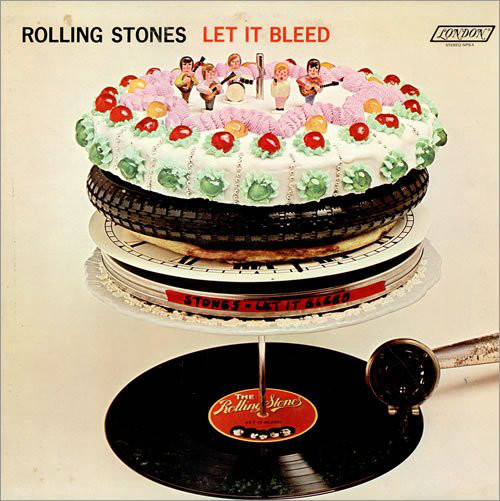
- With solid Double Plus (A++) sound or close to it on both sides, here is an outstanding All Analog pressing showcasing the Stones at the peak of their rock and roll powers
- “Love In Vain” is one of the best sounding Stones songs ever recorded – the acoustic guitar harmonics and the rich WHOMP of the snare prove indisputably that Glyn Johns is one of the engineering greats
- Marks and problems in the vinyl are sometimes the nature of the beast with these Classic Rock records, but once you hear just how superb sounding this copy is, you might be inclined, as we were, to stop counting ticks and pops and just be swept away by the music
- Top 100, 5 stars – Jason McNeil wrote that Beggars Banquet and Let It Bleed are “the two greatest albums the band’s (or anyone’s) ever made.” [Add Sticky Fingers to complete the ultimate Stones Trilogy.]
- This is a Must Own album from 1969, one that should have a place in any audiophile’s pop and rock section
This is, in our humble opinion, the second or third best record the Stones ever made. (Sticky Fingers is Number One, and either this or Beggar’s Banquet comes in a strong second.) With this wonderful early domestic pressing we can now hear the power and the beauty of the recording itself, a fact that we consider the very definition of a Hot Stamper.
Killer Stones Sound
Both sides have more ambiance, more life, and more presence than you probably dreamed possible. Take the sound of “You Can’t Always Get What You Want” to pick just one example. The breathtaking transparency of this copy allows you to pick out each voice in the intro. The vocals on the other songs are no less present, full-bodied and breathy.
There’s also plenty of deep, tight bass, which is crucial to a song like “Monkey Man.” “Gimme Shelter” is pretty tough to get right but it sounds correct here as well.
Testing Love In Vain
This is our favorite test track for side one. The first minute or so clues you into everything that’s happening in the sound. Listen for the amazing immediacy, transparency, and sweetly extended harmonics of the guitar in the left channel. Next, when Watts starts slapping that big fat snare in the right channel, it should sound so real you could reach out and touch it.
If you’re like me, that Tubey magical acoustic guitar sound and the rich whomp of the snare should be all the evidence you need that Glyn Johns is one of the five best rock engineers who ever lived. Ken Scott, Stephen Barncard, Alan Parsons, Geoff Emerick, Bill Halverson, and a few others are right up there with him of course. We audiophiles are very lucky to have had guys like these around when the Stones (and The Beatles and Pink Floyd and Bowie and Crosby, Stills, Nash and Young were at their writing and performing peak.
A Must Own Stones Record
I would hope that it would go without saying that this is a recording that belongs in any serious Rock Music Collection, along with a number of other Stones albums.
Others that belong in that category can be found here.
We would love to get the prices down for these must own titles, but finding good sounding vintage pressings with clean surfaces is getting harder every day.
This vintage London Stereo pressing has the kind of Tubey Magical Midrange that modern records rarely even BEGIN to reproduce. Folks, that sound is gone and it sure isn’t showing signs of coming back. If you love hearing INTO a recording, actually being able to “see” the performers, and feeling as if you are sitting in the studio with the band, this is the record for you. It’s what vintage all analog recordings are known for — this sound.
If you exclusively play modern repressings of vintage recordings, I can say without fear of contradiction that you have never heard this kind of sound on vinyl. Old records have it — not often, and certainly not always — but maybe one out of a hundred new records do, and those are some pretty long odds.
What The Best Sides Of Let It Bleed Have To Offer Is Not Hard To Hear
- The biggest, most immediate staging in the largest acoustic space
- The most Tubey Magic, without which you have almost nothing. CDs give you clean and clear. Only the best vintage vinyl pressings offer the kind of Tubey Magic that was on the tapes in 1969
- Tight, note-like, rich, full-bodied bass, with the correct amount of weight down low
- Natural tonality in the midrange — with all the instruments having the correct timbre
- Transparency and resolution, critical to hearing into the three-dimensional studio space
No doubt there’s more but we hope that should do for now. Playing the record is the only way to hear all of the qualities we discuss above, and playing the best pressings against a pile of other copies under rigorously controlled conditions is the only way to find a pressing that sounds as good as this one does.
What We’re Listening For On Let It Bleed
- Energy for starters. What could be more important than the life of the music?
- The Big Sound comes next — wall to wall, lots of depth, huge space, three-dimensionality, all that sort of thing.
- Then transient information — fast, clear, sharp attacks for the guitars, horns and drums, not the smear and thickness common to most LPs.
- Tight, note-like bass with clear fingering — which ties in with good transient information, as well as the issue of frequency extension further down.
- Next: transparency — the quality that allows you to hear deep into the soundfield, showing you the space and air around all the players.
- Then: presence and immediacy. The musicians aren’t “back there” somewhere, way behind the speakers. They’re front and center where any recording engineer worth his salt would have put them.
- Extend the top and bottom and voila, you have The Real Thing — an honest to goodness Hot Stamper.
Side One
Gimme Shelter
Love in Vain
One of the best sounding Rolling Stones songs of all time. In previous listings I’ve mentioned how good this song sounds — thanks to Glyn Johns, of course — but on these amazing Hot Stamper copies it is OUT OF THIS WORLD.
This is our favorite test track for side one. The first minute or so clues you into to everything that’s happening in the sound. Listen for the amazing immediacy, transparency and sweetly extended harmonics of the guitar in the left channel. Next, when Watts starts slapping that big fat snare in the right channel, it should sound so real you could reach out and touch it.
If you’re like me, that tubey magical acoustic guitar sound and the rich whomp of the snare should be all the evidence you need that Glyn Johns is one of the Five Best Rock Engineers who ever lived. Ken Scott, Stephen Barncard, Alan Parsons and a few others are right up there with him of course. We audiophiles are very lucky to have had guys like those around when the Stones were at their peak.
Country Honk
Live With Me
Let It Bleed
Side Two
Midnight Rambler
You Got the Silver
Monkey Man
On the best copies this song will have Demo Quality Sound. The piano should have nice weight to it without sounding hard and there should be lots of ambience around the vocals.
You Can’t Always Get What You Want
The intro to this song is a great test for transparency. On a Hot Stamper copy you’ll be able to pick out each voice in the choir. When the music comes in you should hear rich, full-bodied acoustic guitars. On the best pressings they sound every bit as rich, tubey, sweet, delicate and harmonically correct as those found on Tea For the Tillerman, Rubber Soul, Comes a Time or any of the other phenomenal recordings we rave about on the site. (Our Top 100 is full of others if you want to check them out.) .
Review
Released in December, Let It Bleed reached number 1 in the UK (temporarily demoting The Beatles’ Abbey Road) and number 3 on the Billboard Top LPs chart in the US, where it eventually went 2x platinum. In a contemporary review for Rolling Stone magazine, music critic Greil Marcus said that the middle of the album has “great” songs, but “Gimme Shelter” and “You Can’t Always Get What You Want” “seem to matter most” because they “both reach for reality and end up confronting it, almost mastering what’s real, or what reality will feel like as the years fade in.”
According to Rolling Stone, Let It Bleed is the second of the Stones’ run of four studio LPs that are generally regarded as among their greatest achievements artistically, equalled only by the best of their great 45’s from that decade. The other three albums are Beggars Banquet (1968), Sticky Fingers (1971) and Exile on Main St. (1972).
In a retrospective review, NME magazine said that the album “tugs and teases” in various musical directions and called it “a classic”.
In his 2001 Stones biography, Stephen Davis said of the album “No rock record, before or since, has ever so completely captured the sense of palpable dread that hung over its era.”
In a five-star review for Rolling Stone in 2004, Gavin Edwards praised Keith Richard’s guitar playing throughout the album and stated, “Whether it was spiritual, menstrual or visceral, the Stones made sure you went home covered in blood.”
Jason McNeil of PopMatters wrote that Beggars Banquet and Let It Bleed are “the two greatest albums the band’s (or anyone’s) ever made”.
In 2000, Q magazine ranked it at number 28 in its list of “The 100 Greatest British Albums Ever”. In 2001, the TV network VH1 placed Let It Bleed at 24th on their “100 Greatest Albums of R ‘n’ R” survey. In 1997, it was voted the 27th “Best Album Ever” by The Guardian.
In 2003, Rolling Stone ranked it at number 32 on the magazine’s list of the “500 Greatest Albums of All Time”.
Wikipedia
