

More of the Music of Maurice Ravel
More of the Music of Sergei Rachmaninoff

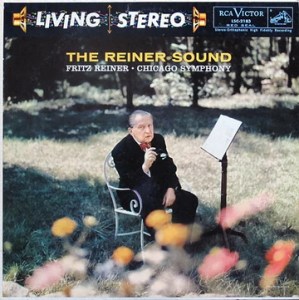
- With big, bold, dynamic Double Plus (A++) Living Stereo sound or close to it throughout, you’ll have a hard time finding a copy that sounds remotely as good as this original Shaded Dog pressing
- It’s also remarkably quiet at high end of Mint Minus Minus, a grade that even our most well-cared-for vintage classical titles have trouble playing at
- Side one is doing just about everything right – it’s rich, clear, undistorted, open, spacious, and has depth and transparency to rival the best recordings you may have heard, and side two is not far behind in all those areas
- True, side two earned a minimal Hot Stamper grade of 1.5+, but we still guarantee that it will beat the pants off any Heavy Vinyl reissue, because every one of those that we played was ridiculously opaque, muddy and thick enough to have us crying “uncle” after five minutes
- This record will have you asking why so few Living Stereo pressings actually do what this one does (particularly on side one). The more critical listeners among you will recognize that this is a very special copy indeed (also particularly on side one). Everyone else will just enjoy the hell out of it.
- Contains two works by Ravel: Rapsodie Espagnole and Pavan for a Dead Princess, as well as Rachmaninoff’s Isle of the Dead
This former TAS list record really surprised us on two counts.
First, you will not believe how dynamic the recording is. Of all the classical recordings we’ve played lately, I would have to say this is the most dynamic of them all.
The explosively loud sections of these wonderful works, with their huge orchestral effects, are dynamic contrasts that are clearly part of the composer’s intentions but ones that rarely make it from the concert hall to vinyl disc the way they do here.
Second, there is simply an amazing amount of top end on this record. Rarely do we hear Golden Age recordings with this kind of energy and extension up top. Again, it has to be some of the best we have heard recently.
(This is, of course, one of the reasons the Classic reissue is such a disaster. With all that top end energy, Bernie’s gritty cutting system and penchant for boosted upper midrange frequencies positively guarantees that the Classic Reiner Sound will be all but unplayable on a tonally correct system. Boosting the bass and highs and adding transistory harshness is the last thing in the world that The Reiner Sound needs.)
Unlike many bien-pensant audiophiles who buy into HP’s classical choices, I am not the biggest Reiner fan. On these works, though, I would have to say the performances are top drawer, some of the best I have ever heard. The amount of energy he manages to coax from the Chicago Symphony Orchestra is nothing less than breathtaking.
What The Best Sides Of The Reiner Sound Have To Offer Is Not Hard To Hear
- The biggest, most immediate staging in the largest acoustic space
- The most Tubey Magic, without which you have almost nothing. CDs give you clean and clear. Only the best vintage vinyl pressings offer the kind of Tubey Magic that was on the tapes in 1958
- Tight, note-like, rich, full-bodied bass, with the correct amount of weight down low
- Natural tonality in the midrange — with all the instruments having the correct timbre
- Transparency and resolution, critical to hearing into the three-dimensional studio space
No doubt there’s more but we hope that should do for now. Playing the record is the only way to hear all of the qualities we discuss above, and playing the best pressings against a pile of other copies under rigorously controlled conditions is the only way to find a pressing that sounds as good as this one does.
Copies with rich lower mids and nice extension up top did the best in our shootout, assuming they weren’t veiled or smeary of course. So many things can go wrong on a record. We know, we’ve heard them all.
Top end extension is critical to the sound of the best copies. Lots of old records (and new ones) have no real top end; consequently, the studio or stage will be missing much of its natural air and space, and instruments will lack their full complement of harmonic information.
Tube smear is common to most vintage pressings. The copies that tend to do the best in a shootout will have the least (or none), yet are full-bodied, tubey and rich.
What We’re Listening For On The Reiner Sound
- Energy for starters. What could be more important than the life of the music?
- The Big Sound comes next — wall to wall, lots of depth, huge space, three-dimensionality, all that sort of thing.
- Then transient information — fast, clear, sharp attacks, not the smear and thickness so common to these LPs.
- Powerful bass — which ties in with good transient information, also the issue of frequency extension further down.
- Next: transparency — the quality that allows you to hear deep into the soundfield, showing you the space and air around all the instruments.
- Extend the top and bottom and voila, you have The Real Thing — an honest to goodness Hot Stamper.
Hi-Fidelity
What do we love about these Living Stereo Hot Stamper pressings? The timbre of every instrument is Hi-Fi in the best sense of the word. The instruments here are reproduced with remarkable fidelity. Now that’s what we at Better Records mean by “Hi-Fi,” not the kind of audiophile phony BS sound that passes for Hi-Fidelity these days. There’s no boosted top, there’s no bloated bottom, there’s no sucked-out midrange. There’s no added digital reverb (Patricia Barber, Diana Krall, et al.). The microphones are not fifty feet away from the musicians (Water Lily) nor are they inches away (Three Blind Mice).
This is Hi-Fidelity for those who recognize the real thing when they hear it. I’m pretty sure our customers do, and whoe
Side One
Rapsodie Espagnole – Ravel
Prélude À La Nuit
Malagueña
Habanera
Feria
Pavane Pour Une Infante Défunte
Side Two
Isle Of The Dead – Rachmaninoff
Rapsodie Espagnole
Rapsodie Espagnole is an orchestral rhapsody written by Maurice Ravel. Composed between 1907 and 1908, the Rapsodie is one of Ravel’s first major works for orchestra. It was first performed in Paris in 1908 and quickly entered the international repertoire. The piece draws on the composer’s Spanish heritage and is one of several of his works set in or reflecting Spain.
Instrumentation
The work is scored for an orchestra of 2 piccolos, 2 flutes, 2 oboes, cor anglais, 2 soprano clarinets, bass clarinet, 3 bassoons, sarrusophone (modern performances typically use a contrabassoon), 4 horns, 3 trumpets, 3 trombones, tuba, timpani, bass drum, cymbals, castanets, tambourine, gong, snare drum, xylophone, celesta, 2 harps and strings.
Structure
The Rapsodie has four movements; a complete performance typically lasts around 15 minutes.
1. Prélude à la nuit
The movement is marked très modéré; the time signature is 3/4 and the key is A major. The whole movement is quiet, never rising above mezzo forte; the strings are muted throughout. As in the String Quartet of three years earlier Ravel places themes in the opening movement that recur in subsequent sections, most particularly the insistent opening theme, F–E–D–C♯.2. Malagueña
This is the shortest of the four movements, and is marked assez vif (“fairly lively”). Malagueña refers to a flamenco dance from the southern Spanish province of Málaga, but Ravel’s music here has only the 3/4 meter in common with the authentic dance. The movement is instead what the critic Noël Goodwin calls “more a romantic evocation of place and mood.” Like the first movement, it is in the key of A, though slightly ambiguous as to whether it is major or minor. The movement ends quietly with a repeat of the four note phrase that opens the first movement.3. Habanera
The movement, in 2/4 and switching between F♯ major and minor, is marked assez lent et d’un rythme las (“rather slow and with a drowsy rhythm”). Goodwin describes it as “beguiling and subtle in its expression of a thoroughly Spanish character and spirit.”4. Feria
Feria (Festival), in 6/8 and C major, is marked assez animé (“fairly lively”). It is the longest of the four movements and is the first point in the score at which Ravel, in Nichols’s phrase, allows “the élan that has so far been deliberately stifled” to break out. The boisterous carnival atmosphere has undertones of nostalgia, but exuberance triumphs and the work ends in a joyful burst of orchestral color.
Pavane for a Dead Princess
Pavane pour une infante défunte (Pavane for a Dead Princess) is a work for solo piano by Maurice Ravel, written in 1899 while the French composer was studying at the Conservatoire de Paris under Gabriel Fauré. Ravel published an orchestral version in 1910 using two flutes, an oboe, two clarinets (in B♭), two bassoons, two horns, harp, and strings.
Ravel described the piece as “an evocation of a pavane that a little princess [Infanta] might, in former times, have danced at the Spanish court.” The pavane was a slow processional dance that enjoyed great popularity in the courts of Europe during the sixteenth and seventeenth centuries.
This antique miniature is not meant to pay tribute to any particular princess from history, but rather expresses a nostalgic enthusiasm for Spanish customs and sensibilities, which Ravel shared with many of his contemporaries (most notably Debussy and Albéniz) and which is evident in some of his other works such as the Rapsodie espagnole and the Boléro.
Isle of the Dead
Isle of the Dead, Op. 29, is a symphonic poem composed by Sergei Rachmaninoff, written in the key of A minor. The piece was inspired by a black and white reproduction of Arnold Böcklin’s painting Isle of the Dead, which he saw in Paris in 1907. He composed the work from January to March of 1909, but later made numerous revisions, including cuts.
It is scored for 3 flutes (3rd doubling piccolo), 2 oboes, English horn, 2 clarinets, bass clarinet, 2 bassoons, contrabassoon, 6 horns, 3 trumpets, 3 trombones, tuba, timpani, cymbals, bass drum, harp, and strings.
The music begins by suggesting the sound of the oars as they meet the waters on the way to the Isle of the Dead. The slowly heaving and sinking music could also be interpreted as waves. Rachmaninoff uses a recurring figure in 5/8 time to depict what may be the rowing of the oarsman or the movement of the water, and as in several other of his works, quotes the Dies Irae plainchant, an allusion to death. In contrast to the theme of death, the 5/8 (quintuple) time also depicts breathing, creating a holistic reflection on how life and death are intertwined.
-Wikipedia
Further Reading