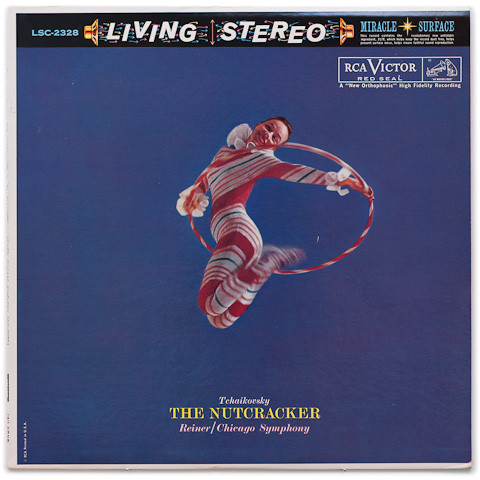

The better pressings of LSC 2328 have some of the best sound we have ever heard for The Nutcracker. We’ve played recordings of the work by the dozens, on the greatest Golden Age labels of all time, including the likes of Mercury, RCA and London. (Our current favorites of both the suites and the complete ballet are those conducted by Ansermet for Decca.)
The CSO, as one might expect, plays this work with more precision and control than most others. They also bring more excitement and dynamic contrasts to their performance, adding greatly to our enjoyment of the music.
Some may find the performances a bit rushed. That was our experience during our most recent shootout.
But skip 9s/6s. We had two copies and both of them sounded too much like an old record.
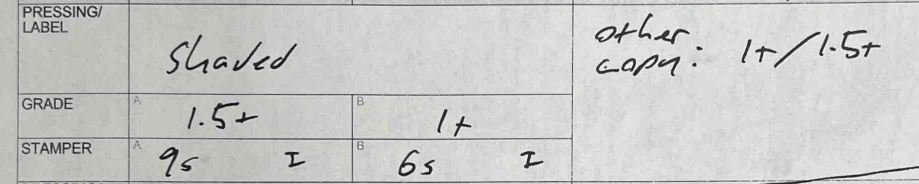

Pressings with those stampers might be passable, even to some degree enjoyable, especially when played on an old school system, but they would not be worth bothering with on the high quality modern equipment we use.
There are quite a number of other records that we’ve run into over the years with a catalog of obvious shortcomings — obvious to us but not necessarily to others — and we’ve broken them down into the three major labels that account for most of the best classical and orchestral titles we’ve had the pleasure to play.
- London/Decca records with weak sound or performances
- Mercury records with weak sound or performances
- RCA records with weak sound or performances, including many on the coveted Shaded Dog label
We’ve auditioned countless pressings in the 38 years we’ve been in business — buying, cleaning and playing them by the thousands.
This is how we find the best sounding vinyl pressings ever made, through trial and error. It may be expensive and time consuming, but there is simply no other method for finding better records that works. If you know of one, please write me!
We are not the least bit interested in pressings that are widely believed to have the best sound.
Believed by whom? Which audiophiles — hobbyists or professionals, take your pick — can be trusted to know what they are talking about when it comes to the sound of records?
I have never met one, outside of those of us who work for Better Records. I remain skeptical of the existence of such a creature.
UPDATE: 2026
Woops, I take that back. I have met one, a certain Mr. Robert Brook. He has been conducting his own shootouts for a few years now and has made his findings available on his blog, The Broken Record. This is valuable information you can trust.
We’re looking for the pressings of albums that actually do sound the best.
If you’re an audiophile with an ear for top quality sound on vintage vinyl, we’d be happy to send you the Hot Stamper pressing guaranteed to beat anything and everything you’ve heard, especially if you have any pressing marketed as more suitable for the audiophile. Those, with few exceptions, are rarely better than mediocre.
And if we can’t beat whatever LP you own or have heard, you get your money back. It’s as simple as that.
Classical Music
I’ve commented often over the years of the benefits to be gained from listening to classical music regularly. Once a week is a good rule of thumb I would say. I love rock and roll, jazz and all the rest of it, but there is something about classical music that restores a certain balance in your musical life that can’t be accomplished by other means. It grounds your listening experience to something perhaps less immediately gratifying but deeper and more enriching over time. Once habituated, the effect on one’s mood is not hard to recognize.
Of course it should be pointed out that the average classical record is a sonic disaster. There are many excellent pressings of rock and jazz, but when it comes to classical music, being so much more difficult to record (and reproduce!), the choices are substantially more narrow. Most of what passed for good classical sound when I was coming up in audio — the DGs, EMIs, Sheffields and other audiophile pressings — are hard to listen to on the modern equipment of today.
I would say we audition at least five records for every one we think might pass muster in a future shootout, and we’re pulling only from the labels we know to be good. I wouldn’t even take the time to play the average Angel, Columbia or DG, or EMI for that matter. The losers vastly outweigh the winners, and there are only so many hours in a day. Who has the time?
All that said, it should be clear that assembling a top quality classical collection requires much more in the way of resources — money and time — than it would for any other genre of music. We are happy to do the work for you — our best classical pressings are amazing in every way — potentially saving you a lifetime of work… at a price of course.
Further Reading
- New to the Blog? Start here
- More stamper and pressing information
- Some stereos make it difficult to find the best sounding pressings