

More Eric Clapton

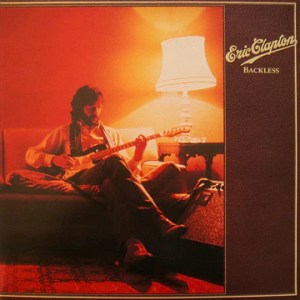
- You’ll find INCREDIBLE Shootout Winning Triple Plus (A+++) grades on both sides of this early British pressing – exceptionally quiet vinyl too
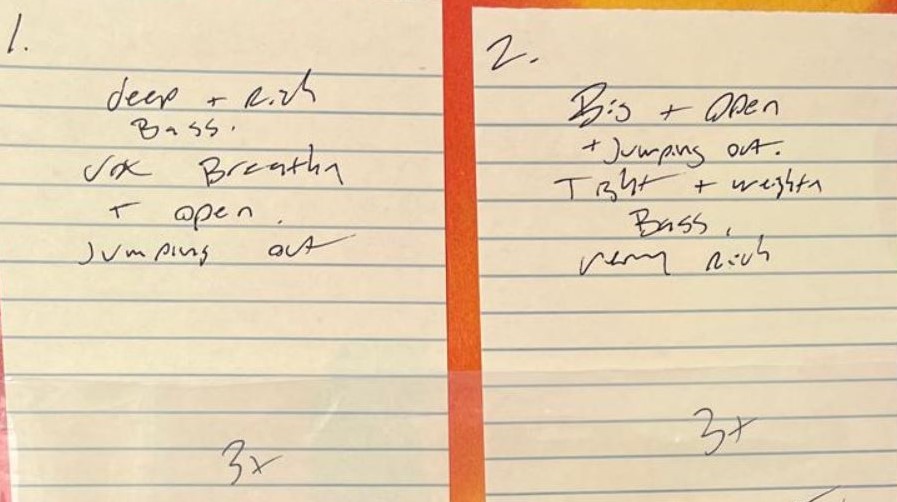
- Here are just a few of the things we had to say about this amazing copy in our notes: “deep, rich bass”…”vox breathy and open”…”jumping out of the speakers”…”big and open”
- Rich, smooth, clear sound throughout – listen to the grungy guitars on “Walk Out In The Rain” – that’s the way they should sound, all right
- Clapton comes to life on the traditional blues “Early In The Morning” – it also has the best sound on the album
- “Backless is a seductive record, if you’re attracted to the interplay of Clapton’s dolorous voice and Marcy Levy’s raspy backup vocals, George Terry’s slide guitar and Glyn Johns’ pristine production.” – Rolling Stone
The typical pressing of Backless, much like the typical pressing of Slowhand, is just too thick, dull, compressed and veiled to be much fun.
You need to turn this album up good and loud to get it to do anything.
The copies that are solid and weighty love getting loud; the copies that are thin and bright only get worse as the level goes up, a sign that they leave a lot to be desired. This is supposed to be a rock album after all.

UPDATE 2025
Last time around in 2023 we wrote:
We had top quality copies on both domestic and British vinyl. Both were cut here in L.A. It makes sense that either can be good.
This time around none of our domestic pressings mastered by The Mastering Lab, the ones we used to think could be good, did well in our shootout. They were boxy and hard. We probably won’t be buying them anymore. The better Brits just killed them.
Seems we got this one wrong. Live and learn is our motto, for precisely this reason. When we’re wrong we admit it, and we tell you what we think is true about the record now, reserving the right to change our minds again. All it takes is the right pressing to show us the error of our ways, and we are looking for those all the time.
The true test for side two was the second track, the old blues song “Early In The Morning.” It’s by far the best sounding track on the album, with huge space, rich bass, a fat snare and Tubey Magic to die for.
This is the kind of sound that only the likes of Glyn Johns can get down on tape, live in the studio no doubt, and it made it easy to do the shootout for side two. The bigger, the richer, the tubier, the more transparent, the better. It’s THE track to demo with.
Both sides have rich, smooth, clear sound. Listen for the guitars on the first track on side one; the grungier the better. Punchy bass too.
This vintage UK pressing has the kind of Tubey Magical Midrange that modern records can barely BEGIN to reproduce. Folks, that sound is gone and it sure isn’t showing signs of coming back. If you love hearing INTO a recording, actually being able to “see” the performers, and feeling as if you are sitting in the studio with the band, this is the record for you. It’s what vintage all analog recordings are known for — this sound.
If you exclusively play modern repressings of vintage recordings, I can say without fear of contradiction that you have never heard this kind of sound on vinyl. Old records have it — not often, and certainly not always — but maybe one out of a hundred new records do, and those are some pretty long odds.
What The Best Sides Of Backless Have To Offer Is Not Hard To Hear
- The biggest, most immediate staging in the largest acoustic space
- The most Tubey Magic, without which you have almost nothing. CDs give you clean and clear. Only the best vintage vinyl pressings offer the kind of Tubey Magic that was on the tapes in 1978
- Tight, note-like, rich, full-bodied bass, with the correct amount of weight down low
- Natural tonality in the midrange — with all the instruments having the correct timbre
- Transparency and resolution, critical to hearing into the three-dimensional studio space
No doubt there’s more but we hope that should do for now. Playing the record is the only way to hear all of the qualities we discuss above, and playing the best pressings against a pile of other copies under rigorously controlled conditions is the only way to find a pressing that sounds as good as this one does.
What We’re Listening For On Backless
- Energy for starters. What could be more important than the life of the music?
- Then: presence and immediacy. The vocals aren’t “back there” somewhere, lost in the mix. They’re front and center where any recording engineer worth his salt — the inestimable Glyn Johns in this case — would put them.
- The Big Sound comes next — wall to wall, lots of depth, huge space, three-dimensionality, all that sort of thing.
- Then transient information — fast, clear, sharp attacks, not the smear and thickness so common to these LPs.
- Tight punchy bass — which ties in with good transient information, also the issue of frequency extension further down.
- Next: transparency — the quality that allows you to hear deep into the soundfield, showing you the space and air around all the instruments.
- Extend the top and bottom and voila, you have The Real Thing — an honest to goodness Hot Stamper.
Learning About Backless
For our shootout, we had at our disposal a variety of pressings we thought should have the potential for Hot Stamper sound. We cleaned them carefully, then unplugged everything in the house we could, warmed up the system, Talisman’d it, found the right VTA for our Triplanar arm (by ear of course) and proceeded to spend the next hour or so playing copy after copy on side one, after which we repeated the process for sides two, three and four.
If you have five or ten copies of a record and play them over and over against each other, the process itself teaches you what’s right and what’s wrong with the sound of the album. Once your ears are completely tuned to what the best pressings do well that the other pressings do not do as well, using a few carefully chosen passages of music, it quickly becomes obvious how well a given copy can reproduce those passages. You’ll hear what’s better and worse — right and wrong would be another way of putting it — about the sound.
This approach is simplicity itself. First you go deep into the sound. There you find a critically important passage in the music, one which most copies struggle — or fail — to reproduce as well as the best. Now, with the hard-won knowledge of precisely what to listen for, you are perfectly positioned to critique any and all pressings that come your way.
It may be a lot of work but it sure ain’t rocket science, and we never pretended it was. Just the opposite: from day one we’ve explained step by step precisely how to go about finding the Hot Stampers in your own collection.
Do It Again
As your stereo and room improve, as you take advantage of new cleaning technologies, as you find new and interesting pressings to evaluate, you may even be inclined to do the shootout all over again, to find the hidden gem, the killer copy that blows away what you thought was the best.
You can’t find it by looking at it. You have to clean it and play it, and always against other pressings of the same album. There is no other way to go about it if you want to be successful in your hunt for the Ultimate Pressing.
For the more popular records on the site such as the Beatles titles we have easily done more than twenty, maybe even as many as thirty to forty shootouts.
And very likely learned something new from every one.
Side One
Walk Out In The Rain
Watch Out For Lucy
I’ll Make Love To You Anytime
Roll It
Tell Me That You Love Me
Side Two
If I Don’t Be There By Morning
Early In The Morning
Promises
Golden Ring
Tulsa Time
Rolling Stone Review
Eric Clapton must want to be the Mississippi John Hurt of his generation: a sweet-tempered old soul who can communicate great pleasure and great pain in a mumble. The surprise is that he gets away with it so easily.
In its way, Backless is a seductive record, if you’re attracted to the interplay of Clapton’s dolorous voice and Marcy Levy’s raspy backup vocals, George Terry’s slide guitar and Glyn Johns’ pristine production. It’s disheartening only if you’re still looking for a Clapton album with a hint of the power and fire he brought to his best work — from Bluesbreakers to Layla. Me, I made my peace with great expectations a while back.
Dave Marsh
Further Reading
- New to the Blog? Start here
- Important lessons we learned from record experiments
- More reviews, letters and commentaries for the music of Eric Clapton