

More Recordings Engineered by Rudy Van Gelder

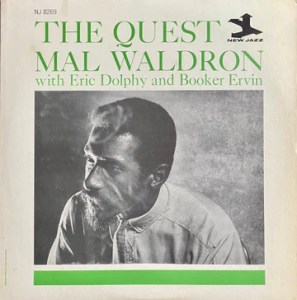
- This New Jazz recording pressed on fairly quiet OJC vinyl boasts incredible Nearly Triple Plus (A++ to A+++) grades from top to bottom – just shy of our Shootout Winner
- These sides are rich and full, from the extended top end all the way down to the deepest bass — thanks, RVG!
- Marks in the vinyl are sometimes the nature of the beast with these vintage LPs – there simply is no way around them if the superior sound of vintage analog is important to you
- 4 1/2 stars: “The seven selections in this set, wildly divergent in character though they are, are notable for their fresh thinking and rhythmic and harmonic daring.” -Down Beat
This vintage New Jazz recording has the kind of Tubey Magical Midrange that modern records can barely BEGIN to reproduce. Folks, that sound is gone and it sure isn’t showing signs of coming back. If you love hearing INTO a recording, actually being able to “see” the performers, and feeling as if you are sitting in the studio with the band, this is the record for you. It’s what vintage all analog recordings are known for — this sound.
If you exclusively play modern repressings of vintage recordings, I can say without fear of contradiction that you have never heard this kind of sound on vinyl. Old records have it — not often, and certainly not always — but maybe one out of a hundred new records do, and those are some pretty long odds.
What The Best Sides Of The Quest Have To Offer Is Not Hard To Hear
- The biggest, most immediate staging in the largest acoustic space
- The most Tubey Magic, without which you have almost nothing. CDs give you clean and clear. Only the best vintage vinyl pressings offer the kind of Tubey Magic that was on the tapes in 1962
- Tight, note-like, rich, full-bodied bass, with the correct amount of weight down low
- Natural tonality in the midrange — with all the instruments having the correct timbre
- Transparency and resolution, critical to hearing into the three-dimensional studio space
No doubt there’s more but we hope that should do for now. Playing the record is the only way to hear all of the qualities we discuss above, and playing the best pressings against a pile of other copies under rigorously controlled conditions is the only way to find a pressing that sounds as good as this one does.
Copies with rich lower mids and nice extension up top did the best in our shootout, assuming they weren’t veiled or smeary of course. So many things can go wrong on a record. We know, we’ve heard them all.
Top end extension is critical to the sound of the best copies. Lots of old records (and new ones) have no real top end; consequently, the studio or stage will be missing much of its natural air and space, and instruments will lack their full complement of harmonic information.
Tube smear is common to most vintage pressings. The copies that tend to do the best in a shootout will have the least (or none), yet are full-bodied, tubey and rich.
Learning the Record
For our shootout, we had at our disposal a variety of pressings that had the potential for Hot Stamper sound. We cleaned them carefully, then unplugged everything in the house we could, warmed up the system, Talisman’d it, found the right VTA for our Triplanar arm (by ear of course) and proceeded to spend the next hour or so playing copy after copy on side one, after which we repeated the process for side two.
If you have five or more copies of a record and play them over and over against each other, the process itself teaches you what’s right and what’s wrong with the sound of the album. Once your ears are completely tuned to what the best pressings do well that the other pressings do not do as well, using a few carefully chosen passages of music, it quickly becomes obvious how well a given copy can reproduce those passages. You’ll hear what’s better and worse — right and wrong would be another way of putting it — about the sound.
This approach is simplicity itself. First, you go deep into the sound. There you find a critically important passage in the music, one which most copies struggle — or fail — to reproduce as well as the best. Now, with the hard-won knowledge of precisely what to listen for, you are perfectly positioned to critique any and all pressings that come your way.
It may be a lot of work but it sure ain’t rocket science, and we’ve never pretended otherwise. Just the opposite: from day one we’ve explained step by step precisely how to go about finding the Hot Stampers in your own collection. Not the good sounding pressings you happen to own — those may or may not have Hot Stampers — but the records you actually cleaned, shot out, and declared victorious.
What We’re Listening For On The Quest
- Energy for starters. What could be more important than the life of the music?
- The Big Sound comes next — wall to wall, lots of depth, huge space, three-dimensionality, all that sort of thing.
- Then transient information — fast, clear, sharp attacks, not the smear and thickness so common to these LPs.
- Tight, full-bodied bass — which ties in with good transient information, also the issue of frequency extension further down.
- Next: transparency — the quality that allows you to hear deep into the soundfield, showing you the space and air around all the instruments.
- Extend the top and bottom and voila, you have The Real Thing — an honest to goodness Hot Stamper.
Old and New Work Well Together
This reissue is spacious, open, transparent, rich and sweet. It’s yet another remarkable disc from the Golden Age of Vacuum Tube Recording Technology, with the added benefit of mastering using the more modern cutting equipment of the 70s and 80s. We are of course here referring to the good modern mastering of 40+ years ago, not the generally opaque, veiled and lifeless mastering of the records produced today.
The combination of old and new works wonders on this title as you will surely hear for yourself on both of these superb sides.
We were impressed with the fact that these pressings excel in so many areas of reproduction. What was odd about it — odd to most audiophiles but not necessarily to us — was just how rich and Tubey Magical the reissue can be on the right pressing.
This leads me to think that most of the natural, full-bodied, lively, clear, rich sound of the recording was still on the tape decades later, and that all that was needed to get that vintage sound on to a record was simply to thread up the tape on the right machine and hit “play.” The fact that practically nobody seems to be able to make a record nowadays that sounds remotely this good tells me that I’m wrong to think that such an approach tends to work, if our experience with hundreds of mediocre Heavy Vinyl reissues is relevant.
Side One
Status Seeking
Duquility
Thirteen
We Diddit
Side Two
Warm Canto
Warp And Woof
Fire Waltz
AMG 4 1/2 Star Review
The seven originals not only feature altoist [Eric] Dolphy (who makes a rare appearance on clarinet during “Warm Canto”) but tenor-saxophonist Booker Ervin, Ron Carter (on cello) and Waldron. With bassist Joe Benjamin and drummer Charlie Persip giving alert support, the complex music (which falls between hard bop and the avant-garde) is successfully interpreted. Worth checking out.
Further Reading
- Could this be the sound audiophiles complain about with RVG’s mastering?
- RVG recorded it, but Hoffman, Gray and Music Matters sure made a mess of it
- Albums that sound as amazingly good as this one are the reason we love Van Gelder in the 60s