

More of the Music of Eric Clapton

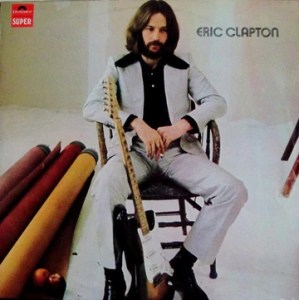
- Outstanding sound throughout this UK Polydor pressing, with solid Double Plus (A++) grades from top to bottom
- Man, what a revelation to hear this old favorite sound so remarkably rich and open – you’ll have a very difficult time finding one that sounds this good lying around in the bins, that’s for sure
- Both sides here are superb – the clarity, transparency, and presence outperformed most of the others we heard in our most recent shootout
- Getting rid of the gritty, grainy, edgy qualities of the sound, while keeping all the detail and texture and resolution we know has to be on the tape is a tricky business, but this copy pulled it off better than nearly all of what we played
- Forget the domestic Atcos – they suffer from all the problems listed above
- 4 1/2 stars: “Throughout the album, Clapton turns out concise solos that de-emphasize his status as guitar god, even when they display astonishing musicality and technique.”
- Here’s a question for you: was 1970 the best year ever for rock and pop music?
This is not your usual Clapton album, and that’s a good thing because most Clapton albums are full of filler. Not so here — almost every song is good, and many are superb.
Horns Are Key
The sound of the horn arrangements backing practically every song on the album are key to the quality of the pressing and mastering. Blurry, smeary, leading-edge-challenged horns on this album are the kiss of death, as are grainy-gritty transistory ones. When the horns have clarity, correct tonality, plenty of space around them and sound full-bodied, probably every other instrument in the soundscape will too.
This vintage Polydor pressing has the kind of Tubey Magical Midrange that modern records can barely BEGIN to reproduce. Folks, that sound is gone and it sure isn’t showing signs of coming back. If you love hearing INTO a recording, actually being able to “see” the performers, and feeling as if you are sitting in the studio with the band, this is the record for you. It’s what vintage all analog recordings are known for — this sound.
If you exclusively play modern repressings of vintage recordings, I can say without fear of contradiction that you have never heard this kind of sound on vinyl. Old records have it — not often, and certainly not always — but maybe one out of a hundred new records do, and those are some pretty long odds.
What The Best Sides Of Eric Clapton Have To Offer Is Not Hard To Hear
- The biggest, most immediate staging in the largest acoustic space
- The most Tubey Magic, without which you have almost nothing. CDs give you clean and clear. Only the best vintage vinyl pressings offer the kind of Tubey Magic that was on the tapes in 1970
- Tight, note-like, rich, full-bodied bass, with the correct amount of weight down low
- Natural tonality in the midrange — with all the instruments having the correct timbre
- Transparency and resolution, critical to hearing into the three-dimensional studio space
No doubt there’s more but we hope that should do for now. Playing the record is the only way to hear all of the qualities we discuss above, and playing the best pressings against a pile of other copies under rigorously controlled conditions is the only way to find a pressing that sounds as good as this one does.
What We’re Listening For On Eric Clapton
- Energy for starters. What could be more important than the life of the music?
- Then: presence and immediacy. The vocals aren’t “back there” somewhere, lost in the mix. They’re front and center where any recording engineer worth his salt would put them.
- The Big Sound comes next — wall to wall, lots of depth, huge space, three-dimensionality, all that sort of thing.
- Then transient information — fast, clear, sharp attacks, not the smear and thickness so common to these LPs.
- Tight punchy bass — which ties in with good transient information, also the issue of frequency extension further down.
- Next: transparency — the quality that allows you to hear deep into the soundfield, showing you the space and air around all the instruments.
- Extend the top and bottom and voila, you have The Real Thing — an honest to goodness Hot Stamper.
Side One
Slunky
Bad Boy
Lonesome And A Long Way From Home
After Midnight
Easy Now
Blues Power
Side Two
Bottle Of Red Wine
Lovin’ You Lovin’ Me
Told You For The Last Time
Don’t Know Why
Let It Rain
AMG 4 1/2 Star Review
Eric Clapton’s eponymous solo debut was recorded after he completed a tour with Delaney & Bonnie. Clapton used the core of the duo’s backing band and co-wrote the majority of the songs with Delaney Bramlett — accordingly, Eric Clapton sounds more laid-back and straightforward than any of the guitarist’s previous recordings. There are still elements of blues and rock & roll, but they’re hidden beneath layers of gospel, R&B, country, and pop flourishes. And the pop element of the record is the strongest of the album’s many elements — “Blues Power” isn’t a blues song and only “Let It Rain,” the album’s closer, features extended solos. Throughout the album, Clapton turns out concise solos that de-emphasize his status as guitar god, even when they display astonishing musicality and technique. That is both a good and a bad thing — it’s encouraging to hear him grow and become a more fully rounded musician, but too often the album needs the spark that some long guitar solos would have given it. In short, it needs a little more of Clapton’s personality.