



Many of the later RCA pressings we’ve played recently have left a lot to be desired.
We’re on record as telling audiophiles that it’s never a good idea to judge records by their labels, so when it came time to do a shootout for this famous Heifetz recording from 1963, LSC 2652, it was only fitting that we force ourselves to clean and play every pressing we had on the shelf, including the White Dogs and Red Seal reissues.
The White Dog did fine (2+ for the Bruch on side one, 1.5+ for the Mozart on side two).
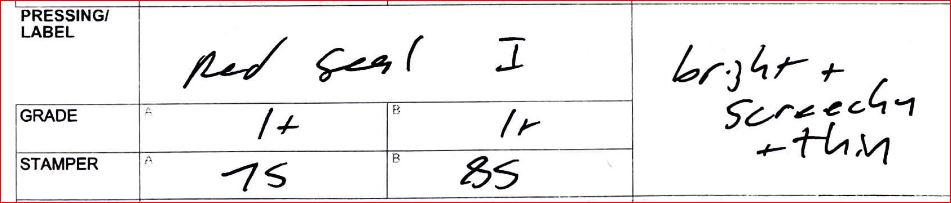
The Red Seal had all the hallmarks of the transistory sound RCA apparently preferred in the 70s.
There are Red Seal pressings with excellent sound — some of them have won shootouts — but this one had too many similarities to the awful Classic Record classical titles produced in the 90s. You know the ones I’m talking about. They have bright, screechy string tone that no self-respecting audiophile with even passable equipment should find tolerable.
(The fact that many of them remain on the TAS list speaks volumes about the self-identified experts’ ability to distinguish a good record from a bad one. More on that subject below.)

More of the Same
Below you will find links to other records we’ve played that had the same problems as this RCA and are best avoided by audiophiles looking for high quality pressings to play.
- These pressings will tend to have dry string tone
- These pressings will tend to have bright string tone
- These pressings will tend to have screechy string tone
There is no shortage of other records that we’ve run into over the years with these kinds of obvious shortcomings.
Here are some of them, a very small fraction of what we’ve auditioned, broken down into the three major labels that account for most of the best classical and orchestral titles we’ve had the pleasure to play.
- London/Decca records with weak sound or performances
- Mercury records with weak sound or performances
- RCA records with weak sound or performances
We’ve listened to countless pressings in the 37 years we’ve been in business — buying, cleaning and playing them by the thousands.
This is how we find the best sounding vinyl pressings ever made, through trial and error. We make lots of mistakes, some of which turn out to be quite costly.
It may be expensive and time consuming, but there is simply no other method for finding better records that works. If you know of one, please write me!
We are not the least bit interested in records that are “known” to sound the best.
Known by whom? Which audiophiles — hobbyists or professionals, take your pick — can be trusted to know what they are talking about when it comes to the sound of records? And I mean Any records.
I have never met one, outside of those of us who work for Better Records. I remain skeptical of the existence of such a creature. The audiophile experts and reviewers I’ve encountered on the web seem hopelessly lost to me.
Woops, I take that back. I have met one, a certain Mr. Robert Brook. He has been conducting his own shootouts for a few years now and makes his findings available on his blog, The Broken Record. This is information you can trust.
(A fellow who goes by the name of ab_ba is a newer convert. You can read about his shootouts here.)
We’re looking for records that actually do sound the best.
If you’re an audiophile with an ear for top quality sound on vintage vinyl, we’d be happy to send you the Hot Stamper pressing guaranteed to beat anything and everything you’ve heard, especially if you have any pressing marketed as suitable for an audiophile.
Those, with few exceptions, are rarely better than mediocre. Some of the worst can be found here.
And if we can’t beat whatever LP you own or have heard, you get your money back. It’s as simple as that.
Further Reading
- More stamper and pressing information
- The really big questions rarely have good answers
- Letters, reviews and commentaries for RCA vintage vinyl