

More Willie Nelson
More Country and Country Rock

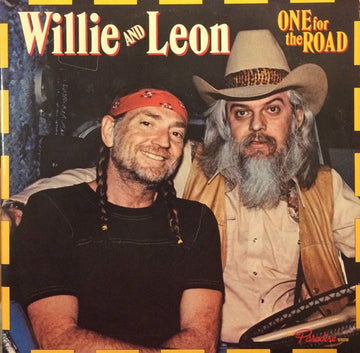
- The sound is big and rich, the vocals breathy and immediate, and you will not believe all the space and ambience
- This is an exceptionally good (studio) recording, and this pressing really nails the smooth, rich analog sound of what must be an awesome master tape
- Our notes for sides one and two on our shootout winning copy read: big/rich/no smear/not bright/breathy vox/big bass/3D/huge vox — that’s our kind of sound!
- 4 stars: “…it’s a small, priceless gem for any serious fan of either singer.”


These vintage Columbia pressings have the kind of Tubey Magical Midrange that modern records can barely BEGIN to reproduce. Folks, that sound is gone and it sure isn’t showing signs of coming back. If you love hearing INTO a recording, actually being able to “see” the performers, and feeling as if you are sitting in the studio with the band, these are the records for you. It’s what vintage all analog recordings are known for — this sound.
If you exclusively play modern repressings of vintage recordings, I can say without fear of contradiction that you have never heard this kind of sound on vinyl. Old records have it — not often, and certainly not always — but maybe one out of a hundred new records do, and those are some pretty long odds.
What the Best Sides Of One for the Road Have To Offer Is Not Hard To Hear
- The biggest, most immediate staging in the largest acoustic space
- The most Tubey Magic, without which you have almost nothing. CDs give you clean and clear. Only the best vintage vinyl pressings offer the kind of Tubey Magic that was on the tapes in 1979
- Tight, note-like, rich, full-bodied bass, with the correct amount of weight down low
- Natural tonality in the midrange — with all the instruments having the correct timbre
- Transparency and resolution, critical to hearing into the three-dimensional studio space
No doubt there’s more but we hope that should do for now. Playing these records is the only way to hear all of the qualities we discuss above, and playing the best pressings against a pile of other copies under rigorously controlled conditions is the only way to find pressings that sound as good as these two do.
What We’re Listening For On One for the Road
- Energy for starters. What could be more important than the life of the music?
- Then: presence and immediacy. The vocals aren’t “back there” somewhere, lost in the mix. They’re front and center where any recording engineer worth his salt would put them.
- The Big Sound comes next — wall to wall, lots of depth, huge space, three-dimensionality, all that sort of thing.
- Then transient information — fast, clear, sharp attacks, not the smear and thickness so common to these LPs.
- Tight punchy bass — which ties in with good transient information, also the issue of frequency extension further down.
- Next: transparency — the quality that allows you to hear deep into the soundfield, showing you the space and air around all the instruments.
- Extend the top and bottom and voila, you have The Real Thing — an honest to goodness Hot Stamper.
Side One
Detour
I Saw The Light
Heartbreak Hotel
Let The Rest Of The World Go By
Trouble In Mind
Side Two
Don’t Fence Me In
The Wild Side Of Life
Ridin’ Down The Canyon
Sioux City Sue
You Are My Sunshine
Side Three
Danny Boy
Always
Summertime
Because Of You
Am I Blue
Side Four
Tenderly
Far Away Places
That Lucky Old Sun
Stormy Weather
One For My Baby And “One More For The Road”
AMG 4 Star Review
One for the Road, Willie Nelson’s duet record with fellow American music maverick Leon Russell, followed months after his freewheeling, jam-heavy double album Willie and Family Live. This record wasn’t recorded live and the songs run a little shorter, but it shares the same sort of loose spirit and easy-rolling eclecticism as the two, essentially backed by the Family, run through a mess of country and pop standards.
The latter makes up for the second half and its appropriately a little more subdued feel, but it’s earthier than Stardust and it makes a good companion for the irresistible first half, which is often cheerfully rowdy (particularly on the dynamite opening triptych of “Detour,” “I Saw the Light,” and “Heartbreak Hotel”) and convincingly bluesy on the ballads and mid-tempo groovers like the excellent “Trouble in Mind.”
Both Nelson and Russell are known as sharp interpreters of other people’s material, and teamed together, they might not reinvent these songs (though they come close on “Heartbreak Hotel”), but they infuse a lot of sound and spirit into these songs. It’s a little bit too laid-back and easy to qualify as a no-holds-barred classic (particularly on the second half), but that mellow charm is precisely why it’s a small, priceless gem for any serious fan of either singer.