

More of the Music of Linda Ronstadt

- The transparency and vocal presence here are wonderful – the piano is solid and Linda’s vocals are breathy and heartfelt
- We love her emotionally powerful interpretations of Desperado, Sail Away and Neil Young’s achingly sublime I Believe in You
- She really belts it out on this album – it’s what she does best – but only the best copies allow you to turn up the volume good and loud and let her do her thing
- Rolling Stone raves it’s “the Ronstadt album for which we’ve been waiting.”
- If you’re a Linda Ronstadt fan, this has to be considered a Must Own Title of hers from 1973.
- The complete list of titles from 1973 that we’ve reviewed to date can be found here.
A key to recognizing the best copies is the fact that they tend to be highly resolving. Two places to check:
Note how breathy her voice is in the quiet passages. Only the least smeared, most transparent copies reproduce that breathy quality in her voice.
Next check out the tambourine on Silver Threads and Golden Needles. If the sound is delicate, not gritty or transistory, you have yourself a winner in the resolution department.
This vintage Asylum pressing has the kind of Tubey Magical Midrange that modern records can barely BEGIN to reproduce. Folks, that sound is gone and it sure isn’t showing signs of coming back. If you love hearing INTO a recording, actually being able to “see” the performers, and feeling as if you are sitting in the studio with the band, this is the record for you. It’s what vintage all analog recordings are known for — this sound.
If you exclusively play modern repressings of vintage recordings, I can say without fear of contradiction that you have never heard this kind of sound on vinyl. Old records have it — not often, and certainly not always — but maybe one out of a hundred new records do, and those are some pretty long odds.
What the Best Sides of Don’t Cry Now Have to Offer Is Not Hard to Hear
- The biggest, most immediate staging in the largest acoustic space
- The most Tubey Magic, without which you have almost nothing. CDs give you clean and clear. Only the best vintage vinyl pressings offer the kind of Tubey Magic that was on the tapes in 1973
- Tight, note-like, rich, full-bodied bass, with the correct amount of weight down low
- Natural tonality in the midrange — with all the instruments having the correct timbre
- Transparency and resolution, critical to hearing into the three-dimensional studio space
No doubt there’s more but we hope that should do for now. Playing the record is the only way to hear all of the qualities we discuss above, and playing the best pressings against a pile of other copies under rigorously controlled conditions is the only way to find a pressing that sounds as good as this one does.
Linda’s Recordings in the ’70s
Every copy we played had problems on the last track of side one, Don’t Cry Now. Linda is singing at the top of her lungs practically from beginning to end, so both cutting the record and playing back the record would be difficult. The result: there will be some coarsening of her vocal.
Some copies had the same problem on side two for I Believe in You, but not all.
What We’re Listening For on Don’t Cry Now
- Energy for starters. What could be more important than the life of the music?
- Then: presence and immediacy. The vocals aren’t “back there” somewhere, lost in the mix. They’re front and center where any recording engineer worth his salt would put them.
- The Big Sound comes next — wall to wall, lots of depth, huge space, three-dimensionality, all that sort of thing.
- Then transient information — fast, clear, sharp attacks, not the smear and thickness so common to these LPs.
- Tight punchy bass — which ties in with good transient information, also the issue of frequency extension further down.
- Next: transparency — the quality that allows you to hear deep into the soundfield, showing you the space and air around all the instruments.
- Extend the top and bottom and voila, you have The Real Thing — an honest to goodness Hot Stamper.
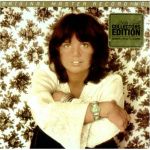

You’re looking at one of the worst audiophile disasters in recent memory. Talk about dead as a doornail sound, folks, if you own this pressing, take it from us, you don’t know what you’re missing. Buy the next domestic copy you spot at your local record store for five or ten bucks and find out. No way it can sound as bad as this compressed, lifeless, dull “audiophile” record.
In 2008, shortly after the MoFi release of the album we decided not to carry their records anymore. Coincidence? We’ll leave you to draw your own conclusions.
Side One
I Can Almost See It
Love Has No Pride
Silver Threads and Golden Needles
Desperado
Don’t Cry Now
Side Two
Sail Away
Colorado
The Fast One
Everybody Loves a Winner
I Believe in You
Rolling Stone Review
Don’t Cry Now, produced by J.D. Souther, is the Ronstadt album for which we’ve been waiting. Her first for Asylum, it surpasses in almost every respect her excellent Capitol album of last year, revealing Linda’s supreme vocal abilities in a fine production setting.
Of the album’s ten songs, five are familiar: Eric Kaz and Libby Titus’ “Love Has No Pride,” The Eagles’ “Desperado,” Randy Newman’s “Sail Away,” Rick Roberts’ “Colorado” and Neil Young’s “I Believe in You.” Excepting “Sail Away,” Linda’s warm soulful renditions of these songs are definitive musical expositions. Her natural vocal equipment is second to none. Combined with perfect pitch, impeccable phrasing and control, her singing carries a throb that hurts and soothes at the same time, and her feeling for the melodic construction of any given song is always proportionate to its structure.
An example of her ability to elevate a good song to exceptional status is her treatment of “I Believe in You.” While Linda’s version is far less personal than Young’s, she manages to render the song whole. The same holds for her “Desperado.” Here the straightforward yet heartfelt reading lends it a stature that does not require a conceptual context in order for it to work.
The other five cuts include three songs by Souther — “I Can Almost See It,” “Don’t Cry Now” and “The Fast One” — plus Bill Williams’ and Booker T. Jones’ “Everybody Loves a Winner” and Rhodes-Reynolds’ out-and-out country swinger, “Silver Threads and Golden Needles.” While Souther’s songs do not have quite the eloquence of the album’s well-known material, they hold up well, and Linda’s interpretations are as sympathetic as any author could ask.
Don’t Cry Now bears some comparison with Joan Baez’ Blessed Are, in that both albums attempt classic re-creations of familiar songs. Based on this premise, Blessed Are is a qualified success and Don’t Cry Now a triumph. Whereas Baez delivers competent run-throughs, Linda Ronstadt enhances the musical-emotional authenticity of the material. This is the most we can demand of any interpretive artist, and Linda fulfills all expectations.
-Stephen Holden, November 8, 1973