

More of the Music of Miles Davis
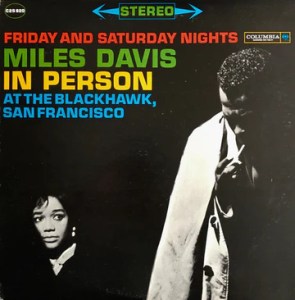

- This 2-LP 6-Eye Stereo pressing boasts very good Hot Stamper sound or BETTER from start to finish
- We guarantee there is more space, richness, presence, and performance energy on this copy than others you’ve heard or you get your money back – it’s as simple as that
- Skip the Red Label pressings – the ones we’ve played were too thin and dry, which is sadly a sound far too common on Columbia reissues from the 70s
- Marks and problems in the vinyl are sometimes the nature of the beast with these early pressings – there simply is no way around them if the superior sound of vintage analog is important to you
- 4 1/2 stars: “Though short-lived, the unique character of this group was its sheer intensity and diversity of attack. Because of the departure of Cannonball Adderley and John Coltrane, Davis had to rely as much on a muscular attack in playing his instrument as his considerable gift for melodic improvisation. For his part, Mobley had the shoes of two monster players to fill, and he does so elegantly with a ton of fire in his playing. But it is Kelly and Chambers who really set the pace for this band.”
- If you’re a jazz fan, this classic title from 1961 belongs in your collection
- The complete list of titles from 1961 that we’ve reviewed to date can be found here.
Vintage covers for this album are hard to find in exceptionally clean shape. Most of the will have at least some amount of ringwear, seam wear and edge wear. We guarantee that the cover we supply with this Hot Stamper is at least VG
These vintage 6-Eye Stereo pressings have the kind of Tubey Magical Midrange that modern records can barely BEGIN to reproduce. Folks, that sound is gone and it sure isn’t showing signs of coming back. If you love hearing INTO a recording, actually being able to “see” the performers, and feeling as if you are sitting in the studio with the band, these are the records for you. It’s what vintage all analog recordings are known for — this sound.
If you exclusively play modern repressings of vintage recordings, I can say without fear of contradiction that you have never heard this kind of sound on vinyl. Old records have it — not often, and certainly not always — but maybe one out of a hundred new records do, and those are some pretty long odds.
What The Best Sides Of In Person: Friday and Saturday Nights… Have To Offer Is Not Hard To Hear
- The biggest, most immediate staging in the largest acoustic space
- The most Tubey Magic, without which you have almost nothing. CDs give you clean and clear. Only the best vintage vinyl pressings offer the kind of Tubey Magic that was on the tapes in 1961
- Tight, note-like, rich, full-bodied bass, with the correct amount of weight down low
- Natural tonality in the midrange — with all the instruments having the correct timbre
- Transparency and resolution, critical to hearing into the three-dimensional studio space
No doubt there’s more but we hope that should do for now. Playing these records are the only way to hear all of the qualities we discuss above, and playing the best pressings against a pile of other copies under rigorously controlled conditions are the only way to find pressings that sound as good as these two do.
Copies with rich lower mids and nice extension up top did the best in our shootout, assuming they weren’t veiled or smeary of course. So many things can go wrong on a record! We know, we’ve heard them all.
Top end extension is critical to the sound of the best copies. Lots of old records (and new ones) have no real top end; consequently, the studio or stage will be missing much of its natural air and space, and instruments will lack their full complement of harmonic information.
Tube smear is common to most vintage pressings. The copies that tend to do the best in a shootout will have the least (or none), yet are full-bodied, tubey and rich.
Size and Space
One of the qualities that we don’t talk about on the site nearly enough is the SIZE of the record’s presentation. Some copies of the album just sound small — they don’t extend all the way to the outside edges of the speakers, and they don’t seem to take up all the space from the floor to the ceiling. In addition, the sound can often be recessed, with a lack of presence and immediacy in the center.
Other copies — my notes for these copies often read “BIG and BOLD” — create a huge soundfield, with the music positively jumping out of the speakers. They’re not brighter, they’re not more aggressive, they’re not hyped-up in any way, they’re just bigger and clearer.
And most of the time those very special pressings are just plain more involving. When you hear a copy that does all that — a copy like this one — it’s an entirely different listening experience.
What We’re Listening For On In Person: Friday and Saturday Nights…
- Energy for starters. What could be more important than the life of the music?
- The Big Sound comes next — wall to wall, lots of depth, huge space, three-dimensionality, all that sort of thing.
- Then transient information — fast, clear, sharp attacks, not the smear and thickness so common to these LPs.
- Tight, full-bodied bass — which ties in with good transient information, also the issue of frequency extension further down.
- Next: transparency — the quality that allows you to hear deep into the soundfield, showing you the space and air around all the instruments.
- Extend the top and bottom and voila, you have The Real Thing — an honest to goodness Hot Stamper.
The Players
- Bass – Paul Chambers
- Drums – Jimmy Cobb
- Engineer – Russ Payne
- Piano – Wynton Kelly
- Producer – Irving Townsend
- Tenor Saxophone – Hank Mobley
- Trumpet – Miles Davis
Side One
- Walkin’
- Bye Bye Blackbird
Side Two
- All Of You
- No Blues
- Bye Bye (Theme)
- Love, I’ve Found You
Side Three
- Well You Needn’t
- Fran-Dance
- So What
Side Four
- Oleo
- If I Were A Bell
- Neo
AMG 4 1/2 Star Review
This short-lived version of the quintet featured Paul Chambers, Wynton Kelly, Jimmy Cobb, and Hank Mobley with Davis. These four discs should begin to fill the void of criticism about this band. Though short-lived, the unique character of this group was its sheer intensity and diversity of attack. Because of the departure of Cannonball Adderley and John Coltrane, Davis had to rely as much on a muscular attack in playing his instrument as his considerable gift for melodic improvisation. For his part, Mobley had the shoes of two monster players to fill, and he does so elegantly with a ton of fire in his playing. But it is Kelly and Chambers who really set the pace for this band.
Kelly fills space in the middle register with an amazingly percussive attack that is as rhythmic as it is harmonically inventive. Mobley steps away from the hard bop side of his trademark sound to go back to the Sonny Rollins book of bebop, and even Davis uses the method of attack and surprise that gained him a reputation with Charlie Parker. Chambers is the man on whom it all turns, equating the parts of the band’s aesthetic. He and Cobb move toward one another and Chambers translates the shifting rhythmic patterns and segues to Kelly, whose interplay with him is almost instinctual, and then through Kelly to the horn players.
Kelly’s sense of that ever-changing momentum and dynamic allows him to be a real part of the rhythm section (as opposed to a melodic counterpart to the front line) and adds room for the horn players to move about inside the bridges he creates between the two factions. His right-hand soloing is based on a series of harmonic and intervallic modes he continually pulls out of his hat and feeds Chambers, more in terms of directional possibility, which is vertical rather than horizontal. For evidence, check the contrast between the opening tunes: Friday’s “Oleo” at breakneck speed, and the nearly 13-minute “If I Were a Bell” on Saturday, which lopes and takes its time articulating the varying chromatic architectures being erected not only during the solos, but in the band’s ensemble playing as well.
In terms of which night of the two was better, it’s a toss-up.