

More of the Music of John Coltrane
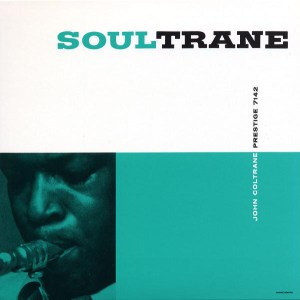

- Both sides of this vintage Prestige recording — remastered and repressed on vinyl during this century (!) — were giving us the sound we were looking for, earning excellent Double Plus (A++) grades, and pressed on remarkably quiet OJC vinyl
- Normally this is information we might not choose to share, as anyone can buy a modern OJC, but the fact that so many different OJC versions exist — I counted six different OJC-021s — means you probably would spend a lot more money finding a good sounding OJC pressing than the price we are charging
- However, if you do find a great sounding OJC, be sure to drop us a line and tell us the stamper numbers — we would be curious to know if anyone was actually able to succeed with such an effort
- This album is in pure, glorious MONO, with sonics that are full-bodied, relaxed, Tubey Magical and tonally correct
- Here is the palpable jazz energy, the life of the music, that’s sure to be missing from whatever dead-as-a-doornail Heavy Vinyl pressing is being stamped out these days
- “… a classic of the 20th century jazz canon and an essential point of reference in Coltrane’s own tumultuous career…. this is the album on which Coltrane first emerged as the primary innovator of the jazz world, wielding an astonishing technical virtuosity and a blinding vision of the possibilities of the tenor sax.”
What The Best Sides Of Soultrane Have To Offer Is Not Hard To Hear
- The biggest, most immediate staging in the largest acoustic space
- The most Tubey Magic, without which you have almost nothing. CDs give you clean and clear. Only the best vintage vinyl pressings offer the kind of Tubey Magic that was on the tapes in 1958
- Tight, note-like, rich, full-bodied bass, with the correct amount of weight down low
- Natural tonality in the midrange — with all the instruments having the correct timbre
- Transparency and resolution, critical to hearing into the three-dimensional studio space
No doubt there’s more but we hope that should do for now. Playing the record is the only way to hear all of the qualities we discuss above, and playing the best pressings against a pile of other copies under rigorously controlled conditions is the only way to find a pressing that sounds as good as this one does.
Standard Operating Procedures
What are sonic qualities by which a record — any record — should be judged? Pretty much the ones we discuss in most of our Hot Stamper listings: energy, frequency extension (on both ends), transparency, spaciousness, harmonic textures (freedom from smear is key), rhythmic drive, tonal correctness, fullness, richness, three-dimensionality, and on and on down the list.
When we can get a number of these qualities to come together on the side we’re playing, we provisionally give it a ballpark Hot Stamper grade, a grade that is often revised during the shootout as we hear what the other copies are doing, both good and bad.
Once we’ve been through all the side ones, we play the best of the best against each other and arrive at a winner for that side. Other copies from earlier in the shootout will frequently have their grades raised or lowered based on how they sounded compared to the eventual shootout winner. If we’re not sure about any pressing, perhaps because we played it early on in the shootout before we had learned what to listen for, we take the time to play it again.
Repeat the process for side two and the shootout is officially over. All that’s left is to see how the sides of each pressing match up.
It may not be rocket science, but it’s a science of a kind, one with strict protocols that we’ve developed over the course of many years to insure that the results we arrive at are as accurate as we can make them.
The result of all our work speaks for itself, on this very record in fact. We guarantee you have never heard this music sound better than it does on our Hot Stamper pressing — or your money back.
What We’re Listening For On Soultrane
- Energy for starters. What could be more important than the life of the music?
- The Big Sound comes next — wall to wall, lots of depth, huge space, three-dimensionality, all that sort of thing.
- Then transient information — fast, clear, sharp attacks, not the smear and thickness so common to these LPs.
- Tight, full-bodied bass — which ties in with good transient information, also the issue of frequency extension further down.
- Next: transparency — the quality that allows you to hear deep into the soundfield, showing you the space and air around all the instruments.
- Then: presence and immediacy. The saxophone isn’t “back there” somewhere, lost in the mix. It’s front and center where any recording engineer worth his salt — the above mentioned RVG in this case — would put it.
- Extend the top and bottom and voila, you have The Real Thing — an honest to goodness Hot Stamper.
Side One
Good Bait
I Want To Talk About You
Side Two
You Say You Care
Theme For Ernie
Russian Lullaby
Pop Matters Review
First things first: let’s take it as read that this is a classic of the 20th century jazz canon and an essential point of reference in Coltrane’s own tumultuous career. 1958 found Coltrane recording for Prestige as a leader, having left Thelonious Monk’s quartet and before heading back to Miles Davis’ band to make history on Kind of Blue the following year. Here, he’s hunkered down with the Red Garland Trio (Garland on piano, Paul Chambers on bass, and Arthur Taylor on drums), enjoying the easy interplay that had developed between the musicians over years of playing together, and taking the opportunity to throw out his newly-honed chops. Yes, this is the album on which Coltrane first emerged as the primary innovator of the jazz world, wielding an astonishing technical virtuosity and a blinding vision of the possibilities of the tenor sax.
… anyone who thinks Coltrane is all bluster and aggression would do well to hear “Theme for Ernie”, a plaintive and elegiac ballad written by Fred Lacy in memory of Ernie Henry, the alto saxophonist who died aged 31 in 1957. Here, Coltrane is pure emotion, displaying the same heartfelt intensity of feeling that would so often be mistaken for anger in his later years.
The rest of the album features some equally timeless performances: “I Want to Talk About You”, a classy Billy Eckstine ballad given an exhaustive 10-minute investigation; “You Say You Care”, a high-spirited, finger-snappin’ swinger; and — best of all — “Russian Lullaby”, a blistering, frenzied rendition of an Irving Berlin tune preformed at the very limits of up-tempo possibilities.