

More of The Clash

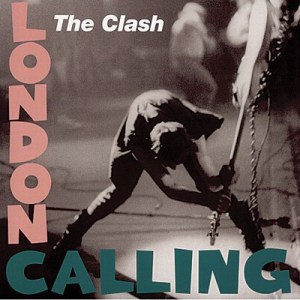
- A vintage UK import with incredible Nearly Triple Plus (A++ to A+++) sound on all FOUR sides – just shy of our Shootout Winner (side four actually won the shootout) – fairly quiet vinyl too
- Guaranteed to be a huge improvement over anything you’ve heard, this Brit is big, punchy, and full-bodied with excellent presence
- A shockingly well-recorded album that comes to life with the combo of a great copy and a hi-res, full-range system
- 5 stars: “A stunning statement of purpose and one of the greatest rock & roll albums ever recorded.”
Audiophile sound for this punk rock classic?! You better believe it, baby! The sound here is superb for all four sides.
What really sets this album apart sonically is The Clash’s use of reggae and dub influences. You can really hear it when you tune in to the bottom end; your average late 70s punk record won’t have this kind of rich and meaty bass, that’s for sure. Drop the needle on “The Guns Of Brixton” (last track on side two) to hear exactly what I’m talking about. On a Hot Stamper copy played at the correct levels (read: quite loud!) the effect is positively HYPNOTIC.
Bill Price engineered and as we like to say, he knocked this one out of the park. The best sounding record from 1979? I have the feeling it just might be.
Nobody would have accused The Clash of being an audiophile-friendly band, but a copy like this might make you think twice about that! We had a blast doing this shootout and we hope whoever takes this home has just as much fun with it.
What The Best Sides Of London Calling Have To Offer Is Not Hard To Hear
- The biggest, most immediate staging in the largest acoustic space
- The most Tubey Magic, without which you have almost nothing. CDs give you clean and clear. Only the best vintage vinyl pressings offer the kind of Tubey Magic that was on the tapes in 1979
- Tight, note-like, rich, full-bodied bass, with the correct amount of weight down low
- Natural tonality in the midrange — with all the instruments having the correct timbre
- Transparency and resolution, critical to hearing into the three-dimensional studio space
No doubt there’s more but we hope that should do for now. Playing these records are the only way to hear all of the qualities we discuss above, and playing the best pressings against a pile of other copies under rigorously controlled conditions are the only way to find pressings that sound as good as these two do.
What We’re Listening For On London Calling
- Energy for starters. What could be more important than the life of the music?
- Then: presence and immediacy. The vocals aren’t “back there” somewhere, lost in the mix. They’re front and center where any recording engineer worth his salt would put them.
- The Big Sound comes next — wall to wall, lots of depth, huge space, three-dimensionality, all that sort of thing.
- Then transient information — fast, clear, sharp attacks, not the smear and thickness so common to these LPs.
- Tight punchy bass — which ties in with good transient information, also the issue of frequency extension further down.
- Next: transparency — the quality that allows you to hear deep into the soundfield, showing you the space and air around all the instruments.
- Extend the top and bottom and voila, you have The Real Thing — an honest to goodness Hot Stamper.
Side One
London Calling
Brand New Cadillac
Jimmy Jazz
Hateful
Rudie Can’t Fail
Side Two
Spanish Bombs
Right Profile
Lost in the Supermarket
Clampdown
Guns of Brixton
Side Three
Wrong ‘Em Boyo
Death or Glory
Koka Kola
The Card Cheat
Side Four
Lover’s Rock
Four Horsemen
I’m Not Down
Revolution Rock
AMG 5 Star Rave Review
Give ‘Em Enough Rope, for all of its many attributes, was essentially a holding pattern for the Clash, but the double-album London Calling is a remarkable leap forward, incorporating the punk aesthetic into rock & roll mythology and roots music. Before, the Clash had experimented with reggae, but that was no preparation for the dizzying array of styles on London Calling. There’s punk and reggae, but there’s also rockabilly, ska, New Orleans R&B, pop, lounge jazz, and hard rock; and while the record isn’t tied together by a specific theme, its eclecticism and anthemic punk function as a rallying call.
While many of the songs — particularly “London Calling,” “Spanish Bombs,” and “The Guns of Brixton” — are explicitly political, by acknowledging no boundaries the music itself is political and revolutionary. But it is also invigorating, rocking harder and with more purpose than most albums, let alone double albums. Over the course of the record, Joe Strummer and Mick Jones (and Paul Simonon, who wrote “The Guns of Brixton”) explore their familiar themes of working-class rebellion and antiestablishment rants, but they also tie them in to old rock & roll traditions and myths, whether it’s rockabilly greasers or “Stagger Lee,” as well as mavericks like doomed actor Montgomery Clift.
The result is a stunning statement of purpose and one of the greatest rock & roll albums ever recorded.