

More of the Music of John Coltrane
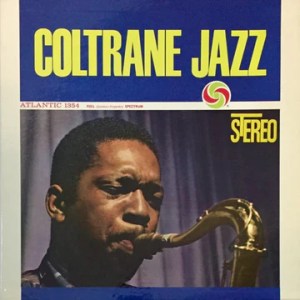

- Both sides of this copy have excellent sound for Coltrane’s brilliant sixth studio album
- This pressing captures the classic Coltrane sound that Tom Dowd and Phil Iehle achieved in the studio in 1961, with plenty of the Tubey Magic that makes a vintage jazz album like this one such a special listening experience
- It’s the rare pressing that isn’t mediocre if not outright awful – it took us a long time to find the right stampers for this one
- It’s trial and error, no more, no less, a process that has worked for plenty of other hard-to-find-good-sound-for Coltrane albums too
- 4 1/2 stars: “The first album to hit the shelves after Giant Steps… While not the groundbreaker that Giant Steps was, Coltrane Jazz was a good consolidation of his gains as he prepared to launch into his peak years of the 1960s.”
- This is a Must Own album from 1961 that belongs in any jazz-loving audiophile’s collection
For us audiophiles both the sound and the music here are wonderful. If you’re looking to demonstrate just how good 1961 All Tube Analog sound can be, this killer copy will do the trick.
This pressing is super spacious, sweet and positively dripping with ambience. Talk about Tubey Magic, the liquidity of the sound here is positively uncanny. This is vintage analog at its best, so full-bodied and relaxed you’ll wonder how it ever came to be that anyone seriously contemplated trying to improve it.
This IS the sound of Tubey Magic. No recordings will ever be made like this again, and no CD will ever capture what is in the grooves of this record. There is, of course, a CD of this album, but those of us who possess a working turntable and a good collection of vintage vinyl could care less.
Phil Iehle also helped engineer Buffalo Springfield’s Last Time Around, as well as albums by Mose Allison, Jerry Jeff Walker, Charles Mingus, the MJQ, Herbie Mann, Eddie Harris, Hank Crawford and dozens of others. Staff engineer at Atlantic? That’s my guess. But a supremely talented one nonetheless.
What the Best Sides of This Classic Jazz Album Have to Offer Is Clear for All to Hear
- The biggest, most immediate staging in the largest acoustic space
- The most Tubey Magic, without which you have almost nothing. CDs give you clean and clear. Only the best vintage vinyl pressings offer the kind of Tubey Magic that was on the tapes in 1961
- Tight, note-like, rich, full-bodied bass, with the correct amount of weight down low
- Natural tonality in the midrange — with all the instruments having the correct timbre
- Transparency and resolution, critical to hearing into the three-dimensional studio space
No doubt there’s more but we hope that should do for now. Playing the record is the only way to hear all of the qualities we discuss above, and playing the best pressings against a pile of other copies under rigorously controlled conditions is the only way to find a pressing that sounds as good as this one does.
Copies with rich lower mids and nice extension up top did the best in our shootout, assuming they weren’t veiled or smeary of course. So many things can go wrong on a record! We know, we’ve heard them all.
Top end extension is critical to the sound of the best copies. Lots of old records (and new ones) have no real top end; consequently, the studio or stage will be missing much of its natural air and space, and instruments will lack their full complement of harmonic information.
Tube smear is common to most vintage pressings and this is no exception. The copies that tend to do the best in a shootout will have the least (or none), yet are full-bodied, tubey and rich.
What We’re Listening For on Coltrane Jazz
- Energy for starters. What could be more important than the life of the music?
- The Big Sound comes next — wall to wall, lots of depth, huge space, three-dimensionality, all that sort of thing.
- Then transient information — fast, clear, sharp attacks, not the smear and thickness so common to these LPs.
- Tight punchy bass — which ties in with good transient information, also the issue of frequency extension further down.
- Next: transparency — the quality that allows you to hear deep into the soundfield, showing you the space and air around all the instruments.
- Extend the top and bottom and voila, you have The Real Thing — an honest to goodness Hot Stamper.
Side One
Little Old Lady
Village Blues
My Shining Hour
Fifth House
Side Two
Harmonique
Like Sonny
I’ll Wait and Pray
Some Other Blues
AMG 4 1/2 Star Review
The first album to hit the shelves after Giant Steps, Coltrane Jazz was largely recorded in late 1959, although one of the eight songs (“Village Blues”) was done in late 1960. On everything save the aforementioned “Village Blues,” Coltrane used the Miles Davis rhythm section of pianist Wynton Kelly, bassist Paul Chambers, and drummer Jimmy Cobb.
While not the groundbreaker that Giant Steps was, Coltrane Jazz was a good consolidation of his gains as he prepared to launch into his peak years of the 1960s.
There are three standards aboard, but the group reaches their peak on Coltrane’s original material, particularly “Harmonique” with its melodic leaps and upper-register saxophone strains and the winding, slightly Eastern-flavored principal riffs of “Like Sonny,” dedicated to Sonny Rollins. The moody “Village Blues” features the lineup of McCoy Tyner on piano, Elvin Jones on drums, and Steve Davison bass; with the substitution of Jimmy Garrison on bass, that personnel would play on Coltrane’s most influential and beloved 1960s albums.