

More Bruce Springsteen
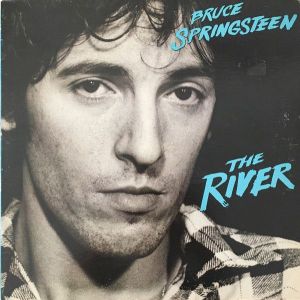

- A vintage copy of Springsteen’s surprisingly well-recorded 1980 release with KILLER Shootout Winning Triple Plus (A+++) sound or close to it on all FOUR sides – exceptionally quiet vinyl too
- As you will see from our notes below, here are just a few of the things we had to say about this stunning copy in our notes: “rich and round and punchy”…”vox breathy and spacious”…”jumping out of the speakers”…”very full-bodied and solid”…”huge and open”
- The quiet vinyl is a big selling point for this copy – Columbia in 1980 rarely produced records that played at our (more or less) top condition grade
- These sides are energetic, clear and full-bodied, with The Boss’ vocals – always the focus for any Springsteen album – front and center where they belong
- This is our pick for Bruce Springsteen’s best sounding album. Roughly 100 other listings for the Best Sounding Album by an Artist or Group can be found here.
- We guarantee there is dramatically more space, richness, presence, and performance energy on this copy than others you’ve heard or you get your money back – it’s as simple as that
- 5 stars: “Springsteen rises to his own challenges as a songwriter, penning a set of tunes that are heartfelt and literate but unpretentious while rocking hard, and the E Street Band were never used to better advantage, capturing the taut, swaggering force of their live shows in the studio with superb accuracy… [he] rarely made an album as compelling as this, or one that rewards repeat listening as well.”
- If you’re a Springsteen fan, this title from 1980 is surely a Must Own


This early Columbia stereo pressing has the kind of Tubey Magical Midrange that modern records can barely BEGIN to reproduce. Folks, that sound is gone and it sure isn’t showing signs of coming back. If you love hearing INTO a recording, actually being able to “see” the performers, and feeling as if you are sitting in the studio with the band, this is the record for you. It’s what vintage all analog recordings are known for — this sound.
If you exclusively play modern repressings of vintage recordings, I can say without fear of contradiction that you have never heard this kind of sound on vinyl. Old records have it — not often, and certainly not always — but maybe one out of a hundred new records do, and those are some pretty long odds.
What The Best Sides Of The River Have To Offer Is Not Hard To Hear
- The biggest, most immediate staging in the largest acoustic space
- The most Tubey Magic, without which you have almost nothing. CDs give you clean and clear. Only the best vintage vinyl pressings offer the kind of Tubey Magic that was on the tapes even as late as 1980
- Tight, note-like, rich, full-bodied bass, with the correct amount of weight down low
- Natural tonality in the midrange — with all the instruments having the correct timbre
- Transparency and resolution, critical to hearing into the three-dimensional studio space
No doubt there’s more but we hope that should do for now. Playing the record is the only way to hear all of the qualities we discuss above, and playing the best pressings against a pile of other copies under rigorously controlled conditions is the only way to find a pressing that sounds as good as this one does.
What We’re Listening For On The River
- Energy for starters. What could be more important than the life of the music?
- Then: presence and immediacy. The vocals aren’t “back there” somewhere, lost in the mix. They’re front and center where any recording engineer worth his salt would put them.
- The Big Sound comes next — wall to wall, lots of depth, huge space, three-dimensionality, all that sort of thing.
- Then transient information — fast, clear, sharp attacks, not the smear and thickness so common to these LPs.
- Tight punchy bass — which ties in with good transient information, also the issue of frequency extension further down.
- Next: transparency — the quality that allows you to hear deep into the soundfield, showing you the space and air around all the instruments.
- Extend the top and bottom and voila, you have The Real Thing — an honest to goodness Hot Stamper.
Side One
The Ties That Bind
Sherry Darling
Jackson Cage
Two Hearts
Independence Day
Side Two
Hungry Heart
Out In The Street
Crush On You
You Can Look (But You Better Not Touch)
I Wanna Marry You
The River
Side Three
Point Blank
Cadillac Ranch
I’m A Rocker
Fade Away
Stolen Car
Side Four
Ramrod
The Price You Pay
Drive All Night
Wreck On The Highway
AMG 5 Star Rave Review
After taking his early urban folk tales of cars and girls as far as he could on Born to Run, Bruce Springsteen took a long, hard look at the lives of those same Jersey street kids a few years down the line, now saddled with adult responsibilities and realizing that the American Dream was increasingly out of their grasp, on 1978’s Darkness on the Edge of Town, an album that dramatically broadened Springsteen’s musical range and lyrical scope.
With 1980’s The River, Springsteen sought to expand on those themes while also offering more of the tough, bar-band rock that was his trademark (and often conspicuous in its absence on Darkness), and by the time it was released it had swelled into Springsteen’s first two-LP set.
The River was Springsteen’s most ambitious work to date, even as the music sounded leaner and more strongly rooted in rock & roll tradition than anything on Darkness or Born to Run, and though the album wasn’t the least bit short on good times, the fun in songs like “Two Hearts,” “Out in the Street,” and “Cadillac Ranch” is rarely without some weightier subtext. As the romantic rush of “Two Hearts” fades into the final break with family on “Independence Day” and the sentimentality of “I Wanna Marry You” is followed by the grim truths of the title tune, nothing is easy or without consequence in Springsteen’s world, and the album’s themes of youthful ideals buckling under the weight of crushing reality are neatly summed up as Springsteen asks the essential question of his career, “Is a dream a lie if it don’t come true?”
…Springsteen rises to his own challenges as a songwriter, penning a set of tunes that are heartfelt and literate but unpretentious while rocking hard, and the E Street Band were never used to better advantage, capturing the taut, swaggering force of their live shows in the studio with superb accuracy (and if the very ’80s snare crack dates this album, Neil Dorfsman’s engineering makes this one of Springsteen’s best-sounding works). The River wasn’t Springsteen’s first attempt to make a truly adult rock & roll album, but it’s certainly a major step forward from Darkness on the Edge of Town, and he rarely made an album as compelling as this, or one that rewards repeat listening as well.