

More Jazz Fusion
More Large Group Jazz Recordings

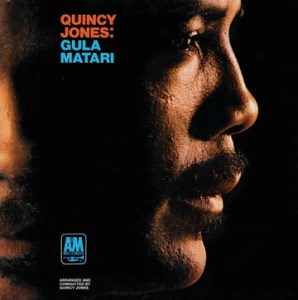
- Gula Matari makes its Hot Stamper debut on this early A&M pressing with two solid Double Plus (A++) or BETTER sides
- The sound is rich and Tubey Magical, yet transparent and spacious in the way that only vintage pressings ever are
- Valerie Simpson’s vocals on the R&B cover of S&G’s “Bridge Over Troubled Water” on side one are wonderfully sweet and breathy with remarkable in-your-listening-room presence
- Another title that was rarely pressed on good vinyl — A&M made some awfully good sounding records, but they rarely play as quietly as we audiophiles would like them to
- 4 1/2 stars: “…the roaring big band comes back with a vengeance in ‘Walkin’,’ where Milt Jackson, Herbie Hancock, Hubert Laws, and other jazzers take fine solo turns, and things really get rocking on Nat Adderley’s ‘Hummin”… The whole record sounds like they must have had a ball recording it.
This vintage A&M pressing has the kind of Tubey Magical Midrange that modern records can barely BEGIN to reproduce. Folks, that sound is gone and it sure isn’t showing signs of coming back. If you love hearing INTO a recording, actually being able to “see” the performers, and feeling as if you are sitting in the studio with the band, this is the record for you. It’s what vintage all analog recordings are known for — this sound.
If you exclusively play modern repressings of vintage recordings, I can say without fear of contradiction that you have never heard this kind of sound on vinyl. Old records have it — not often, and certainly not always — but maybe one out of a hundred new records do, and those are some pretty long odds.
What The Best Sides Of Gula Matari Have To Offer Is Not Hard To Hear
- The biggest, most immediate staging in the largest acoustic space
- The most Tubey Magic, without which you have almost nothing. CDs give you clean and clear. Only the best vintage vinyl pressings offer the kind of Tubey Magic that was on the tapes in 1970
- Tight, note-like, rich, full-bodied bass, with the correct amount of weight down low
- Natural tonality in the midrange — with all the instruments having the correct timbre
- Transparency and resolution, critical to hearing into the three-dimensional studio space
No doubt there’s more but we hope that should do for now. Playing the record is the only way to hear all of the qualities we discuss above, and playing the best pressings against a pile of other copies under rigorously controlled conditions is the only way to find a pressing that sounds as good as this one does.
Copies with rich lower mids and nice extension up top did the best in our shootout, assuming they weren’t veiled or smeary of course. So many things can go wrong on a record! We know, we’ve heard them all.
Top end extension is critical to the sound of the best copies. Lots of old records (and new ones) have no real top end; consequently, the studio or stage will be missing much of its natural air and space, and instruments will lack their full complement of harmonic information.
Tube smear is common to most vintage pressings. The copies that tend to do the best in a shootout will have the least (or none), yet are full-bodied, tubey and rich.
A Big Group of Musicians Needs This Kind of Space
One of the qualities that we don’t talk about on the site nearly enough is the SIZE of the record’s presentation. Some copies of the album just sound small — they don’t extend all the way to the outside edges of the speakers, and they don’t seem to take up all the space from the floor to the ceiling. In addition, the sound can often be recessed, with a lack of presence and immediacy in the center.
Other copies — my notes for these copies often read “BIG and BOLD” — create a huge soundfield, with the music positively jumping out of the speakers. They’re not brighter, they’re not more aggressive, they’re not hyped-up in any way, they’re just bigger and clearer.
And most of the time those very special pressings are just plain more involving. When you hear a copy that does all that — a copy like this one — it’s an entirely different listening experience.
What We’re Listening For On Gula Matari
- Energy for starters. What could be more important than the life of the music?
- The Big Sound comes next — wall to wall, lots of depth, huge space, three-dimensionality, all that sort of thing.
- Then transient information — fast, clear, sharp attacks, not the smear and thickness so common to these LPs.
- Tight, full-bodied bass — which ties in with good transient information, also the issue of frequency extension further down.
- Next: transparency — the quality that allows you to hear deep into the soundfield, showing you the space and air around all the instruments.
- Extend the top and bottom and voila, you have The Real Thing — an honest to goodness Hot Stamper.
The Players and Personnel
A veritable Who’s Who in the world of jazz, including:
- Pepper Adams – Baritone Sax
- Ray Brown – Bass
- Ron Carter – Bass
- Herbie Hancock – Keyboards
- Freddie Hubbard – trumpet, flugelhorn
- Milt Jackson – Vibraphone
- Hubert Laws – flute
- Grady Tate – drums
- Creed Taylor – Producer
- Rudy Van Gelder – Engineer
…and more!
Side One
Bridge Over Troubled Water
Gula Matari
Side Two
Walkin’
Hummin’
AMG 4 1/2 Star Review
With his second and last album under the Creed Taylor aegis, the complexities of Quincy Jones’ catholic, evolving tastes start to reveal themselves. We hear signs of his gradual gravitation toward pop right off the bat with the churchy R&B cover of Paul Simon’s mega-hit “Bridge Over Troubled Water,” dominated by Valerie Simpson’s florid soul vocal and a gospel choir.
His roots fixation surfaces in the spell-like African groove of the title track, a dramatic tone poem that ebbs and flows masterfully over its 13-minute length. From this point on, it’s all jazz; the roaring big band comes back with a vengeance in “Walkin’,” where Milt Jackson, Herbie Hancock, Hubert Laws, and other jazzers take fine solo turns, and things really get rocking on Nat Adderley’s “Hummin’.” Major Holley is a riot with his grumble-scat routine on bass. The whole record sounds like they must have had a ball recording it.