

More Doc Watson
More Folk Revival Music
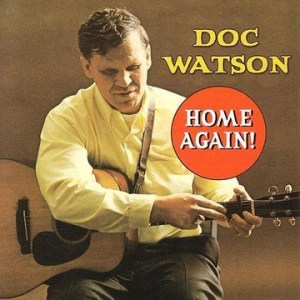

Want to find your own shootout winner? Scroll to the bottom to see our advice on doing just that.
- This outstanding pressing boasts solid Double Plus (A++) sound from start to finish
- Here is the in-the-room performance intimacy that will surely bring Doc’s music to life in a way you’ve never heard before
- If you own the veiled, opaque, recessed, ambience-challenged Cisco remaster, you are in for a treat – our Hot Stamper is none of those things!
- “[H]is most affecting folk-style record, with unexpectedly warm vocals matched to the quiet virtuosity of his playing. [The album] features Watson performing lively, achingly beautiful renditions of popular folk standards. All are played with very imposing dexterity by Watson, joined by his son Merle and Russ Savakus on upright bass.
This vintage Vanguard stereo pressing has the kind of Tubey Magical Midrange that modern records rarely begin to reproduce. Folks, that sound is gone and it sure isn’t showing any sign of coming back.
Having done this for so long, we understand and appreciate that rich, full, solid, tubey sound is key to the presentation of this primarily vocal music. We rate these qualities higher than others we might be listening for (e.g., bass definition, soundstage, depth, etc.).
Hot Stamper sound is rarely about the details of a given recording. In the case of this album, more than anything else a Hot Stamper must succeed at recreating a solid, palpable, real Doc Watson singing live in your listening room. The better copies have an uncanny way of doing just that.
If you exclusively play modern repressings of vintage recordings, I can say without fear of contradiction that you have never heard this kind of sound on vinyl. Old records have it — not often, and certainly not always — but less than one out of 100 new records do, if our experience with the hundreds we’ve played over the years can serve as a guide.
What the Best Sides of Home Again! Have to Offer Is Not Hard to Hear
- The biggest, most immediate staging in the largest acoustic space
- The most Tubey Magic, without which you have almost nothing. CDs give you clean and clear. Only the best vintage vinyl pressings offer the kind of Tubey Magic that was on the tapes in 1967
- Tight, note-like, rich, full-bodied bass, with the correct amount of weight down low
- Natural tonality in the midrange — with all the instruments having the correct timbre
- Transparency and resolution, critical to hearing into the three-dimensional studio space
No doubt there’s more but we hope that should do for now. Playing the record is the only way to hear all of the qualities we discuss above, and playing the best pressings against a pile of other copies under rigorously controlled conditions is the only way to find a pressing that sounds as good as this one does.
Copies with rich lower mids and nice extension up top did the best in our shootout, assuming they weren’t veiled or smeary of course. So many things can go wrong on a record! We know, we’ve heard them all.
Top end extension is critical to the sound of the best copies. Lots of old records (and new ones) have no real top end; consequently, the studio or stage will be missing much of its natural air and space, and instruments will lack their full complement of harmonic information.
Tube smear is common to most vintage pressings and this is no exception. The copies that tend to do the best in a shootout will have the least (or none), yet are full-bodied, tubey and rich.
What We’re Listening For on Home Again!
- Energy for starters. What could be more important than the life of the music?
- The Big Sound comes next — wall to wall, lots of depth, huge space, three-dimensionality, all that sort of thing.
- Then transient information — fast, clear, sharp attacks, not the smear and thickness common to most LPs.
- Tight, note-like bass with clear fingering — which ties in with good transient information, as well as the issue of frequency extension further down.
- Next: transparency — the quality that allows you to hear deep into the soundfield, showing you the space and air around all the players.
- Then: presence and immediacy. The musicians aren’t “back there” somewhere, way behind the speakers. They’re front and center where any recording engineer worth his salt would have put them.
- Extend the top and bottom and voila, you have The Real Thing — an honest to goodness Hot Stamper.
The Players
- Doc Watson – guitar, 12-string guitar, vocals, banjo, harmonica
- Merle Watson – guitar
- Russ Savakus – bass
Vinyl Condition
Mint Minus Minus is about as quiet as any vintage pressing will play, and since only the right vintage pressings have any hope of sounding good on this album, that will most often be the playing condition of the copies we sell. (The copies that are even a bit noisier get listed on the site are seriously reduced prices or traded back in to the local record stores we shop at.)
Those of you looking for quiet vinyl will have to settle for the sound of other pressings and Heavy Vinyl reissues, purchased elsewhere of course as we have no interest in selling records that don’t have the vintage analog magic of these wonderful originals.
If you want to make the trade-off between bad sound and quiet surfaces with whatever Heavy Vinyl pressing might be available, well, that’s certainly your prerogative, but we can’t imagine losing what’s good about this music — the size, the energy, the presence, the clarity, the weight — just to hear it with less background noise.
TRACK LISTING
Side One
Down In The Valley To Pray
Georgie
The Old Man Below
Katie Morey
The F.F.V.
A-Rovin’ On A Winter’s Night
Dill Pickle Rag
Side Two
Sing Song Kitty
Froggie Went A-Courtin’
Pretty Saro
Childhood Play
Rain Crow Bill
Matty Groves
Victory Rag
AMG Review
Doc Watson’s fourth Vanguard album, Home Again! is his most affecting folk-style record, with unexpectedly warm vocals matched to the quiet virtuosity of his playing. With only a couple of instrumentals on this 14-song collection, the rest features Watson performing lively, achingly beautiful renditions of popular folk standards (“Katie Morey,” “Georgie,” “Froggie Went A-Courtin’,” “Matty Groves”).
There isn’t a weak number here, although highlights include the haunting “Winter’s Night,” and “The F.F.V.,” the latter a grim but lively song in memory of a train wreck and a dead engineer. All are played with very imposing dexterity by Watson, joined by his son Merle and Russ Savakus on upright bass.
This album was a great showcase for Watson’s voice — vaguely similar to but rougher-hewn than Burl Ives — which is often overlooked in the aura of his playing.