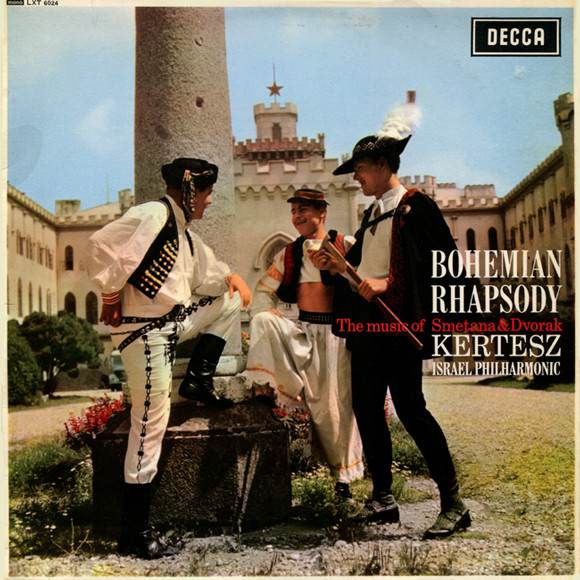
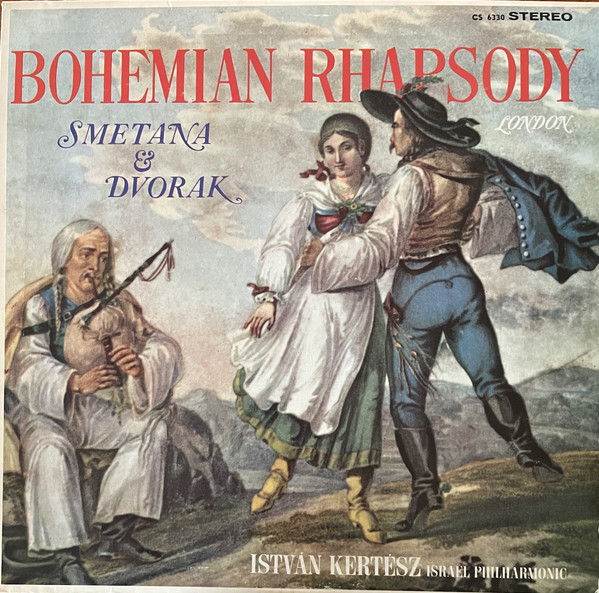
More of the music of Antonin Dvorak (1841-1904)
More Orchestral Spectaculars

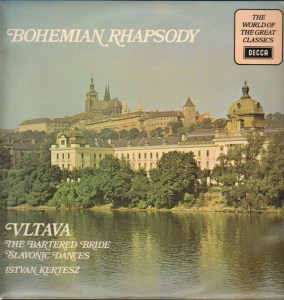
- We can honestly say we have never heard these wonderfully melodic works played with more verve and skill
- Nor have we heard any performances with better sound – this may be a budget Decca reissue, but as some of you Hot Stamper fans have discovered, it is not unusual for these later Deccas to beat the originals
- And note that this pressing is no spring chicken — it’s almost 50 years old
- The original Decca and London pressings are rare and expensive, but if you one, you really owe it to yourself to hear just how good this reissue sounds
- “The performances of The Bartered Bride extracts have all of the necessary sparkle and verve, while Kertesz’s credentials as a Dvorák conductor are second to none.”
- This is yet another Must Own orchestral recording from 1962
- Other recommended titles from 1962 can be found here
This record shows off vintage Decca sound at its best. The full range of colors of the orchestra are here presented with remarkable clarity, dynamic contrast, spaciousness, sweetness, and timbral accuracy.
If you want to demonstrate to a novice listener why modern recordings are so consistently unsatisfactory, all you have to do is play this record for them. No CD ever sounded like this.
The richness of the strings, a signature sound for Decca in the Fifties and Sixties, is on display here for fans of the classical Golden Age. It’s practically impossible to hear that kind of string sound on any recording made in the last thirty years (and this of course includes practically everything pressed on Heavy Vinyl).
It may be a lost art but as long as we have these wonderful vintage pressings to play it’s an art that is not lost on us. I don’t think the Decca engineers could have cut this record much better — it has all the orchestral magic one could ask for, as well as the clarity and presence that are missing from so many other vintage Golden Age records.
Brilliantly Reissued Decca Sound
This vintage Decca pressing has the kind of Tubey Magical Midrange that modern records can barely BEGIN to reproduce. Folks, that sound is gone and it sure isn’t showing signs of coming back. If you love hearing INTO a recording, actually being able to “see” the performers, and feeling as if you are sitting in the studio with the band, this is the record for you. It’s what vintage all analog recordings are known for — this sound.
If you exclusively play modern repressings of vintage recordings, I can say without fear of contradiction that you have never heard this kind of sound on vinyl. Old records have it — not often, and certainly not always — but maybe one out of a hundred new records do, and those are some pretty long odds.
What the Best Sides of Bohemian Rhapsody Have to Offer Is Not Hard to Hear
- The biggest, most immediate staging in the largest acoustic space
- The most Tubey Magic, without which you have almost nothing. CDs give you clean and clear. Only the best vintage vinyl pressings offer the kind of Tubey Magic that was on the tapes in 1962
- Tight, note-like, rich, full-bodied bass, with the correct amount of weight down low
- Natural tonality in the midrange — with all the instruments having the correct timbre
- Transparency and resolution, critical to hearing into the three-dimensional studio space
No doubt there’s more but we hope that should do for now. Playing the record is the only way to hear all of the qualities we discuss above, and playing the best pressings against a pile of other copies under rigorously controlled conditions is the only way to find a pressing that sounds as good as this one does.
What We’re Listening For on Bohemian Rhapsody
- Energy for starters. What could be more important than the life of the music?
- The Big Sound comes next — wall to wall, lots of depth, huge space, three-dimensionality, all that sort of thing.
- Then transient information — fast, clear, sharp attacks, not the smear and thickness so common to these LPs.
- Next: transparency — the quality that allows you to hear deep into the soundfield, showing you the space and air around all the instruments.
- Extend the top and bottom and voila, you have The Real Thing — an honest to goodness Hot Stamper.
Old and New Work Well Together
This reissue is yet another remarkable disc from the Golden Age of Vacuum Tube Recording Technology, with the added benefit of mastering using the more modern cutting equipment of the ’70s. We are of course here referring to the good modern mastering of 40+ years ago, not the generally opaque, veiled and lifeless mastering that is the hallmark of the records being produced today.
The combination of old and new works wonders on this title as you will surely hear for yourself on both of these superb sides.
We were impressed with the fact that these pressings excel in so many areas of reproduction. What was odd about it — odd to most audiophiles but not necessarily to us — was just how rich and Tubey Magical the reissue can be on the right pressing.
This leads me to think that most of the natural, full-bodied, lively, clear, rich sound of the recording was still on the tape decades later, and that all that was needed to get that vintage sound on to a record was simply to thread up the tape on the right machine and hit play. The fact that practically nobody seems to be able to make a record nowadays that sounds remotely this good tells me that I’m wrong to think that such an approach tends to work, if our experience with hundreds of mediocre Heavy Vinyl reissues is relevant.
Side One
SMETANA
Overture & Dances from The Bartered Bride
Ma Vlast
Side Two
DVORAK
Slavonic Dances Nos. 1, 3, 8, 9, & 10
Classics Today Review
István Kertesz was a pro when it came to this music, and even though the Israel Philharmonic in the early 1960s wasn’t the best of all possible orchestras, it plays very well for him, as well it should. The main theme of The Moldau, after all, has been suggested as the inspiration for Hatikvah, the Israeli national anthem.
The performances of The Bartered Bride extracts have all of the necessary sparkle and verve, while Kertesz’s credentials as a Dvorák conductor are second to none. It’s a pity he didn’t record the complete Slavonic Dances for Decca, as these five extracts certainly whet the appetite for more.
The Early Pressings – Ever Seen One? Me Neither