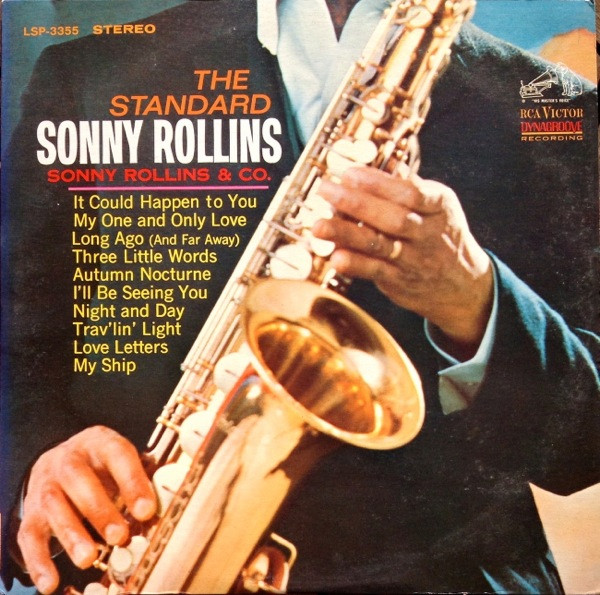

It is — or can be — but that’s only possible — as far as we know — on the early stereo pressings. On the mono pressings, the ones originally pressed in 1965 on the black dynagroove label, and never pressed again, not so much. They’re not awful, but they’re not very good either.
Which means that as a general rule, audiophiles should stick to the stereo pressings of this album, in the same way that they should almost always stick to stereo pressings of stereo recordings.
This is a Core Insight we only arrived at after playing hundreds of mono pressings made from tapes originally recorded in stereo. [1] Rarely do the mono pressings of such titles sound remotely as good as the stereo pressings.
Here is how we described a killer stereo copy of The Standard Sonny Rollins we encountered during the course of a shootout in 2025:
The Standard Sonny Rollins is back on the site for only the second time in over four years, here with outstanding sound throughout this original stereo pressing.
Once again the brilliant engineering of Ray Hall for RCA conveys the vitality of live music for these sessions (which were undoubtedly recorded live). Includes superstars like Herbie Hancock, Jim Hall, and Bob Cranshaw, who’ve lent their talents to some of the greatest jazz recordings of all time.
Here is the stamper sheet showing how the mono pressing fared. In the past we’ve had similar luck with the mono pressings of Living Stereo recordings, but this one was cheap and we figured why not?
Collectors often say that the mono pressings of jazz albums are often the best sounding. Well, why not put that proposition to the test? That is after all the business we are in, testing whether something is true or not to the best of our ability.
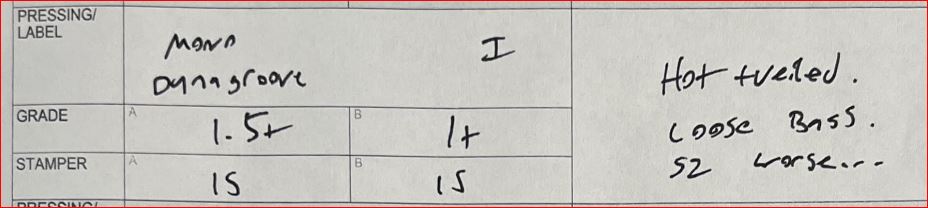

Side one was hot and veiled with loose bass. Side two had even worse problems in all the same areas.
Side one was good, not great, earning our 1.5+ grade. The other side was merely passable. We do not sell records with grades this low. Almost any properly cleaned early stereo pressing would off better sound quality.
1.5+ is four grades down from one of our White Hot Stamper pressings. That is a steep dropoff as far as we’re concerned.
Leave the mono pressings for the jazz collector types and their old school audio systems of the 50s, 60s and 70s. [2]
To help guide you in your search for better sounding vinyl, here is our breakdown for mono versus stereo, as well as links to each category:
Most of these are mono recordings. If stereo pressings were made from them through reprocessing, they rarely are any good. As of 2026 there are about 130 albums in this group.
Currently there are about 750 albums in this group. (Note that records that are only available in stereo would typically not be included in this list.)
There are currently only 35 albums in this group. Some of them are mono pressings of stereo recordings, but there are not many of those. 99% or more of the stereo recordings we play in our shootouts sound better to us in stereo than they do in mono.
This is partly due to the fact that the big dynamic speakers we use are pulled well out into the room, where they have the ability to create a huge three-dimensional soundscape with excellent depth and sound that stretches from wall to wall.
Those of you with smaller systems, sometimes comprising speakers with a few small drivers, placed too close to the back wall and even — gasp — right up against the back wall, will hear things differently.
We cannot judge that sound since we have no way of actually hearing it, but it is not likely we would find it acceptable.
Although there are more than three thousand reviews of albums on the blog, we don’t know how many came out when mono pressings of stereo recordings were still being offered (usually at a savings of one dollar, those were the days!), so identifying the best of the monos, stereos and those that sound good both ways is going to be a slow process that will take place over the course of many years.
Two Caveats
[1] Decca recordings from the 50s sometimes used a separate microphone feed into a one track (mono) tape recorder to create a true mono recording. We wrote about one such recording here.
[2] Some old equipment can have exceptionally good sound. The low power transistor integrated amp we use was produced in the 70s. But if all your equipment could have been purchased 50 years ago, you most likely have missed out on many of the changes in audio that have revolutionized the hobby in ways that you simply cannot imagine.
Further Reading
- Sonny Rollins helped us see the light many years ago
- How do you make a vintage jazz recording sound this wrong?
- These stereo recordings sound especially bad on mono pressings