

The Music of Bela Bartok Available Now
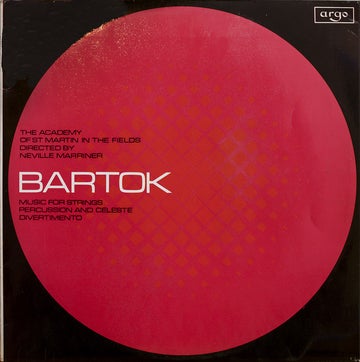
- A vintage copy of this classical Masterpiece, here with solid Double Plus (A++) sound on both UK Decca-pressed Argo sides – exceptionally quiet vinyl too
- Clear and transparent, with huge hall space extending wall to wall and floor to ceiling, this is the sound that the modern reissue utterly fails to reproduce
- An abundance of energy, loads of detail and wonderfully textured string tone – everything you want in a top quality orchestral recording is here, and more
- We surveyed a large group of pressings containing this work, and in the end Marriner’s reading from 1970 had the best sound and the best performance of all that we played
- “… one of the best-known compositions by the Hungarian composer Béla Bartók.”
- There are about 150 orchestral recordings we think offer the best performance coupled with the highest quality sound. This record has earned a place on that list.
This vintage Argo pressing has the kind of Tubey Magical Midrange that modern records can barely BEGIN to reproduce. Folks, that sound is gone and it sure isn’t showing signs of coming back. If you love hearing INTO a recording, actually being able to “see” the performers, and feeling as if you are sitting in the studio with the band, this is the record for you. It’s what vintage all analog recordings are known for — this sound.
If you exclusively play modern repressings of vintage recordings, I can say without fear of contradiction that you have never heard this kind of sound on vinyl. Old records have it — not often, and certainly not always — but maybe one out of a hundred new records do, and those are some pretty long odds.
What the Best Sides of Music For Strings Percussion And Celeste / Divertimento Have to Offer Is Not Hard to Hear
- The biggest, most immediate staging in the largest acoustic space
- The most Tubey Magic, without which you have almost nothing. CDs give you clean and clear. Only the best vintage vinyl pressings offer the kind of Tubey Magic that was on the tapes in 1970
- Tight, note-like, rich, full-bodied bass, with the correct amount of weight down low
- Natural tonality in the midrange — with all the instruments having the correct timbre
- Transparency and resolution, critical to hearing into the three-dimensional studio space
No doubt there’s more but we hope that should do for now. Playing the record is the only way to hear all of the qualities we discuss above, and playing the best pressings against a pile of other copies under rigorously controlled conditions is the only way to find a pressing that sounds as good as this one does.
What We’re Listening For on Music For Strings Percussion And Celeste
- Energy for starters. What could be more important than the life of the music?
- The Big Sound comes next — wall to wall, lots of depth, huge space, three-dimensionality, all that sort of thing.
- Then transient information — fast, clear, sharp attacks, not the smear and thickness so common to these LPs.
- Next: transparency — the quality that allows you to hear deep into the soundfield, showing you the space and air around all the instruments.
- Extend the top and bottom and voila, you have The Real Thing — an honest to goodness Hot Stamper.
A Must Own Record
We consider this album a Masterpiece. It’s a Demo Disc quality recording that belongs in any serious classical collection.
Others that belong in that category can be found here.
Side One
Music For Strings Percussion And Celeste
1st Mov. Andante Tranquillo
2nd Mov. Allegro
3rd Mov. Adagio
4th Mov. Allegro Molto
Side Two
Divertimento For Strings
1st Mov. Allegro Non Troppo
2nd Mov. Molto Adagio
3rd Mov. Allegro Assai
Background
Music for Strings, Percussion and Celesta… is one of the best-known compositions by the Hungarian composer Béla Bartók.
As its title indicates, the piece is written for string instruments (violins, violas, cellos, double basses, and harp), percussion instruments (xylophone, snare drum, cymbals, tam-tam, bass drum, and timpani) and celesta. The ensemble also includes a piano, which may be classified as either a percussion or string instrument (the celesta player also plays piano during 4-hand passages). Bartók divides the strings into two groups which he directs should be placed antiphonally on opposite sides of the stage, and he makes use of antiphonal effects particularly in the second and fourth movements. -Wikipedia