

More Stevie Ray Vaughan
More Electric Blues

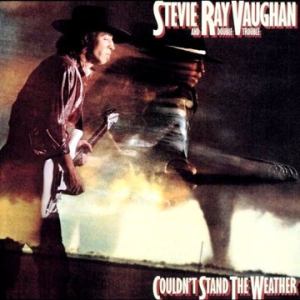
- Boasting two excellent Double Plus (A++) sides, this vintage copy (one of only a handful to hit the site in ten months) is doing just about everything right
- The bass is big, the overall presentation is huge, and the energy is jumpin’ on this early pressing – this is the right sound for SRV’s hard-chargin’ Electric Blues
- 4 stars: “Stevie Ray Vaughan’s second album, Couldn’t Stand the Weather, pretty much did everything a second album should do: it confirmed that the acclaimed debut was no fluke, while matching, if not bettering, the sales of its predecessor, thereby cementing Vaughan’s status as a giant of modern blues.”
Superb sound for this Stevie Ray classic! Just picture yourself in a blues club. Now imagine the volume being about ten times as loud. This is the kind of music you would hear and it would tend to sound pretty much like this: a bit messy but also real. If you’re one of those audiophiles who likes pinpoint imaging, forget it. They were going for the “live in the studio” sound with this one, which means it’s a bit of a jumble image-wise. But that’s the way you would hear it in a blues club, so where’s the harm?
This copy has excellent presence to the vocals and guitars, keeping in mind that the vocals are usually well back in the mix compared to the guitars, which for a guitarist of SRV’s skills is probably a good thing.
What The Best Sides Of Couldn’t Stand The Weather Have To Offer Is Not Hard To Hear
- The biggest, most immediate staging in the largest acoustic space
- The most Tubey Magic, without which you have almost nothing. CDs give you clean and clear. Only the best vintage vinyl pressings offer the kind of Tubey Magic that was on the tapes even as late as 1984
- Tight, note-like, rich, full-bodied bass, with the correct amount of weight down low
- Natural tonality in the midrange — with all the instruments having the correct timbre
- Transparency and resolution, critical to hearing into the three-dimensional studio space
No doubt there’s more but we hope that should do for now. Playing the record is the only way to hear all of the qualities we discuss above, and playing the best pressings against a pile of other copies under rigorously controlled conditions is the only way to find a pressing that sounds as good as this one does.
What We’re Listening For On Couldn’t Stand The Weather
Number one by far: Too many instruments jammed into too little space in the upper midrange. When the tonality is shifted-up, even slightly, or there is too much compression, or too much smear, there will be too many elements — voices, guitars, drums — vying for space in the upper area of the midrange, causing congestion and a noticeable loss of clarity.
With the more solid sounding copies, the lower mids are full and rich; above them, the next “level up” so to speak, there’s plenty of space in which to fit all the instruments comfortably, without having them sound like they are all piled up on top of one another as is often the case. With more space and less compression and smear the upper midrange does not sound overstuffed and overwhelmed with musical information.
Number Two: edgy vocals, which is related to Number One above. Almost all of Stevie Ray Vaughan’s recordings seem to have some edge to his vocals — the man really belts it out on his albums, it’s what he does — but the best copies keep the edge under control, without sounding compressed, dark, dull or smeary.
A Tough Record to Play
Couldn’t Stand The Weather is a difficult record to reproduce. Do not attempt to play it using anything other than the highest quality equipment.
Unless your system is firing on all cylinders, even our hottest Hot Stamper copies — the Super Hot and White Hot pressings with the biggest, most dynamic, clearest, and least distorted sound — can have problems. Your system should be thoroughly warmed up, your electricity should be clean and cooking, you’ve got to be using the right room treatments, and we also highly recommend using a demagnetizer such as the Walker Talisman on the record, your cables (power, interconnect and speaker) as well as the individual drivers of your speakers.
This is a record that’s going to demand a lot from the listener, and we want to make sure that you feel you’re up to the challenge. If you don’t mind putting in a little hard work, here’s a record that will reward your time and effort many times over, and probably teach you a thing or two about tweaking your gear in the process (especially your VTA adjustment, just to pick an obvious area many audiophiles neglect).
Side One
Scuttle Buttin’
Couldn’t Stand the Weather
The Things (That) I Used to Do
Voodoo Chile (Slight Return)
Side Two
Cold Shot
Tin Pan Alley
Honey Bee
Stang’s Swang
AMG 4 Star Review
Stevie Ray Vaughan’s second album, Couldn’t Stand the Weather, pretty much did everything a second album should do: it confirmed that the acclaimed debut was no fluke, while matching, if not bettering, the sales of its predecessor, thereby cementing Vaughan’s status as a giant of modern blues.